The Chickasaw Nation’s own publications provide a purposeful path through removal, separate government, language learning and the historic capitol at Tishomingo. They are community-issued accounts with specific scopes, not a complete history or independent verification of present legal and educational outcomes.
See each region’s evidence for historical or present-day scope.
Homeland / region
Southeast / Oklahoma
Research depth
Source guide
Source collection
6 annotated resources · 6 Indigenous-led
Inspected sources
4 substantive works · selected content reviewed
Initial adequacy
Still unfinished
Source review
October 28, 2026
A source guide for a deeper dive.This entry provides a brief orientation and an organized reading path. A comprehensive deep dive has not yet been completed. Follow the annotated sources and distinguish primary community accounts from outside reference material.
Still unfinished
A bounded actual-content starting path and specifically scoped credited picture are available. Fuller history, source comparison and community review remain open; quantity does not establish completion.
Assessment recorded October 28, 2026. This is separate from research completion and community review.
Compare selected original removal and constitutional records with the Nation’s histories.
Review actual speaker-led publications and learning materials; programme descriptions are not outcome studies.
The earlier cultural-center and village-history leads remain separately unreviewed.
Backdrop photographs & credits
These photographs have individual, documented connections to this entry. Their captions and source records define the people, place, object, and period shown; no one photograph represents every community within a broader label.
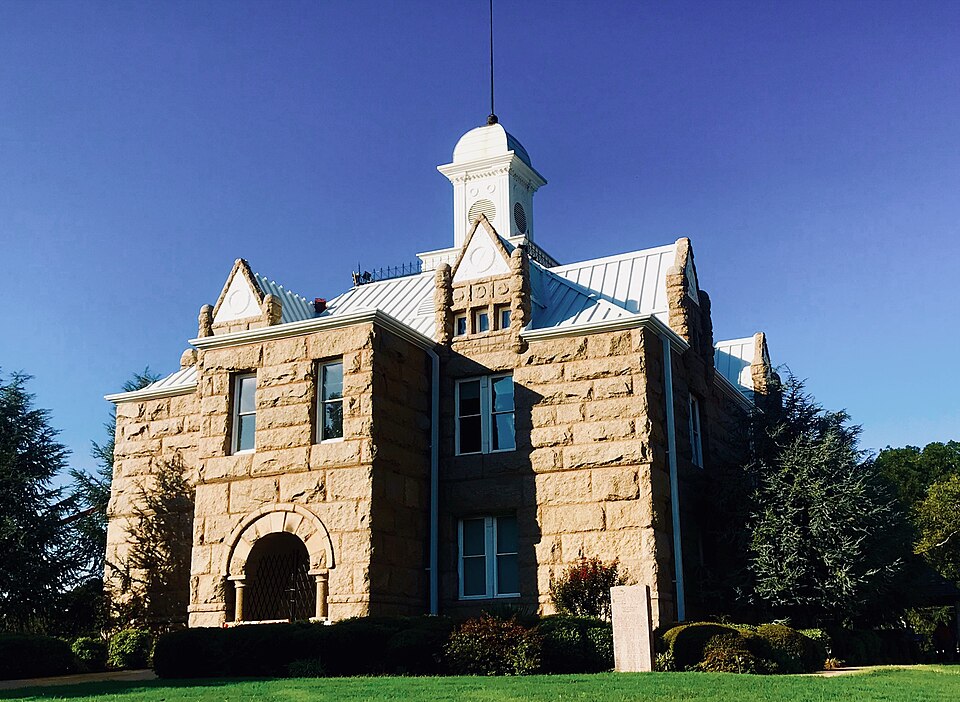
The 1898 granite capitol at Tishomingo, identified by the photographer and the Nation’s matching historical account. It is distinct from the earlier 1858 brickcapitol. One historic institutional place, not every Chickasaw community, a current office-use or legal title claim. Complete available retrieved JPEG imported unchanged. Background/card CSS crops and overlays affect presentation; the opened page retains the complete available frame proportionally.
Image, association, and reuse record reviewed 2026-10-28.
Full photographs are displayed proportionally above. A translucent background copy may be cropped by the viewport; it does not replace the complete image or its record.
The visual treatment does not change the research status, evidence, or remaining gaps recorded in this profile.
Start reading here
A short purposeful path through selected actual-content works. Read annotations for community, period and inspection limits; this is not a complete history or community endorsement.
Connect historical government with the specifically identified capitol.
These are selected starting points. The full annotated collection, source perspectives, inspection limits and remaining research questions follow below. A starting guide is not an exhaustive history or community endorsement.
01
Identity and context
The Chickasaw Nation is a contemporary nation with southeastern homelands and a history of forced removal to Indian Territory.
Focus the next stage of research on: Chickasaw-authored history, Chikashshanompaʼ language, sovereignty and cultural institutions. The sources below are selected reading paths; their authorship, dates and community scope should guide how they are used.
The Nation’s history and focused Removal account describe forced movement to Indian Territory while explaining how leaders negotiated parts of that process. They also follow the effort to establish separate governmental affairs and a constitution in 1856. Negotiation is not treated here as proof that removal was freely chosen, and the original treaties still need direct reading.
The Nation dates its revitalization programme to 2007 and its language department to 2009. Its public account describes speaker-led classes, youth learning and digital resources. These are routes into learning and stated programme activities; the linked software, recordings and actual teaching outcomes have not been evaluated here.
The Nation’s building history follows the granite capitol from construction and governmental use through later reclamation and museum interpretation. This is the 1898 building shown in the credited photograph, rather than the earlier brick capitol. Its public history connects architecture with changing institutions without granting rights to reproduce museum objects or assuming current visitor conditions.
Compare selected original removal and constitutional records with the Nation’s histories.
Review actual speaker-led publications and learning materials; programme descriptions are not outcome studies.
The earlier cultural-center and village-history leads remain separately unreviewed.
Cohort10: selected actual-content reviews preserve their institutional/community scope. Existing source cards are upgraded at the same ID and URL where noted; repeated publications are not globally new works.
Maps with context
Historical maps
Explore authentic historical documents connected to this entry. Their names and boundaries reflect their makers and periods.
c. 1721 design; LOC reproduction, 1929 · Represented historical people
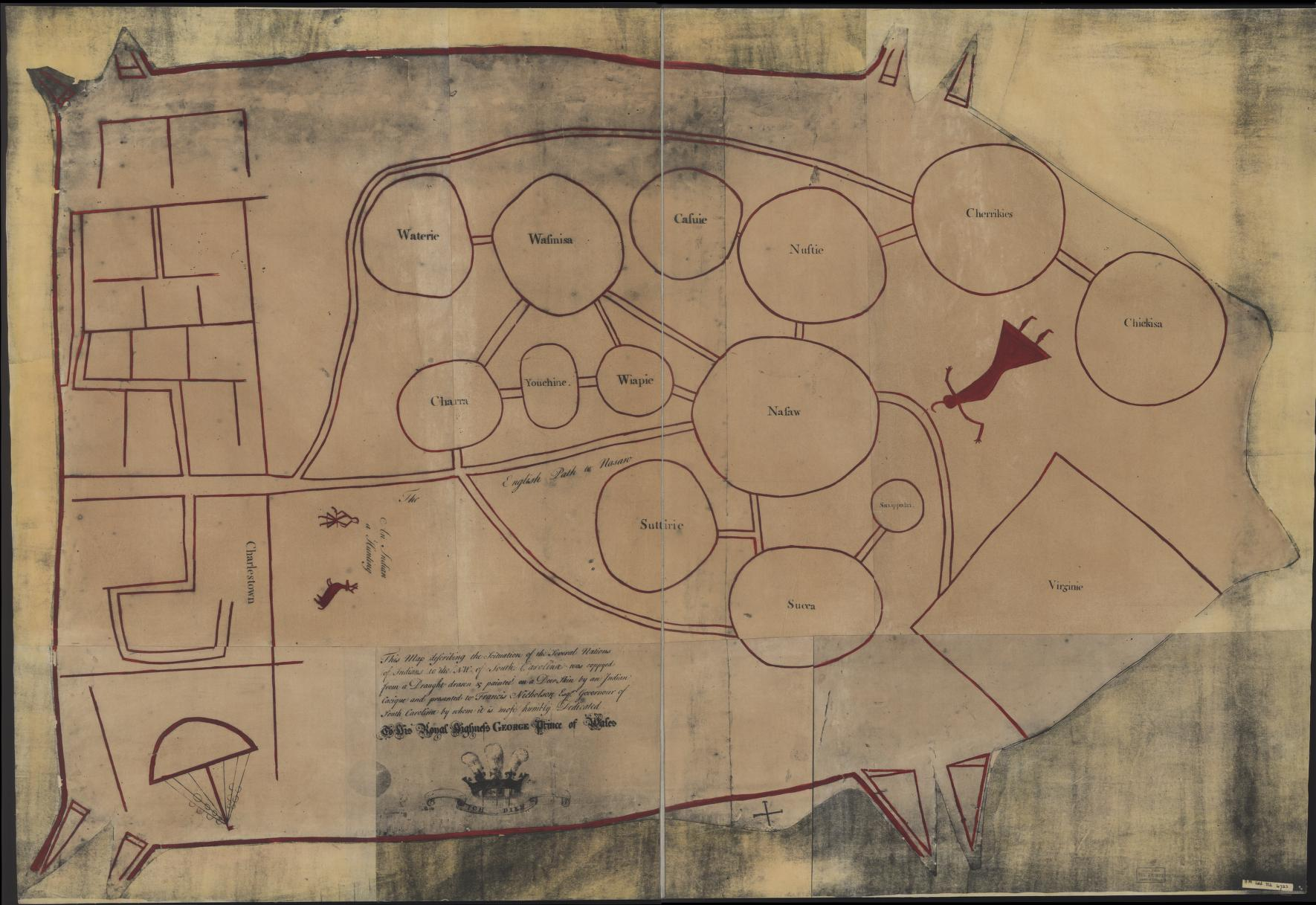
Catawba deerskin map: archival reproduction
Unidentified Indigenous maker; colonial copy associated with Francis Nicholson
Chickisa appears in the far-right circle. Newberry explicitly identifies Chickasaw among these represented communities. The link concerns historical representation.
Underlying mapmaker and colonial copyist unnamed. Supplied digital reproduction; exact scan provenance unconfirmed. Historical interpretation: Library of Congress and Newberry Library. Archive reuse and provenance notes ↗
These map connections are a growing selection. Historical depictions do not establish current boundaries, and a link does not imply community authorship or endorsement.
Follow the reading path
Sources & further reading
Open any title to read the original source. Annotations explain what each link can help you explore.
No Indigenous-led source is identified in this entry yet. This is a gap in this collection, and does not imply an absence of community knowledge or organization.
The Nation’s concise historical account follows removal, separate government, Tishomingo and later institution-building. Its own perspective should be read alongside more focused community histories and original records.
Inspection: Content reviewed for the stated scope
Scope: Complete main historical prose from From migration through the 1983 constitution statement, before Subpages. Navigation and illustrations not used as additional works.
Review recorded: October 28, 2026
Access note: Normal public HTTP 200 body read. No original treaty, constitution, military record, enrollment roll or map inspected. Comparative triumphal claims and the period label Five Civilized Tribes are not adopted as an analytical category; no present legal or population conclusions.
Community or Indigenous-organization perspective linked for this entry. Use “Chokma! (Hello) | Chickasaw Cultural Center” to begin with the publisher’s own account; check whether its scope is one community or a wider people.
Community or Indigenous-organization perspective linked for this entry. Use “The Chickasaw Nation - The Decades and the Villages - 1720 - 1730 - Paper 1” to begin with the publisher’s own account; check whether its scope is one community or a wider people.
The Nation dates its revitalization programme to 2007 and its language department to 2009. Its account describes speaker-led learning across different ages and formats; it does not measure present proficiency.
Inspection: Content reviewed for the stated scope
Scope: Actual Program Details and programme-format descriptions through Chickasaw.TV, before Locations. Resource titles are reading routes, not inspected software, lessons or recordings.
Review recorded: October 28, 2026
Access note: Normal public HTTP 200 text read. Apps, commercial software, video, classes, child participation and underlying evaluations not inspected. Public descriptions do not guarantee current availability, eligibility, prices or learning outcomes. Religious explanations remain attributed and are not reproduced as instruction.
A focused account describes forced movement, negotiations and family experiences, while explaining the Nation’s desire for separate governmental affairs. Its comparative claims require careful treatment.
Inspection: Content reviewed for the stated scope
Scope: Complete main Removal prose from Chickasaw Removal is the most traumatic through the 1856 constitution paragraph, before Chickasaw.net. Source’s numerical/comparative casualty claims and descriptions of other Plains peoples not adopted.
Review recorded: October 28, 2026
Access note: Normal public HTTP 200 body read. No underlying treaty, account book, travel journal, Dawes record or military evidence inspected. The directory attributes the Nation’s interpretation and does not portray removal as voluntary because leaders negotiated parts of the process.
The Nation follows the 1898 capitol’s construction, governmental use, loss and reclamation, and museum interpretation. This is the building in the photograph, distinct from the earlier brick capitol demolished in 1897.
Inspection: Content reviewed for the stated scope
Scope: Complete historical body beginning Construction of the granite Romanesque style through the Notes on restoration/exhibits, before Chickasaw.net. Source photographs and exhibits not inspected.
Review recorded: October 28, 2026
Access note: Normal public HTTP 200 prose read. Historical construction and reclamation dates are attributed to the Nation; original architectural plans, deeds and museum objects uninspected. Current visitor arrangements and ownership/legal conclusions are not independently verified. The earlier 1858 brick-capitol page is not mistaken for this 1898 granite building.