This broader Choctaw path preserves the difference between Mississippi and Oklahoma government perspectives. It pairs Mississippi community history with Oklahoma language, wartime-communications and capitol-history publications. These selected accounts do not replace the histories of every Choctaw community or settle present membership and legal questions.
See each region’s evidence for historical or present-day scope.
Homeland / region
Southeast / Oklahoma
Research depth
Source guide
Source collection
5 annotated resources · 5 Indigenous-led
Inspected sources
4 substantive works · selected content reviewed
Initial adequacy
Still unfinished
Source review
October 28, 2026
A source guide for a deeper dive.This entry provides a brief orientation and an organized reading path. A comprehensive deep dive has not yet been completed. Follow the annotated sources and distinguish primary community accounts from outside reference material.
Still unfinished
A bounded actual-content starting path and specifically scoped credited picture are available. Fuller history, source comparison and community review remain open; quantity does not establish completion.
Assessment recorded October 28, 2026. This is separate from research completion and community review.
Add individual community and family perspectives, including appropriate Louisiana/Jena sources, without automatic government affiliation.
Inspect original treaties, constitutional records and military evidence before extending legal or comparative claims.
The History index is supporting navigation; individual linked works count only after actual reading.
Backdrop photographs & credits
These photographs have individual, documented connections to this entry. Their captions and source records define the people, place, object, and period shown; no one photograph represents every community within a broader label.
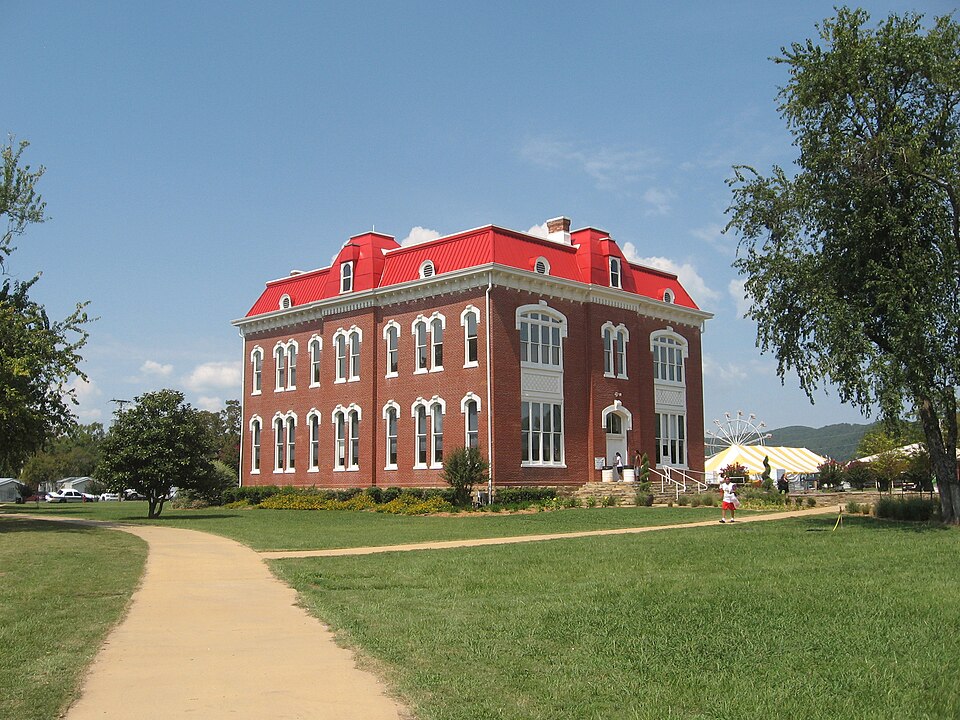
Choctaw Capitol Museum exterior Urbanative / Wikimedia Commons. Author-released public domain.
One Oklahoma Nation capitol/museum setting at Tuskahoma, not the Mississippi Band or every Choctaw community. Primary Nation architectural history independently identifies the place. The record’s 2009 date is explicitly an upload date, not proof of capture; visitors’ identities/membership and any event are not inferred. Complete available retrieved JPEG imported unchanged. Background/card CSS crops and overlays affect presentation; the opened page retains the complete available frame proportionally.
Image, association, and reuse record reviewed 2026-10-28.
Full photographs are displayed proportionally above. A translucent background copy may be cropped by the viewport; it does not replace the complete image or its record.
The visual treatment does not change the research status, evidence, or remaining gaps recorded in this profile.
Start reading here
A short purposeful path through selected actual-content works. Read annotations for community, period and inspection limits; this is not a complete history or community endorsement.
Connect the capitol photograph with a focused architectural history.
These are selected starting points. The full annotated collection, source perspectives, inspection limits and remaining research questions follow below. A starting guide is not an exhaustive history or community endorsement.
01
Identity and context
Choctaw people continue through several contemporary nations and communities with distinct histories.
Focus the next stage of research on: Chahta language and names, southeastern homelands, removal and different tribal governments. The sources below are selected reading paths; their authorship, dates and community scope should guide how they are used.
The Mississippi Band’s history describes people who remained in Mississippi through removal pressure and later hardships. It follows community organizing and the 1945 constitution, then the growth of council responsibilities. This account is a starting point into Mississippi continuity; it should not be replaced by a story in which all Choctaw people left for Oklahoma.
The Oklahoma Nation’s language-school account traces an initial 1998 satellite class into several teaching settings. Its separate Code Talkers account describes using Choctaw speech for wartime communications in France. Read the latter as the Nation’s historical interpretation, with military records still to inspect; neither source supplies a current proficiency census or establishes claims to being first.
The Nation’s 2023 architectural feature follows the capitol from construction in the 1880s through changing uses and efforts to preserve it. It connects the building with government and public history, including restoration and a museum mission. The credited exterior image offers one Oklahoma institutional setting, not an illustration of every Choctaw community.
Add individual community and family perspectives, including appropriate Louisiana/Jena sources, without automatic government affiliation.
Inspect original treaties, constitutional records and military evidence before extending legal or comparative claims.
The History index is supporting navigation; individual linked works count only after actual reading.
Cohort10: selected actual-content reviews preserve their institutional/community scope. Existing source cards are upgraded at the same ID and URL where noted; repeated publications are not globally new works.
Maps with context
Historical maps
Explore authentic historical documents connected to this entry. Their names and boundaries reflect their makers and periods.
1900 · Named historical subject; federal land administration
Map of Choctaw Nation, Indian territory: compiled from official records of the United States Geological Survey
R. L. McAlpine; United States Department of the Interior
The archive identifies Choctaw Nation as the subject and describes allotments, selections and coal leases. This provides historical administrative context, not present-day jurisdiction.
Library of Congress, Geography and Map Division. Rights record ↗
These map connections are a growing selection. Historical depictions do not establish current boundaries, and a link does not imply community authorship or endorsement.
Follow the reading path
Sources & further reading
Open any title to read the original source. Annotations explain what each link can help you explore.
No Indigenous-led source is identified in this entry yet. This is a gap in this collection, and does not imply an absence of community knowledge or organization.
Indigenous-ledMississippi Band of Choctaw IndiansSource 1
The Band’s own narrative follows Choctaw people remaining in Mississippi, the hardships they faced and local institution-building. It complements Oklahoma accounts rather than being replaced by a single removal story.
Inspection: Content reviewed for the stated scope
Scope: Complete Tribal History narrative from The Choctaw, and their ancestors through the 1945 constitution/council discussion, ending before the separate Treaties catalogue. Later treaties, ChoctawToday figures and images excluded.
Review recorded: October 28, 2026
Access note: Normal public HTTP 200 actual body read. No treaty, land grant, original census, disease register or constitutional record inspected. Ancient chronological estimates and numerical loss/population/acreage claims are not independently verified or adopted. Historical organizing is attributed; no present membership/legal guidance.
The history page is a set of brief topic introductions and links. It is retained for navigation and not counted in addition to the specific Code Talkers and architectural features reviewed here.
Inspection: Supporting or limited review; see scope
Scope: Actual short HistoricalDocuments/Code Talkers/Chiefs/HinaHanta/Irish-history topic introductions; linked items only count when reviewed separately.
Review recorded: October 28, 2026
Access note: Public actual index read normally. No complete treaty, constitution, chiefs list or object catalogue inspected through this index; current legal claims and monetary conversions not adopted.
This short programme account connects language with identity and traces an initial 1998 satellite class into several teaching settings. It is a starting route to the school, not an inspection of its full curriculum.
Inspection: Content reviewed for the stated scope
Scope: Complete substantive purpose/Additional Information paragraphs, including the 1998 starting-class history, before Related Links. Linked language site and lessons not separately reviewed.
Review recorded: October 28, 2026
Access note: Normal public HTTP 200 body read. Teacher/student totals, current class availability and benefit/contact information not adopted. No lesson, video, dictionary or learning evaluation inspected. This is an Oklahoma Nation programme, not a claim that every Choctaw government uses the same educational system.
The Nation explains how Choctaw speech was used in wartime communications and preserves named family recollections. Read the account as a community-published historical introduction, with military records still to inspect.
Inspection: Content reviewed for the stated scope
Scope: Actual main historical article read; selected synthesis uses the opening explanation of telephone communications in France and its distinction between ordinary speech and adapted military messages. Family biographies and code-word examples were read but are not reproduced.
Review recorded: October 28, 2026
Access note: Normal public HTTP 200 text read. No military message logs, service files, medal legislation, interviews or linked booklet inspected. Claims to being first, decisive battle outcomes and universal citizenship/legal statements not adopted. The page’s archival photograph was not reused or cleared by this reading.
A June 1, 2023 historical feature follows the capitol’s construction, changing uses and preservation. It connects a recognizable building with government and public history rather than treating it as a generic cultural motif.
Inspection: Content reviewed for the stated scope
Scope: Actual article from publication/date and opening through construction, architectural form, 1930 spreservation and 1972 restoration/museum mission. Later visitor schedules, event descriptions, original photographs and linked references not adopted.
Review recorded: October 28, 2026
Access note: Normal public HTTP 200 body read. Original plans, legislation, deeds, newspaper quotations, artworks and cited scholarship not independently inspected. Building costs/current equivalents, present legal status and visitor conditions excluded. This is an Oklahoma Nation institutional history, not all Choctaw community histories.