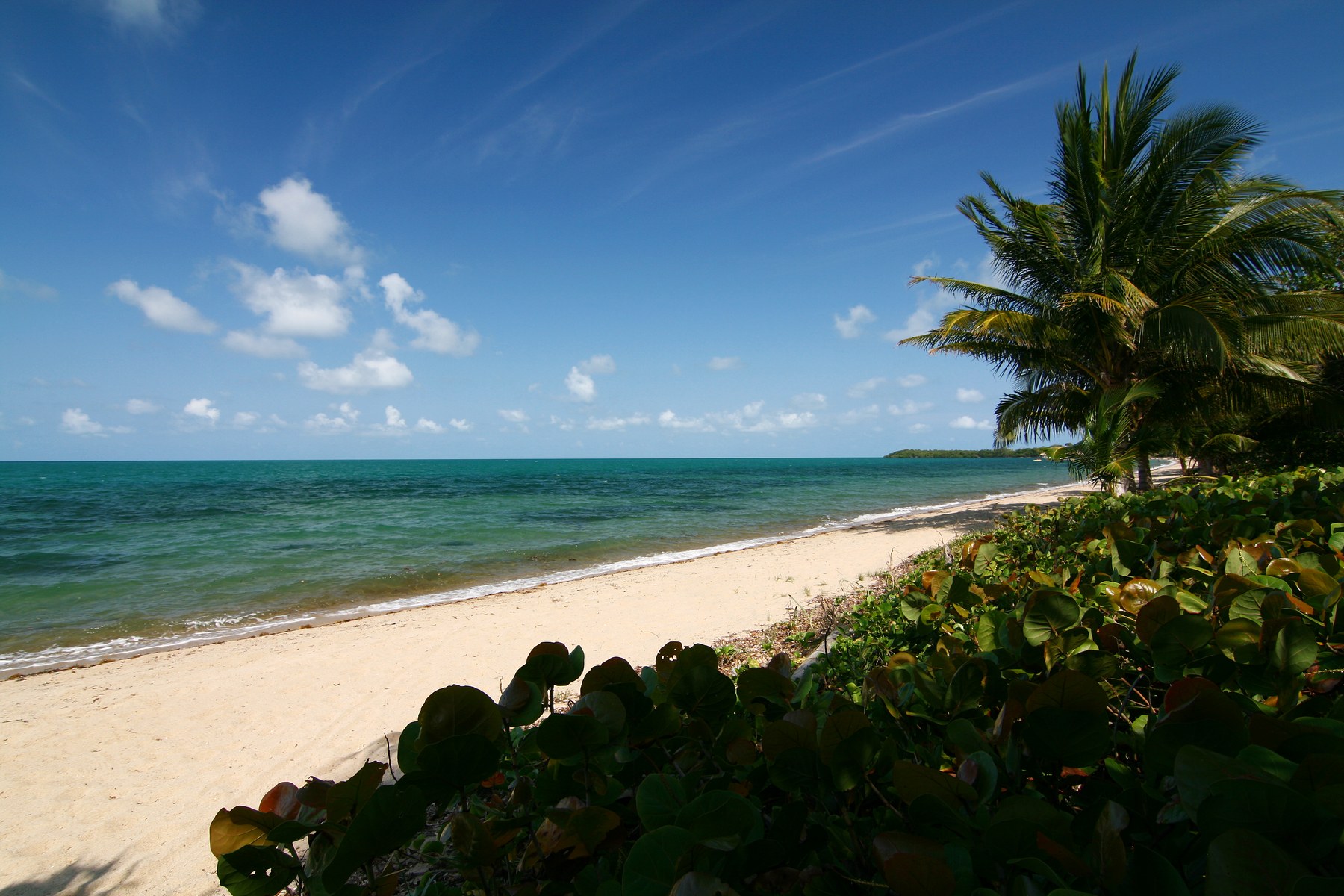
Almond Beach, Hopkins, Stann Creek, Belize,2012Walter Rodriguez,2012 · Wikimedia Commons, originally Flickr · CC BY 2.0 · Full-frame web copy proportionally resized/JPEG-compressed; CSS crops/overlays.
Garifuna people have Afro-Indigenous histories connecting Saint Vincent/Yurumein, Central America and diaspora communities. A festival account, language-documentation work, a Garifuna author’s historical primer and a dated participation plan offer distinct starting perspectives, with local community histories still open.
See each region’s evidence for historical or present-day scope.
Homeland / region
Caribbean / Central America
Research depth
Source guide
Source collection
8 annotated resources · 1 Indigenous-led
Inspected sources
5 substantive works · selected content reviewed
Initial adequacy
Still unfinished
Source review
October 29, 2026
A source guide for a deeper dive.This entry provides a brief orientation and an organized reading path. A comprehensive deep dive has not yet been completed. Follow the annotated sources and distinguish primary community accounts from outside reference material.
Still unfinished
A bounded actual-content source guide and specifically scoped credited image are available. Fuller history and community/source comparison remain open; quantity does not establish completion or endorsement.
Assessment recorded October 29, 2026. This is separate from research completion and community review.
Add Garifuna community-authored and country-specific histories, including differing accounts of origins and displacement.
Inspect the retained UNESCO records and linked recordings only when ordinarily accessible; no challenge bypass.
Develop individually named community and institution routes after exact identity/dedup checks.
The dated sources and image do not establish present populations, jurisdiction, ancestry or programme outcomes.
Inspect stronger country-specific and local community-authored histories with exact dating and comparison.
Retained UNESCO leads, underlying legal instruments and private practices remain excluded from actual-content review.
Backdrop photographs & credits
These photographs have individual, documented connections to this entry. Their captions and source records define the people, place, object, and period shown; no one photograph represents every community within a broader label.
Almond Beach, Hopkins, Stann Creek, Belize,2012 Walter Rodriguez,2012 · Wikimedia Commons, originally Flickr · CC BY 2.0 · Full-frame web copy proportionally resized/JPEG-compressed; CSS crops/overlays.
Modern Almond Beach landscape identified as Hopkins-area, Stann Creek, Belize. The BelizeTourismBoard identifies Hopkins with a Garifuna community; this is narrow place context, not a photograph of Garifuna people or a boundary, property-ownership, exclusive-occupation or all-community claim. Complete delivered frame inspected; original cameraRAW and earlier Photoshop processing history uninspected.
Image, association, and reuse record reviewed 2026-10-29.
Full photographs are displayed proportionally above. A translucent background copy may be cropped by the viewport; it does not replace the complete image or its record.
The visual treatment does not change the research status, evidence, or remaining gaps recorded in this profile.
01
Identity and context
Garifuna people have a distinct Afro-Indigenous history connecting Saint Vincent and communities along the Caribbean coast of Central America.
Focus the next stage of research on: Garifuna language, displacement, music, community institutions and diaspora. The sources below are selected reading paths; their authorship, dates and community scope should guide how they are used.
The Smithsonian’s 2013 festival introduction connects Garifuna history with Saint Vincent, called Yurumein, and describes British exile in 1797 followed by settlement along Central America’s Caribbean coast. It also presents communities in the United States. This is a broad historical route; individual places and organizations need their own accounts.
The Endangered Language Alliance classifies Garifuna within the Arawakan family and describes vocabulary shaped by contact with Carib languages, French, English and Spanish. A linguistic classification does not make distinct peoples interchangeable, and speaking—or not speaking—a language does not establish someone’s membership or identity.
In the 2013 Smithsonian programme, Los Angeles Wanaragua leader Flavio Alvarez connects maintaining language and public performance with cultural continuity. ELA describes collaborations involving James Lovell and Daniel Kaufman, including documentation and children’s song-based learning. These are attributed accounts of particular people and projects, not claims about every Garifuna community or measured present-day outcomes.
I. Myrtle Palacio’s 2024primer explicitly explains her Garifuna-insider research approach. Its selected chapters place naming, language documentation, civic participation and recognition within Belize’s history. This is an attributed historical synthesis; the Atlas has not independently checked every underlying interview, legal document or historical claim.
The 2013BEST/World Bank plan proposes community participation and livelihood support in a project involving diverse Belizean communities. Its Garifuna discussion is useful dated context. A proposed programme is not evidence of completed benefits, and a grouped consultation list does not establish every resident’s identity or any present territorial right.
Abtahian, Chaturvedi and Greenop describe Garifuna pronunciation using a Hopkins-born consultant and earlier local interviews. They distinguish observed variation from comparisons with older descriptions. This offers a carefully located language example, rather than a rule for all Garifuna speakers or community membership.
Add Garifuna community-authored and country-specific histories, including differing accounts of origins and displacement.
Inspect the retained UNESCO records and linked recordings only when ordinarily accessible; no challenge bypass.
Develop individually named community and institution routes after exact identity/dedup checks.
The dated sources and image do not establish present populations, jurisdiction, ancestry or programme outcomes.
Inspect stronger country-specific and local community-authored histories with exact dating and comparison.
Retained UNESCO leads, underlying legal instruments and private practices remain excluded from actual-content review.
Follow the reading path
Sources & further reading
Open any title to read the original source. Annotations explain what each link can help you explore.
No Indigenous-led source is identified in this entry yet. This is a gap in this collection, and does not imply an absence of community knowledge or organization.
Retained UNESCO reading lead. This update does not claim the linked record, recording or project file has been inspected.
Inspection: Content review not recorded
Scope: No substantive content inspection in this update.
Access recorded: October 19, 2026
Access note: The first exact UNESCO heritage route previously returned a verification form and was not bypassed. The other two legacy URLs remain unread leads; no linked audio, video, project report or outcomes checked.
A dated festival introduction connects Saint Vincent/Yurumein, British exile in 1797 and Central American/U.S. communities. Participant perspectives place language, teaching and public performance in intergenerational context.
Inspection: Content reviewed for the stated scope
Scope: Actual 2013 programme body: Flavio Alvarez statement, main historical/diaspora introduction, James Lovell caption and participant roles. Normal HTTP 200 full HTML retrieved and selected text inspected after web-reader timeout.
Review recorded: October 29, 2026
Access note: Selected HTML body only, not all festival material, linked recordings, histories underlying its synthesis or pictured participants. No current population distribution/count, universal ancestry test or present officeholder claim. Images not reproduced from this source.
A language-documentation organization describes Arawakan affiliation, contact vocabulary, New York community settings and collaborations using songs to teach language. Its accounts of programmes are organizational descriptions rather than independent impact evaluations.
Inspection: Content reviewed for the stated scope
Scope: Actual page Affiliation paragraph; selected Morphosyntax introduction; ELA’s Work paragraphs describing documentation with James Lovell and Daniel Kaufman; In New York community-setting paragraphs; Nursery Rhymes project introduction and Yugacure project description. Actual web-reader body inspected; not all example paradigms or embedded media.
Review recorded: October 29, 2026
Access note: Undated webpage: no current speaker totals, percentage distributions, success/outcome claims or language-only identity rule adopted. Shipwreck-origin narrative, gendered-register origin hypotheses and exclusivity claims are not used. Embedded recordings, underlying cited books, grant records and all12songs not watched/read. No reproduction of lyrics, ceremonial text or media.
A Garifuna author explicitly explains her community-insider research perspective and places language, naming and civic participation in Belize’s history. One booklet is one work.
Inspection: Content reviewed for the stated scope
Scope: 50-pagePDF: title/creditsPDFpp1–3; foreword/methodologyPDFpp6–8(printedprologuepp1–2); selected advocacyPDFpp26–28(printedpp20–22) and language paragraphPDFp30(printedp24). Actual selected text read through web tool; fullPDF also retrieved normally200. Repeated extraction of the same passages counted once.
Review recorded: October 29, 2026
Access note: Not all50pages, underlying cited studies, reproduced legal instruments, maps, photos, chants or private spiritual chapter inspected for reuse. Author’s historical synthesis is attributed; no present demographics, appearance-based identity, precise disputed statutory references/election chronology or current legal/outcome claim adopted. CopyrightJune 2024: link only, no full public copy or images.
A dated project plan connects livelihoods and participation with Indigenous and wider local communities. Proposed measures are not evidence that benefits occurred or every participant had one identity.
Inspection: Content reviewed for the stated scope
Scope: Actual34-pagePDF cover, selected introduction/project aimsPDFpp3–5(printedpp2–4), and opening Garifuna/community governance contextPDFp12(printedp11) read through ordinary web reader. Cover dateSeptember 2013 controls over later URL/catalogue upload date.
Review recorded: October 29, 2026
Access note: Direct local download failedTLS certificate verification and was not retried with disabled validation. Actual selected web-reader text inspected; not all34pages, maps, underlying laws/consultations or restricted spiritual material. No current census, jurisdiction, consent, implemented-outcome or project-list-to-ethnicity inference. A mixed affected-community list does not establish every place’s Garifuna affiliation.
Academic / referenceMaya Abtahian, Manasvi Chaturvedi and Cameron Greenop; Journal of the International Phonetic Association / Cambridge University PressSource 8
An open-access phonetic study offers a Hopkins-specific example of variation. Compare its bounded speaker sample and historical comparisons with broader language descriptions.
Inspection: Content reviewed for the stated scope
Scope: Actual publisher HTML: author/date/issue metadata; introduction and participant description, web lines490–506; Consonants opening lines508–523; selected Lenition/affricate/rhotic discussion lines568–611. Online18May2023; issue54(1),April2024,pp381–398. Selected body only, not the entire article.
Review recorded: October 29, 2026
Access note: The article centers a named Hopkins-born consultant who later migrated to the USA, with additional variation drawn from2007–2008 Hopkins interviews. Neither recordings, complete tables/figures, map, supplementary files nor underlying cited works were inspected or reproduced. Older speaker estimates, current endangerment totals, exclusive language-family rankings and speculative contact explanations are not adopted. Open-access text links remain on the publisher site; no new media reused.