Long Lake #58 is an Anishinaabe community whose public education accounts connect locally directed schools, language and learning from Elders. These starting sources trace the development of its school system and a dated discussion of educational priorities; they are not a complete community history.
See each region’s evidence for historical or present-day scope.
Homeland / region
Ontario, Canada — listing address only
Research depth
Source guide
Source collection
2 annotated resources · 2 Indigenous-led
Inspected sources
2 substantive works · selected content reviewed
Initial adequacy
Still unfinished
Source review
October 28, 2026
Names & relationshipsListed as an Anishinabek Nation member First Nation. This is an organizational relationship; membership alone does not establish ethnicity, language, ancestry, citizenship, jurisdiction or representation of another named community.
A source guide for a deeper dive.This entry provides a brief orientation and an organized reading path. A comprehensive deep dive has not yet been completed. Follow the annotated sources and distinguish primary community accounts from outside reference material.
Still unfinished
A small actual-content starting path and specifically scoped credited photograph are available. Fuller history, source comparison and community review remain open; quantity does not establish completion.
Assessment recorded October 28, 2026. This is separate from research completion and community review.
Add community-authorized historical work beyond the current education-focused starting guide.
Inspect the original history curriculum and underlying archival sources before summarizing earlier periods.
Verify current programmes through newly dated publications; the undated education page includes old plans.
Backdrop photographs & credits
These photographs have individual, documented connections to this entry. Their captions and source records define the people, place, object, and period shown; no one photograph represents every community within a broader label.
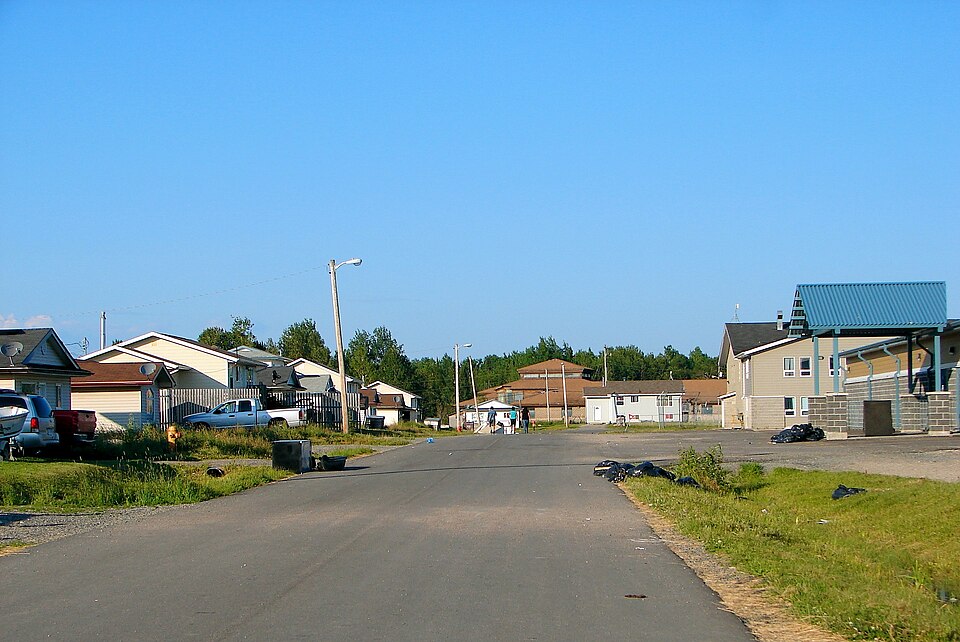
Long Lake Reserve58, July2012 P199 / Wikimedia Commons · CC BY-SA 3.0
The exact photographer record identifies Long Lake Reserve58. Historical public settlement/place context, not a current census, all community territory or a portrait of every member. Complete available960×642 JPEG imported unchanged. CSS display crops/overlays affect background/card copies only; the page displays the complete frame proportionally.
Image, association, and reuse record reviewed 2026-10-28.
Full photographs are displayed proportionally above. A translucent background copy may be cropped by the viewport; it does not replace the complete image or its record.
The visual treatment does not change the research status, evidence, or remaining gaps recorded in this profile.
Start reading here
A short purposeful path through selected actual-content works. Read annotations for community, period and inspection limits; this is not a complete history or community endorsement.
Then read a dated report of community leaders explaining educational priorities.
These are selected starting points. The full annotated collection, source perspectives, inspection limits and remaining research questions follow below. A starting guide is not an exhaustive history or community endorsement.
01
Building community-directed schools
The Nation’s education page dates its initial joint education authority with Ginoogaming First Nation to1997 and its independent administration toJuly2012. It describes Migizi Wazisin Elementary School’s development and the later addition of secondary programming at Migizi Miigwanan Secondary School. The account places families, community participation and land-based learning alongside classroom subjects. Its dated plans and old enrolment figures should not be read as a current school census.
At a July2025 education summit, Chief Judy Desmoulin and education director Claire Onabigon described learning opportunities extending from early childhood to adult education. Rick Garrick’s report attributes to them an emphasis on student well-being, Elders’ participation, language and a locally developed history curriculum. Onabigon also discussed a proposed language-and-culture department. These are dated participants’ accounts and plans, rather than an independent evaluation or confirmation that every proposal was completed.
Develop a community-directed history and annotated reading collection.
Review community-specific imagery and reuse terms before substantive profile publication.
Review detailed relationships, naming changes and historical regional connections.
Add community-authorized historical work beyond the current education-focused starting guide.
Inspect the original history curriculum and underlying archival sources before summarizing earlier periods.
Verify current programmes through newly dated publications; the undated education page includes old plans.
Cohort07: selected actual-content sources and specifically scoped cleared imagery provide a starting guide. Comprehensive history and community review remain open.
Follow the reading path
Sources & further reading
Open any title to read the original source. Annotations explain what each link can help you explore.
No Indigenous-led source is identified in this entry yet. This is a gap in this collection, and does not imply an absence of community knowledge or organization.
The opening Education Authority account traces the jointly established authority, later independent administration and elementary/secondary schools. Selected school descriptions explain community involvement and land-based learning. Some wording anticipates fall2020; staffing and enrolment are not treated as current. Linked agreements and the commissioned mural were not inspected or reproduced.
Inspection: Content reviewed for the stated scope
Scope: Read the complete opening Education Authority history and selected Elementary/Secondary School descriptions; staff directories, application links and financial-aid material are outside the substantive review.
Review recorded: October 28, 2026
Access note: Web reader timed out; ordinary direct HTML retrieval returned200 and the selected actual body was read locally. The page warns that the site is under construction. Undated text includes2020 plans; no claim of current staffing, enrolment or completed plans.
Rick Garrick reports Chief Judy Desmoulin and education director Claire Onabigon’s July2025 summit presentation about community-directed schools, adult learning and language priorities. Their evaluations are attributed to the speakers. The underlying summit recording, enrolment data and proposed department’s later implementation were not inspected.
Inspection: Content reviewed for the stated scope
Scope: Read the complete main article dated August5,2025, including speakers’ attributed accounts and future language/education plans.
Review recorded: October 28, 2026
Access note: Actual public HTML body read. Linked documents, photographs and underlying records were not reviewed or licensed through this text inspection. No login or reader paywall was encountered for the selected body.