Mississauga #8 First Nation’s starting path pairs a community-hosted historical compilation with its Lands and Resources page. These sources introduce particular memories of river-based work and the department’s stated stewardship responsibilities.
See each region’s evidence for historical or present-day scope.
Homeland / region
Ontario, Canada — Lake Huron region member listing
Research depth
Source guide
Source collection
2 annotated resources · 1 Indigenous-led
Inspected sources
2 substantive works · selected content reviewed
Initial adequacy
Still unfinished
Source review
October 28, 2026
Names & relationshipsListed as an Anishinabek Nation member First Nation. Membership alone is not treated as proof of Ojibwe, Anishinaabe or other ethnic identity.
A source guide for a deeper dive.This entry provides a brief orientation and an organized reading path. A comprehensive deep dive has not yet been completed. Follow the annotated sources and distinguish primary community accounts from outside reference material.
Still unfinished
A small actual-content starting path and specifically scoped credited photograph are available. Fuller history, source comparison and community review remain open; quantity does not establish completion.
Assessment recorded October 28, 2026. This is separate from research completion and community review.
Establish the compilation’s original author, publication history and fuller community context.
Inspect original records and further community-directed histories before extending personal recollections.
Review public land plans and monitoring reports separately; no legal boundary or current environmental condition is determined.
Backdrop photographs & credits
These photographs have individual, documented connections to this entry. Their captions and source records define the people, place, object, and period shown; no one photograph represents every community within a broader label.
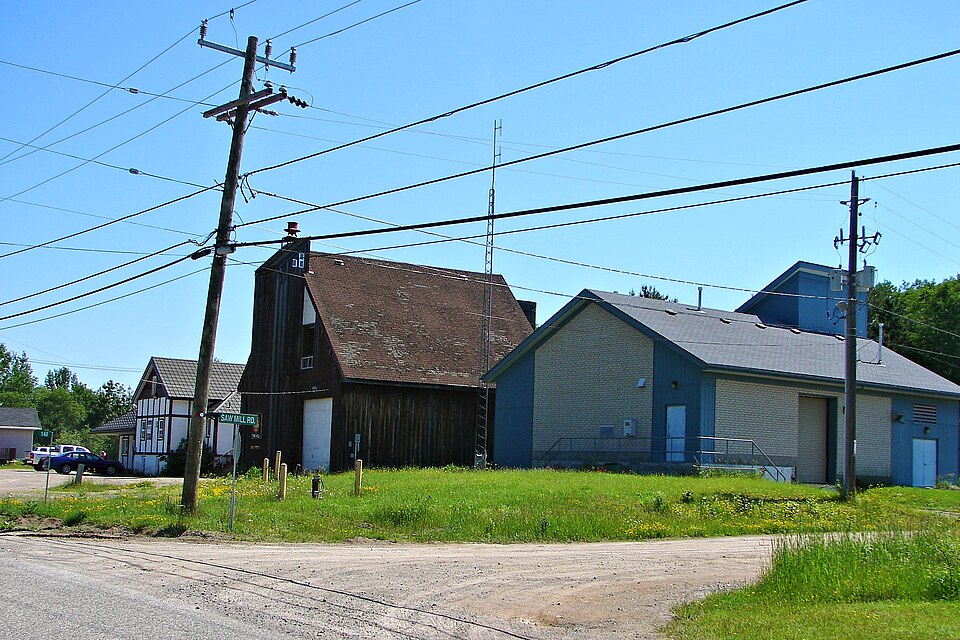
Exact photographer caption identifies Mississagi River8 Reserve west of Blind River. The Nation’s About Us explicitly bridges Mississauga #8/Mississagi names. A dated community landscape, not every Mississauga people, a current boundary or proof of ownership of each visible feature. Complete available960×640 JPEG imported unchanged. CSS display crops/overlays affect background/card copies only; the page displays the complete frame proportionally.
Image, association, and reuse record reviewed 2026-10-28.
Full photographs are displayed proportionally above. A translucent background copy may be cropped by the viewport; it does not replace the complete image or its record.
The visual treatment does not change the research status, evidence, or remaining gaps recorded in this profile.
Start reading here
A short purposeful path through selected actual-content works. Read annotations for community, period and inspection limits; this is not a complete history or community endorsement.
Connect historical land-based life with the department’s stated stewardship work.
These are selected starting points. The full annotated collection, source perspectives, inspection limits and remaining research questions follow below. A starting guide is not an exhaustive history or community endorsement.
01
A compilation of records and community memories
The linked history explains that it draws on records and older people’s recollections. One selected passage describes Dan Boyer travelling by canoe or boat along the Mississauga River for trapping. That named person’s experience introduces river-based work without standing for every family or period.
The Lands and Resources Department describes community land-use planning, land and water management, environmental monitoring and partnerships. It connects this work with land-based learning and historical knowledge. The page explains responsibilities and goals; underlying plans and environmental results remain to inspect.
Develop a community-directed history and annotated reading collection.
Review community-specific imagery and reuse terms before substantive profile publication.
Review detailed relationships, naming changes and historical regional connections.
Establish the compilation’s original author, publication history and fuller community context.
Inspect original records and further community-directed histories before extending personal recollections.
Review public land plans and monitoring reports separately; no legal boundary or current environmental condition is determined.
Cohort07: selected actual-content sources and specifically scoped cleared imagery provide a starting guide. Comprehensive history and community review remain open.
Follow the reading path
Sources & further reading
Open any title to read the original source. Annotations explain what each link can help you explore.
No Indigenous-led source is identified in this entry yet. This is a gap in this collection, and does not imply an absence of community knowledge or organization.
Community-hosted historical compilationMississauga First Nation (current public host; original compiler not identified in inspected pages)Source 1
The Nation’s linked compilation explains its use of records and older people’s accounts. The selected Earning a Living passage relates Dan Boyer’s river travel and trapping; personal memory is attributed, not universalized.
Inspection: Content reviewed for the stated scope
Scope: Actual73-page public PDF downloaded normally from the exact About Us link. Selectable introductionPDFp3 and complete Earning a Living passagePDFp37 read. No title/author/date page was supplied in this scan’s inspected beginning; current host calls it History of Mississauga FN.
Review recorded: October 28, 2026
Access note: Actual selected public content read without an account or challenge. Not full73-page reading or source-image review. Colonial quotations, population reconstructions, private membership detail and other unreviewed chapters are excluded; underlying interviews/records not inspected.
The department describes land-use planning, water and environmental monitoring, partnerships and land-based learning. Stated responsibilities do not establish legal scope, staffing levels or independently verified environmental outcomes.
Inspection: Content reviewed for the stated scope
Scope: Selected substantial Department Overview, Key Functions and stewardship paragraph, web lines37–68; later position descriptions read for context but not used for current staffing claims.
Review recorded: October 28, 2026
Access note: Actual selected public content read without an account or challenge. Underlying Land Code, environmental data, land plans and legal instruments uninspected; no present boundary, employment or regulatory advice.