Modoc histories connect the California–Oregon borderlands with forced removal and community rebuilding in Oklahoma, while other Modoc remained in Oregon. A Nation-led history and a park interpretation provide different starting perspectives. The Oklahoma-based Modoc Nation is one government context, not a substitute for every Modoc community.
See each region’s evidence for historical or present-day scope.
Homeland / region
Pacific Northwest / California / Oregon / Oklahoma
Research depth
Source guide
Source collection
4 annotated resources · 3 Indigenous-led
Inspected sources
2 substantive works · selected content reviewed
Initial adequacy
Still unfinished
Source review
October 28, 2026
A source guide for a deeper dive.This entry provides a brief orientation and an organized reading path. A comprehensive deep dive has not yet been completed. Follow the annotated sources and distinguish primary community accounts from outside reference material.
Still unfinished
A bounded actual-content starting path and specifically scoped credited picture are available. Fuller history, source comparison and community review remain open; quantity does not establish completion.
Assessment recorded October 28, 2026. This is separate from research completion and community review.
Add contemporary Modoc voices from both Oregon and Oklahoma without assuming one government represents all Modoc people.
Inspect original removal, agency and community records before adopting contested totals, superlatives or precise military/legal claims.
Backdrop photographs & credits
These photographs have individual, documented connections to this entry. Their captions and source records define the people, place, object, and period shown; no one photograph represents every community within a broader label.
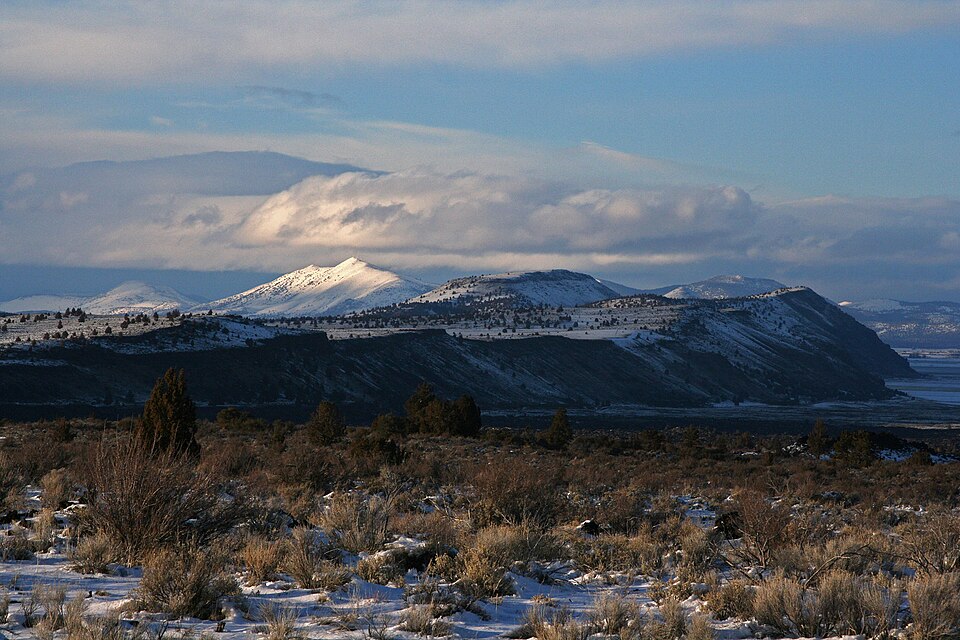
Views from the Lava Beds National Park Service; individual photographer not supplied / Wikimedia Commons. Public domain — U.S. government work.
A modern landscape of Lava Beds National Monument. Both Nation history and the park’s homeland account identify this landscape’s specific Modoc historical connection. It is not a reconstructed 1873 scene, a mapped boundary, a portrait of present citizens or a site-access invitation. Complete available retrieved JPEG imported unchanged. Background/card CSS crops and overlays affect presentation; the opened page retains the complete available frame proportionally.
Image, association, and reuse record reviewed 2026-10-28.
Full photographs are displayed proportionally above. A translucent background copy may be cropped by the viewport; it does not replace the complete image or its record.
The visual treatment does not change the research status, evidence, or remaining gaps recorded in this profile.
Start reading here
A short purposeful path through selected actual-content works. Read annotations for community, period and inspection limits; this is not a complete history or community endorsement.
The park account relates lakes, uplands and lava beds to seasonal life and explains different paths followed by Modoc people after the1870s.
These are selected starting points. The full annotated collection, source perspectives, inspection limits and remaining research questions follow below. A starting guide is not an exhaustive history or community endorsement.
01
Identity and context
Modoc people have homelands in the California–Oregon borderlands, with continuing communities in the West and Oklahoma.
Focus the next stage of research on: Modoc perspectives, war and displacement, language and contemporary governments. The sources below are selected reading paths; their authorship, dates and community scope should guide how they are used.
The park’s homeland account describes a seasonal movement between lakeside villages and upland camps, with fishing, gathering and hunting linked to different environments. It places the lava beds within this connected landscape. That interpretation helps explain a regional setting; it is not a reconstruction of every family’s life or a present political boundary.
Modoc Nation’s history recounts conflict, refuge in the lava beds and the forced removal of prisoners to Indian Territory after the 1873 war. The park account also notes that some Modoc did not take part in that conflict and remained in Oregon. These different experiences matter: one group’s removal should not stand for every Modoc history.
The Nation’s account follows later community organization, renewed federal recognition and the restoration of its historic church. It also identifies a tribal complex with archives and a library in Miami, Oklahoma. These are parts of the Nation’s own account of rebuilding; original administrative files and a fuller range of family histories remain to inspect.
Add contemporary Modoc voices from both Oregon and Oklahoma without assuming one government represents all Modoc people.
Inspect original removal, agency and community records before adopting contested totals, superlatives or precise military/legal claims.
Cohort11: selected actual-content reviews preserve their institutional/community scope. Existing source cards are upgraded at the same ID and URL where noted; repeated publications are not globally new works.
Follow the reading path
Sources & further reading
Open any title to read the original source. Annotations explain what each link can help you explore.
No Indigenous-led source is identified in this entry yet. This is a gap in this collection, and does not imply an absence of community knowledge or organization.
The Oklahoma-based Nation relates its California–Oregon homeland, the Modoc War, removal, survival and later institutional rebuilding. Its particular community history should not be collapsed into every Modoc experience.
Inspection: Content reviewed for the stated scope
Scope: Selected actual History body: opening homeland/livelihood paragraphs;1872–1873 conflict/removal sequence through arrival at Quapaw Agency; later 1909 return, termination/recognition, church restoration and tribal complex/library paragraphs. Intervening agency narrative read as context, not independently corroborated; cemetery specifics and comparative/superlative claims not used.
Review recorded: October 28, 2026
Access note: Normal public HTTP 200 body read. No underlying treaties, military trial, passenger lists, cemetery records, agency investigations or contemporary legal instruments inspected. Population/casualty totals, currency conversions, absolute warfare claims and outdated wording about lost language/culture are not adopted. This is a Nation-authored history, not an assertion that all Modoc belong to its government.
Community or Indigenous-organization perspective linked for this entry. Use “Modoc Nation Index Page” to begin with the publisher’s own account; check whether its scope is one community or a wider people.
Community or Indigenous-organization perspective linked for this entry. Use “CONSTITUTION OF THE MODOC NATION” to begin with the publisher’s own account; check whether its scope is one community or a wider people.
The park account relates lakes, uplands and lava beds to seasonal life and explains different paths followed by Modoc people after the1870s. It complements a Nation-led account while retaining its federal-interpretive perspective.
Inspection: Content reviewed for the stated scope
Scope: Main introduction, Seasonal Life, and Modern Modoc Peoples units (Oklahoma and Klamath Tribes) through Lava Beds Homeland conclusion. Using Plants and Animals read only at general material-use level; spiritual-site references and procedural details excluded from synthesis.
Review recorded: October 28, 2026
Access note: Normal public HTTP 200 body read. No archaeological sites, original military records, living-history demonstrations, private ceremonies, maps or current government totals inspected. Historical labels on this older interpretive page are not substituted for a government’s present preferred name; population/casualty figures and universal descriptions are not adopted.