First Peoples community · Added to the original list
Moruga First Peoples
The Moruga First Peoples reading route introduces a community account, selected public-policy representations and an individual oral-history interview. Organizational naming and leadership claims need careful dating and comparison; this guide does not identify one body as the voice of all Indigenous peoples in Trinidad and Tobago.
See each region’s evidence for historical or present-day scope.
Homeland / region
Caribbean / Trinidad and Tobago — Moruga community context
Research depth
Source guide
Source collection
3 annotated resources · 1 Indigenous-led
Inspected sources
3 substantive works · selected content reviewed
Initial adequacy
Still unfinished
Source review
October 29, 2026
Names & relationshipsThe report identifies the Moruga First Peoples and their heritage work in and around Moruga. This verifies a distinct named community route; it does not establish a separate state government, universal ancestry label or present officeholders.
A source guide for a deeper dive.This entry provides a brief orientation and an organized reading path. A comprehensive deep dive has not yet been completed. Follow the annotated sources and distinguish primary community accounts from outside reference material.
Still unfinished
Selected actual-content sources and a specifically scoped credited image provide a starting route. Fuller histories and comparison remain open; quantity does not establish completion or endorsement.
Assessment recorded October 29, 2026. This is separate from research completion and community review.
Develop a community-led or appropriately scoped historical introduction and an annotated actually inspected reading collection.
Verify individually relevant imagery, creator and reuse terms before a substantive guide is published.
Verify fuller naming, organizational relationships and present-day context; identity checks do not establish ancestry, membership, representation, jurisdiction or community endorsement.
Seek fuller community-authored history and contemporary institutional context.
The cleared photograph supplies Moruga place context, not a photograph of community members; fuller community-directed history and contemporary institutional context remain open.
Backdrop images & credits
These images have individual, documented connections to this entry. Their captions and source records define the people, place, object, and period shown; no one image represents every community within a broader label.
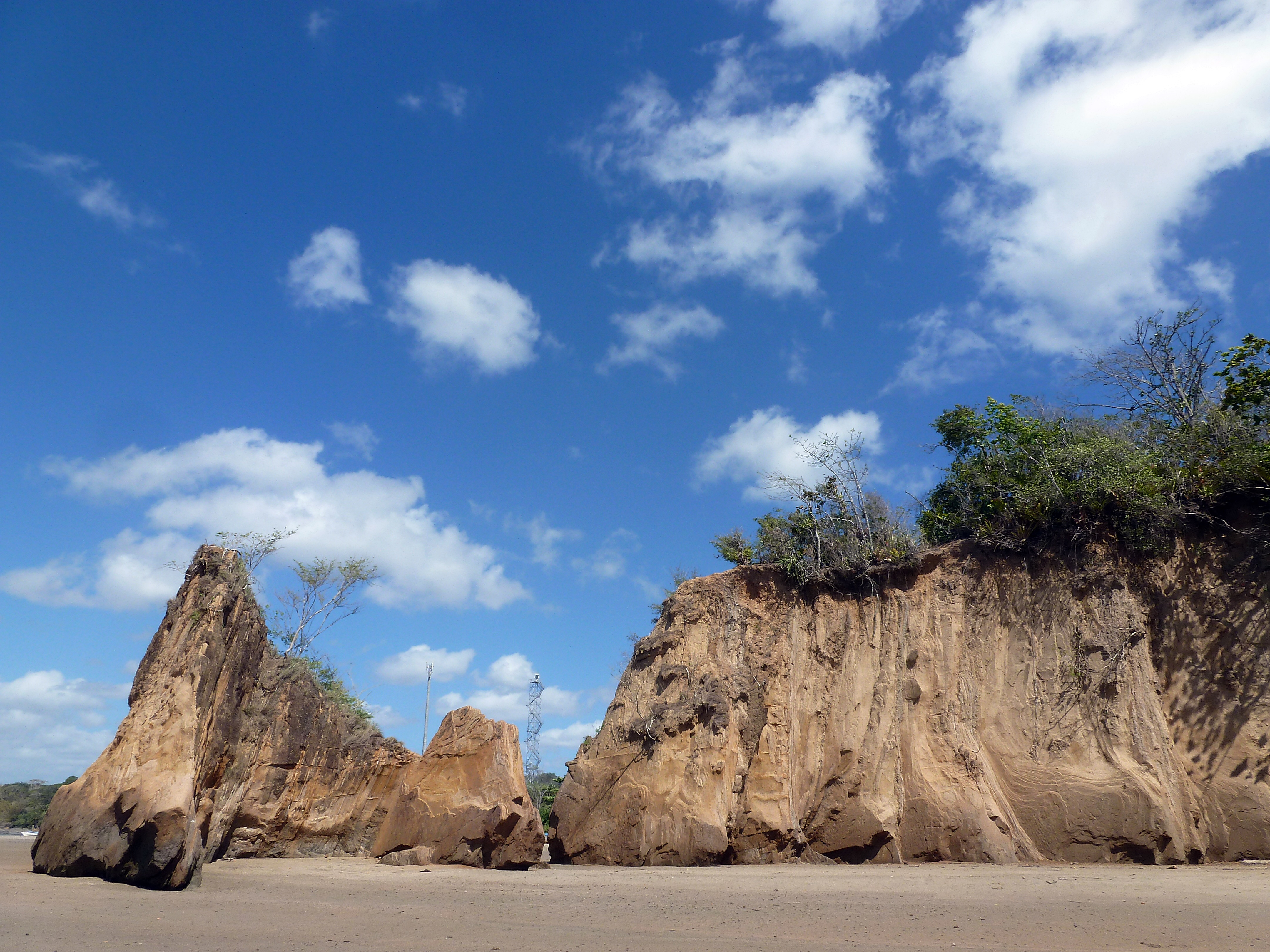
Moruga coastline, 25 March 2016 Kalamazadkhan, Moruga coastline, 25 March 2016. Own-work photograph via Wikimedia Commons, Creative Commons Attribution-ShareAlike 4.0 International. Original JPEG retained unchanged.
A specific modern Moruga coastal setting. The community’s own history account connects its organization with Moruga families, and selected parliamentary content discusses Moruga heritage initiatives. The photograph is not a community portrait, a cultural object, a ceremony, a boundary, evidence of land ownership or exclusive occupation, or an image representing all Warao people.
Image, association, and reuse record reviewed 2026-10-29.
Full images are displayed proportionally above. A translucent background copy may be cropped by the viewport; it does not replace the complete image or its record.
The visual treatment does not change the research status, evidence, or remaining gaps recorded in this profile.
01
A community account from Moruga
The First Peoples Sovereign Nation website traces its organization to Moruga families and describes an expanding network of relationships. Its historical and institutional claims are self-descriptions; the page does not establish authority over every Indigenous community in Trinidad and Tobago.
Moruga’s2022 submission described heritage-preservation work and asked for additional assistance. The record is a dated account of priorities, not proof of subsequent delivery.
In a published interview excerpt, Eric Lewis discusses collecting local stories. The editor explains that this is only part of a longer conversation. Read it as an attributed individual account; personal beliefs and recollections do not automatically establish historical events or a shared community position.
Develop a community-led or appropriately scoped historical introduction and an annotated actually inspected reading collection.
Verify individually relevant imagery, creator and reuse terms before a substantive guide is published.
Verify fuller naming, organizational relationships and present-day context; identity checks do not establish ancestry, membership, representation, jurisdiction or community endorsement.
Seek fuller community-authored history and contemporary institutional context.
The cleared photograph supplies Moruga place context, not a photograph of community members; fuller community-directed history and contemporary institutional context remain open.
Follow the reading path
Sources & further reading
Open any title to read the original source. Annotations explain what each link can help you explore.
No Indigenous-led source is identified in this entry yet. This is a gap in this collection, and does not imply an absence of community knowledge or organization.
Indigenous-ledFirst Peoples Sovereign Nation in Trinidad and TobagoSource 1
A self-published account connects the organization’s origins with Moruga families and describes education, environmental work and wider connections.
Inspection: Content reviewed for the stated scope
Scope: Actual History of the First peoples Sovereign nation body through organizational aims; leaders list inspected only to identify claimed roles. No private ceremonies, genealogies or underlying records read.
Review recorded: October 29, 2026
Access note: The community page contains an internally impossible2022-to2012 succession date. A separate leadership page gives2023, and published reporting records contested leadership. No exact succession chronology, sole-representation, genetic-ancestry, pure-descent, universal-Warao, government-recognition or current-office claim is adopted. Website photos marked all rights reserved are not reproduced.
The report preserves Moruga’s request for greater support for heritage initiatives.
Inspection: Content reviewed for the stated scope
Scope: Printed/PDF pp18–19 sections3.16 and3.20, plus pp25–26 committee discussion; p10 identity paragraph already reviewed earlier and not recounted as a new work.
Review recorded: October 29, 2026
Access note: Selected public body and attributed submissions only, not the entire79-page report or every appendix. A cached normalHTTP200 PDF from the prior identity task was reused for new actual-content reading; today a direct original request returned403 and stopped. Dated testimony, plans and recommendations are not present law, completed transfers, current funding or independently adjudicated facts. No ancestry-purity, exclusive-representation, current-officer or universal-Warao claims adopted.
An edited personal interview excerpt and the interviewer’s account of collecting stories provide one individual perspective from Moruga.
Inspection: Content reviewed for the stated scope
Scope: Actual July29,2024 published excerpt, interviewer’s process/context and Eric Lewis discussion of researching local oral histories; not the full three-hour interview or book.
Review recorded: October 29, 2026
Access note: Personal memories, beliefs and supernatural narratives are attributed, not independently verified history. No ceremonial-object details, claims of exclusive leadership, ritual instructions or supernatural events are adopted as facts. Earlier title Prince of Moruga is dated source wording.