Nuu-chah-nulth connects distinct communities on western Vancouver Island. This small path introduces the Tribal Council’s institutional history and one Tla-o-qui-aht stewardship example; neither stands for every nation, language variety or community experience.
See each region’s evidence for historical or present-day scope.
Homeland / region
British Columbia / Vancouver Island
Research depth
Source guide
Source collection
4 annotated resources · 3 Indigenous-led
Inspected sources
2 substantive works · selected content reviewed
Initial adequacy
Still unfinished
Source review
October 28, 2026
A source guide for a deeper dive.This entry provides a brief orientation and an organized reading path. A comprehensive deep dive has not yet been completed. Follow the annotated sources and distinguish primary community accounts from outside reference material.
Still unfinished
A bounded actual-content starting path and specifically scoped credited picture are available. Fuller history, source comparison and community review remain open; quantity does not establish completion.
Assessment recorded October 28, 2026. This is separate from research completion and community review.
Develop separate, community-directed histories and language reading paths across the distinct nations.
Inspect original organizational and land-protection records before expanding institutional or legal claims.
Compare community evaluations of stewardship without treating stated goals or counters as demonstrated ecological outcomes.
Backdrop photographs & credits
These photographs have individual, documented connections to this entry. Their captions and source records define the people, place, object, and period shown; no one photograph represents every community within a broader label.
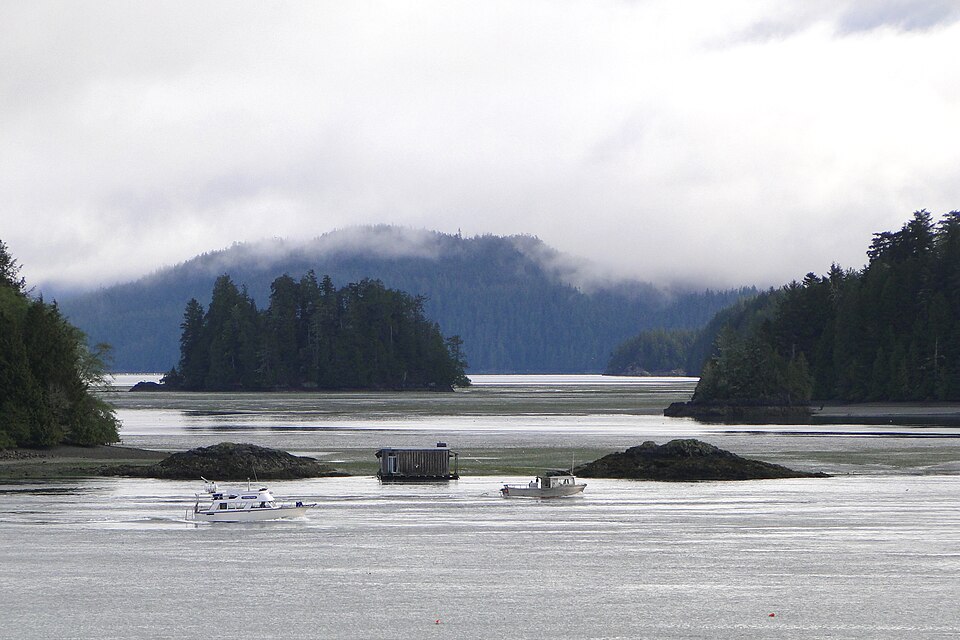
Clayoquot Sound near Tofino,2010 Adam Jones, Ph.D. / Wikimedia Commons · CC BY-SA 3.0
One photographer-identified Clayoquot Sound landscape near Tofino. Tla-o-qui-aht Tribal Parks explicitly locates its work in Clayoquot Sound, while NTC lists Tla-o-qui-aht among participating nations. Not a claimed reserve shoreline, legal boundary, all Nuu-chah-nulth communities or proof of ecological results. Complete available retrieved JPEG imported unchanged. Background/card CSS crops and overlays affect presentation; the opened page retains the complete available frame proportionally.
Image, association, and reuse record reviewed 2026-10-28.
Full photographs are displayed proportionally above. A translucent background copy may be cropped by the viewport; it does not replace the complete image or its record.
The visual treatment does not change the research status, evidence, or remaining gaps recorded in this profile.
Start reading here
A short purposeful path through selected actual-content works. Read annotations for community, period and inspection limits; this is not a complete history or community endorsement.
Follow one specifically named Tla-o-qui-aht stewardship example; it is not a survey of every Nuu-chah-nulth community.
These are selected starting points. The full annotated collection, source perspectives, inspection limits and remaining research questions follow below. A starting guide is not an exhaustive history or community endorsement.
01
Identity and context
Nuu-chah-nulth is a wider identity connecting distinct nations on western Vancouver Island.
Focus the next stage of research on: Individual nations, language, maritime homelands and contemporary political institutions. The sources below are selected reading paths; their authorship, dates and community scope should guide how they are used.
The Tribal Council’s chronology traces an alliance formed in 1958, incorporation as a society in 1973 and adoption of its present institutional name in 1979. Its own explanation describes shared services and advocacy for participating nations. These organizational arrangements should be distinguished from the wider people and individual governments.
One community’s stewardship account in Clayoquot Sound
Tla-o-qui-aht Tribal Parks situates its work in Clayoquot Sound and traces the first park declaration to 1984. Its account describes a contemporary Guardians programme established in 2008 and work involving restoration, monitoring and visitor education. These are the programme’s own history and stated activities, not an independent assessment of all outcomes.
Develop separate, community-directed histories and language reading paths across the distinct nations.
Inspect original organizational and land-protection records before expanding institutional or legal claims.
Compare community evaluations of stewardship without treating stated goals or counters as demonstrated ecological outcomes.
Cohort09: selected actual-content reviews preserve their institutional/community scope. Existing source cards are upgraded at the same ID and URL where noted; repeated publications are not globally new works.
Follow the reading path
Sources & further reading
Open any title to read the original source. Annotations explain what each link can help you explore.
No Indigenous-led source is identified in this entry yet. This is a gap in this collection, and does not imply an absence of community knowledge or organization.
Historical context for this entry. Read “Nuu-chah-nulth Tribal Council - Province of British Columbia” with attention to the author, period covered, and communities named; compare with community-published accounts where available.
The Council’s chronology traces an alliance into a shared-service institution. Its timeline concerns this organization rather than one government for every Nuu-chah-nulth community.
Inspection: Content reviewed for the stated scope
Scope: Complete published historical timeline body lines12–69,1958–2011; synthesis selects 1958 alliance,1973 incorporation,1974 newspaper and 1979 name change.
Review recorded: October 28, 2026
Access note: Public HTML read normally. Underlying incorporation records, funding agreements and treaty texts were not inspected. Claims to national firsts and present legal powers or service outcomes are not adopted.
Supporting explanation distinguishes the Council’s shared services and participating nations from the wider people. Membership lists and programme descriptions can change.
Inspection: Supporting or limited review; see scope
Scope: Actual institutional explanation lines14–50, including region lists and three service roles.
Review recorded: October 28, 2026
Access note: Undated public page read. Current membership/population totals, availability of individual services and claimed cost savings are not adopted. Supporting institutional context, excluded from the substantive reading-path count.
One named community’s own stewardship account introduces land protection and Guardians work in Clayoquot Sound. It is a case study within a wider reading route, not all Nuu-chah-nulth histories.
Inspection: Content reviewed for the stated scope
Scope: Selected complete prose sections History of Land Protection and Indigenous Land Care, lines46–81; narrative dates first park declaration to 1984 and contemporary Guardians programme to 2008.
Review recorded: October 28, 2026
Access note: Public HTML read. Linked videos,2024 declaration, interactive map and underlying legal/ecological records remain uninspected. Programme aims and self-described interpretations are attributed; animated metrics, legal boundaries and ecological outcomes are not adopted. Site photographs are not licensed by this source review.