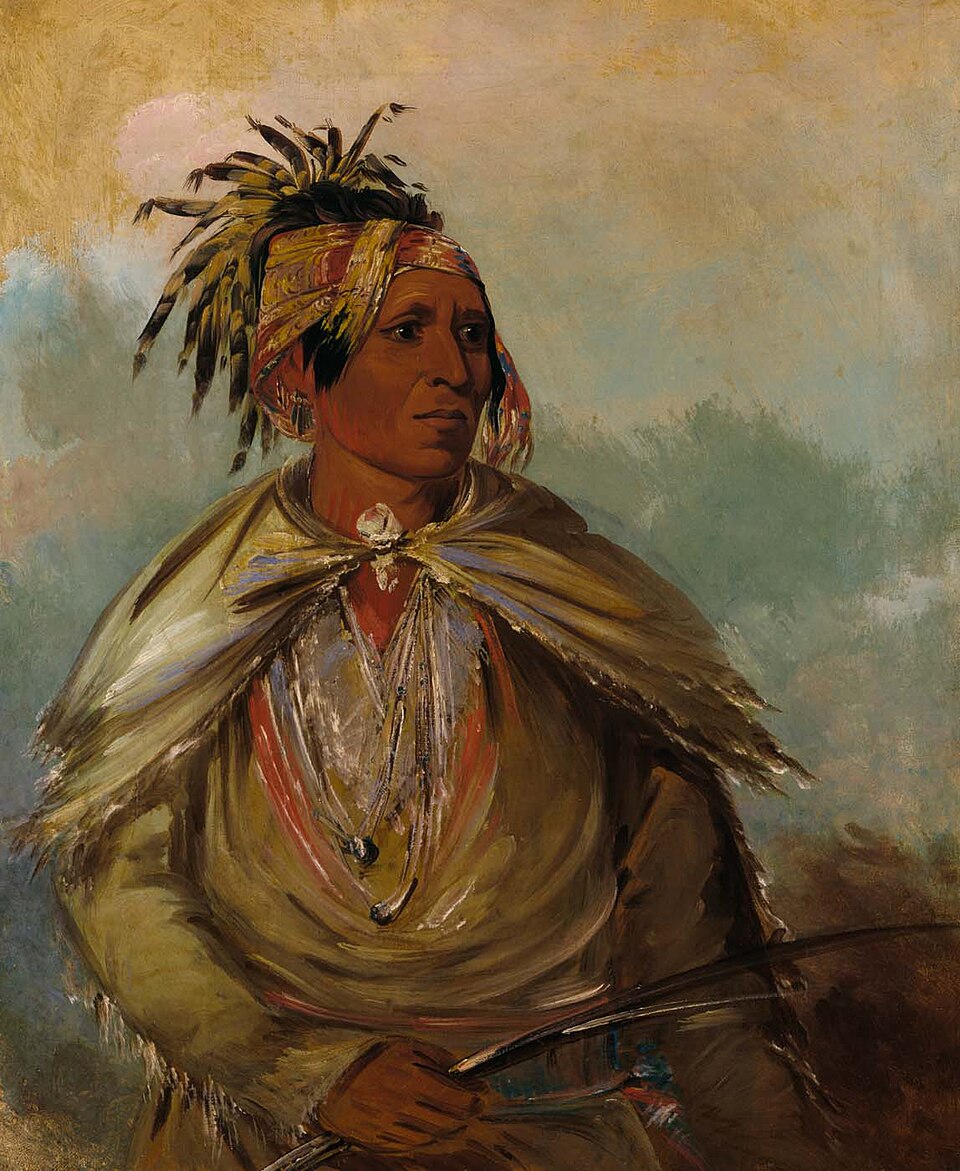
Peoria names a historical people and also appears in the present Peoria Tribe of Indians of Oklahoma, a confederated government with Kaskaskia, Piankashaw and Wea histories. This path combines critically scoped historical references with the Tribe’s own Peewaaliaataweenki learning introduction.
See each region’s evidence for historical or present-day scope.
Homeland / region
Great Lakes / Oklahoma
Research depth
Source guide
Source collection
5 annotated resources · 2 Indigenous-led
Inspected sources
3 substantive works · selected content reviewed
Initial adequacy
Still unfinished
Source review
October 28, 2026
A source guide for a deeper dive.This entry provides a brief orientation and an organized reading path. A comprehensive deep dive has not yet been completed. Follow the annotated sources and distinguish primary community accounts from outside reference material.
Still unfinished
A bounded actual-content starting path and specifically scoped credited picture are available. Fuller history, source comparison and community review remain open; quantity does not establish completion.
Assessment recorded October 28, 2026. This is separate from research completion and community review.
Resolve conflicting termination/restoration dates using the original federal acts and a community historical account.
Read Nation-published histories of the distinct confederated peoples rather than flattening them into one original community.
Inspect relevant nineteenth-century school records and community responses; the county hazard-plan source remains an unread lead.
Backdrop images & credits
These images have individual, documented connections to this entry. Their captions and source records define the people, place, object, and period shown; no one image represents every community within a broader label.
Pah-mee-ców-ee-tah, Man Who Tracks, a Chief, 1830 George Catlin / Smithsonian American Art Museum, Gift of Mrs.Joseph Harrison, Jr. · Public Domain
SAAM identifies Man Who Tracks as a Peoria chief and dates this outside historical painting 1830. Not a documentary photograph, Peoria-made artwork, a current government leader or universal Peoria appearance. The primary item resolves a stray Commons depicted-person field naming Catlin; the sitter is not identified as Catlin. Complete available retrieved JPEG imported unchanged. Background/card CSS crops and overlays affect presentation; the opened page retains the complete available frame proportionally.
Image, association, and reuse record reviewed 2026-10-28.
Full images are displayed proportionally above. A translucent background copy may be cropped by the viewport; it does not replace the complete image or its record.
The visual treatment does not change the research status, evidence, or remaining gaps recorded in this profile.
Start reading here
A short purposeful path through selected actual-content works. Read annotations for community, period and inspection limits; this is not a complete history or community endorsement.
Compare the reference account critically, avoiding its outdated racial framing and unresolved dates.
These are selected starting points. The full annotated collection, source perspectives, inspection limits and remaining research questions follow below. A starting guide is not an exhaustive history or community endorsement.
01
Identity and context
The Peoria Tribe of Indians of Oklahoma continues the histories of multiple constituent peoples of the Illinois Country.
Focus the next stage of research on: Removal, confederated histories and contemporary language and cultural work. The sources below are selected reading paths; their authorship, dates and community scope should guide how they are used.
The education guide and historical encyclopedia describe the nineteenth-century union of Peoria, Kaskaskia, Piankashaw and Wea communities. The modern Peoria Tribe should therefore not be reduced to the historical Peoria people alone. Separate names remain useful routes into the shared government’s history.
These references trace movement through Missouri and Kansas to Indian Territory, but disagree on the later termination and restoration chronology. Original acts are needed to resolve that conflict. The encyclopedia also uses outdated racial language, which does not define contemporary Peoria identity and is not adopted here.
The Tribe’s Culture/Language page introduces Peewaaliaataweenki beginner study through weekly meetings, practice and instructor feedback. Listening, reading and writing are explicit learning aims. Readers should follow the programme’s own current information for access, rather than assume an enrollment place or a particular outcome.
Resolve conflicting termination/restoration dates using the original federal acts and a community historical account.
Read Nation-published histories of the distinct confederated peoples rather than flattening them into one original community.
Inspect relevant nineteenth-century school records and community responses; the county hazard-plan source remains an unread lead.
Cohort10: selected actual-content reviews preserve their institutional/community scope. Existing source cards are upgraded at the same ID and URL where noted; repeated publications are not globally new works.
Follow the reading path
Sources & further reading
Open any title to read the original source. Annotations explain what each link can help you explore.
No Indigenous-led source is identified in this entry yet. This is a gap in this collection, and does not imply an absence of community knowledge or organization.
An official navigation route for the present government. The inspected news/navigation page does not itself provide a substantive history and is excluded from the inspected-work count.
Inspection: Supporting or limited review; see scope
Scope: Actual homepage navigation, introductory labels and news listings; no substantial historical body found.
Review recorded: October 28, 2026
Access note: Normal HTTP200 HTML/text inspected. Linked news articles and departments were not all read; this is supporting navigation only.
Historical context for this entry. Read “2.1.4 History” with attention to the author, period covered, and communities named; compare with community-published accounts where available.
The selected opening history explains the nineteenth-century confederation of Kaskaskia, Peoria, Piankashaw and Wea. Other chronological statements conflict with the historical encyclopedia and require correction through original records.
Inspection: Content reviewed for the stated scope
Scope: Actual PDF pp.1–2 of the nine-page July 2014 guide: confederation, Kansas pressures and movement to Indian Territory. No full-file reading claimed.
Review recorded: October 28, 2026
Access note: Normal HTTP200 PDF/text read. The guide’s termination/restoration dates (1950/1972) conflict with OHS (1956/1978); neither legal chronology is adopted here. Maps, original treaties, acts, linked resources and generalized ancestry/religion claims are not used.
The Tribe describes a structured beginner language course combining classroom or online meetings with listening, reading and writing work. This offers a direct community learning route rather than an outside summary.
Inspection: Content reviewed for the stated scope
Scope: Actual programme body reader lines23–58: course format, skills, assignments, instructor feedback and stated enrollment preferences. Unrelated featured-biography paragraph excluded.
Review recorded: October 28, 2026
Access note: Actual indexed body read; one ordinary reader request returned403, a later normal reader request supplied the body. No login, enrollment form, lesson, recording or assessment was inspected. Current availability, schedule and learning outcomes are not confirmed.
Glen Roberson’s reference account supplies a concise migration, confederation and schooling narrative. It also contains outdated racial and generalized religious framing that should be questioned rather than repeated as community identity.
Inspection: Content reviewed for the stated scope
Scope: Actual complete short article body, reader lines99–106, author and publication/update information108, 130–131; synthesis uses movement/confederation and school paragraphs100–103 only.
Review recorded: October 28, 2026
Access note: Public body read; published 2010, updated 2020. Underlying treaties, school records and cited books were not inspected. Racial-purity language, generalized ancestry/religion, old membership totals and current governance claims are not adopted. Its legal chronology conflicts with the 2014 education guide and remains unresolved.
Related entries may represent alternate names, constituent communities, wider groupings, or historical connections. Read the naming notes before treating entries as equivalent.
Robey’s Atlas of Indigenous North America · Compiled October 19, 2026 · Peoria