Ponca people continue through distinct Nebraska and Oklahoma governments alongside shared histories and relationships. These readings pair Nebraska history and cultural work with an Oklahoma constitutional document and a dated report involving both communities.
See each region’s evidence for historical or present-day scope.
Homeland / region
Great Plains / Nebraska / Oklahoma
Research depth
Source guide
Source collection
6 annotated resources · 6 Indigenous-led
Inspected sources
4 substantive works · selected content reviewed
Initial adequacy
Still unfinished
Source review
October 28, 2026
A source guide for a deeper dive.This entry provides a brief orientation and an organized reading path. A comprehensive deep dive has not yet been completed. Follow the annotated sources and distinguish primary community accounts from outside reference material.
Still unfinished
A bounded actual-content starting path and specifically scoped credited picture are available. Fuller history, source comparison and community review remain open; quantity does not establish completion.
Assessment recorded October 28, 2026. This is separate from research completion and community review.
Add Oklahoma Ponca history and more Nebraska/community voices.
Resolve conflicting termination-year wording through primary records before publishing an exact date.
Read complete amendments and primary court/history records before legal/enrollment interpretation.
Confluence photo is modern northern regional context, not all Ponca communities or Oklahoma government land/boundaries.
Backdrop photographs & credits
These photographs have individual, documented connections to this entry. Their captions and source records define the people, place, object, and period shown; no one photograph represents every community within a broader label.
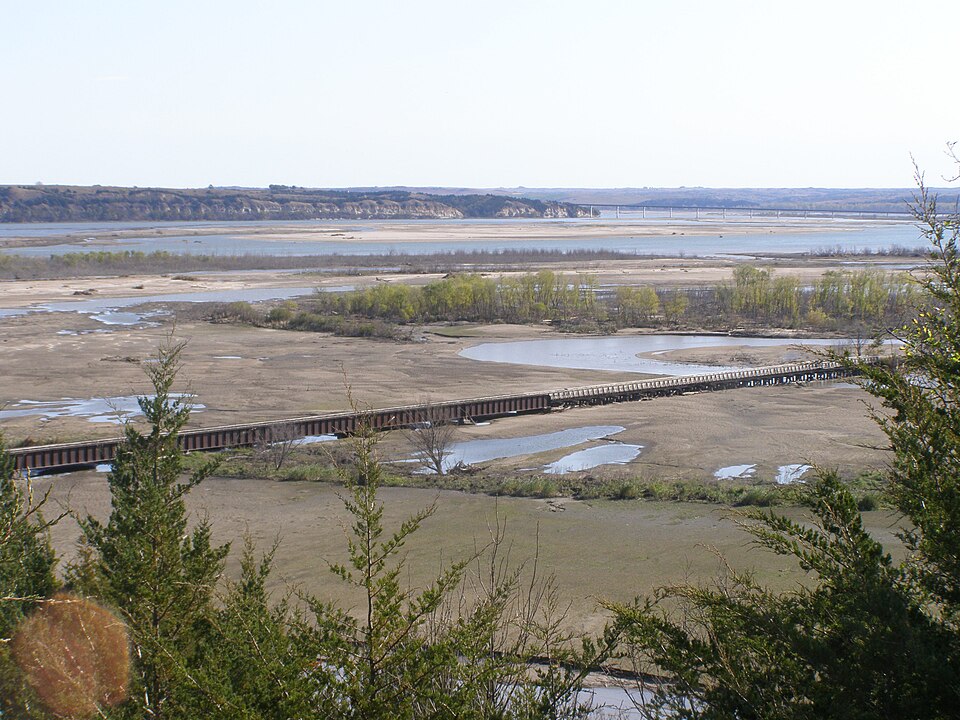
Niobrara and Missouri River confluence Chris Light / Wikimedia Commons — CC BY-SA 4.0
Modern northern regional-waterway context for Nebraska Ponca Niobrara history. Not all Ponca homelands, Oklahoma Ponca land, territorial boundary or undisturbed historical landscape. Complete available retrieved JPEG imported unchanged. Background/card CSS crops and overlays affect presentation; the opened page retains the complete available frame proportionally.
Image, association, and reuse record reviewed 2026-10-28.
Full photographs are displayed proportionally above. A translucent background copy may be cropped by the viewport; it does not replace the complete image or its record.
The visual treatment does not change the research status, evidence, or remaining gaps recorded in this profile.
Start reading here
A short purposeful path through selected actual-content works. Read annotations for community, period and inspection limits; this is not a complete history or community endorsement.
Read an attributed event account involving both governments.
These are selected starting points. The full annotated collection, source perspectives, inspection limits and remaining research questions follow below. A starting guide is not an exhaustive history or community endorsement.
01
Identity and context
Ponca people continue through distinct contemporary governments in Nebraska and Oklahoma.
Focus the next stage of research on: Ponca-authored history, forced removal, return and language. The sources below are selected reading paths; their authorship, dates and community scope should guide how they are used.
The Nebraska Tribe recounts forced removal in 1877 and Standing Bear’s 1879 return to the Niobrara area. Read this alongside Oklahoma sources: return north did not erase relatives and community life in Oklahoma. More primary records are needed before making universal legal or precise present-boundary claims.
The selected constitution identifies the Ponca Tribe of Indians of Oklahoma and its Business Committee. Nebraska publications concern a different contemporary government. The heading dates ratification to 1950 and the file includes later amendment language, so its filename cannot establish the complete history or present legal effect.
The Nebraska Culture Department connects language learning with archives, genealogy assistance and preservation. Its explanation offers a route into continuing cultural work. Linked dictionaries, videos and collections have separate access conditions and are not automatically reviewed or licensed by this guide.
The 2022 museum-return report names delegations from both governments and community reflections on belonging and healing. These are public examples of relationships across government contexts. They remain attributed perspectives on that event, not a claim that every Ponca person shares one view.
Add Oklahoma Ponca history and more Nebraska/community voices.
Resolve conflicting termination-year wording through primary records before publishing an exact date.
Read complete amendments and primary court/history records before legal/enrollment interpretation.
Confluence photo is modern northern regional context, not all Ponca communities or Oklahoma government land/boundaries.
Cohort10: selected actual-content reviews preserve their institutional/community scope. Existing source cards are upgraded at the same ID and URL where noted; repeated publications are not globally new works.
Follow the reading path
Sources & further reading
Open any title to read the original source. Annotations explain what each link can help you explore.
No Indigenous-led source is identified in this entry yet. This is a gap in this collection, and does not imply an absence of community knowledge or organization.
Indigenous-ledPonca Tribe of Indians of OklahomaSource 1
Selected constitutional text identifies the Oklahoma government and governing committee. The filename is not the original ratification date; selected text is not current legal advice.
Inspection: Content reviewed for the stated scope
Scope: Actual9-page PDF: selectedpp1–3, headingRatifiedSeptember20, 1950, preamble, ArticleI name and ArticleIII Business Committee. ArticleII and beginningIV read for context; eligibility detail not republished. Remaining6pages unreviewed.
Review recorded: October 28, 2026
Access note: Actual selected public body inspected 2026-10-28 through normal HTTP200 retrieval, web reader or stated PDF pages. No bypass or outreach. Linked works, original records, audio and pictures were not automatically inspected or licensed. File includes later amendment language;2022 filename does not imply origin or unchanged 1950 law. No present citizenship eligibility or complete constitutional/current legal determination.
Community or Indigenous-organization perspective linked for this entry. Use “Tribal Documents - Ponca Tribe” to begin with the publisher’s own account; check whether its scope is one community or a wider people.
Community or Indigenous-organization perspective linked for this entry. Use “Homepage - Ponca Tribe” to begin with the publisher’s own account; check whether its scope is one community or a wider people.
The Nebraska Tribe describes forced removal, Standing Bear’s return and continuing institutions. It is one government’s account, not a substitute for Oklahoma Ponca perspectives.
Inspection: Content reviewed for the stated scope
Scope: Actual history body: selected 1877 removal/1879 return, Niobrara connection and later restoration/continuity. Broad first-person-in-law wording and conflicting termination-year entries not adopted.
Review recorded: October 28, 2026
Access note: Actual selected public body inspected 2026-10-28 through normal HTTP200 retrieval, web reader or stated PDF pages. No bypass or outreach. Linked works, original records, audio and pictures were not automatically inspected or licensed. Timeline says 1962 termination while another site account says 1966; exact chronology needs primary review. No current population, universal legal-first claim or boundary inferred; underlying court text uninspected.
Actual purpose, mission and functions connect language learning, archives, genealogy assistance and public education. Linked resources are not all inspected works or cleared media.
Inspection: Content reviewed for the stated scope
Scope: Actual Our Purpose/Culture Department functions and Mission Statement. Language-resource labels read for scope. Dictionary, keyboard, videos, museum/event/programme links not substantively reviewed or counted separately.
Review recorded: October 28, 2026
Access note: Actual selected public body inspected 2026-10-28 through normal HTTP200 retrieval, web reader or stated PDF pages. No bypass or outreach. Linked works, original records, audio and pictures were not automatically inspected or licensed. Earlier/culture/redirects to this canonicalURL; one work. Undated aims are not outcomes/current participation or complete collection access. No recordings/dictionary entries/photos reproduced.
The 2022 report names delegations from both Ponca governments and attributes perspectives on a museum return to community members. Shared relationships do not collapse the governments into one.
Inspection: Content reviewed for the stated scope
Scope: Complete actual article datedJune15, 2022. Selected both-government participation and attributed interpretations of identity/healing. Artifact pictures, ceremony details and unpublished provenance records not copied or treated as inspected.
Review recorded: October 28, 2026
Access note: Actual selected public body inspected 2026-10-28 through normal HTTP200 retrieval, web reader or stated PDF pages. No bypass or outreach. Linked works, original records, audio and pictures were not automatically inspected or licensed. Older root-levelURL redirects to this/news/URL; one work. Reported event not proof of current display or general legal outcome. Textual reading does not license artwork/artifact imagery.