This starting path follows the Snoqualmie Indian Tribe’s own accounts of political recognition, language learning and advocacy around Snoqualmie Falls. The sources preserve distinct institutional, historical and cultural perspectives; they do not replace a fuller community history.
See each region’s evidence for historical or present-day scope.
Homeland / region
Pacific Northwest / Washington
Research depth
Source guide
Source collection
5 annotated resources · 5 Indigenous-led
Inspected sources
3 substantive works · selected content reviewed
Initial adequacy
Still unfinished
Source review
October 28, 2026
A source guide for a deeper dive.This entry provides a brief orientation and an organized reading path. A comprehensive deep dive has not yet been completed. Follow the annotated sources and distinguish primary community accounts from outside reference material.
Still unfinished
A bounded actual-content starting path and specifically scoped credited picture are available. Fuller history, source comparison and community review remain open; quantity does not establish completion.
Assessment recorded October 28, 2026. This is separate from research completion and community review.
Read original recognition documents and compare selected community-authored histories.
Expand language and family perspectives without reproducing restricted knowledge or assuming one account speaks for everyone.
Inspect primary land/planning records before adding boundaries, current ownership or later outcomes.
Backdrop photographs & credits
These photographs have individual, documented connections to this entry. Their captions and source records define the people, place, object, and period shown; no one photograph represents every community within a broader label.
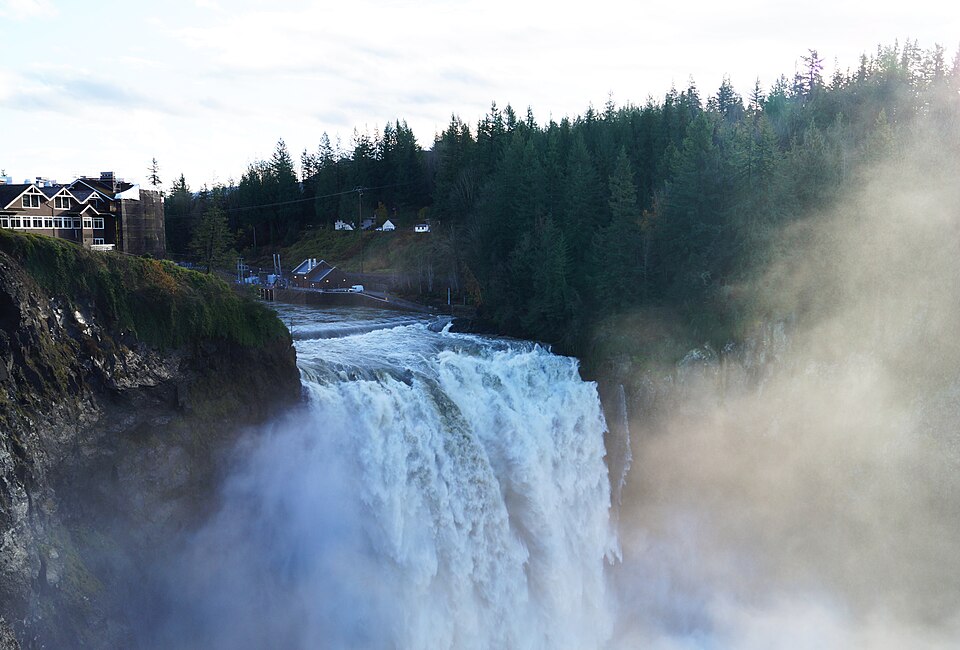
Snoqualmie Falls,2017 Kpsudeep / Wikimedia Commons · CC BY-SA 4.0
Photographer-identified Snoqualmie Falls. The Tribe’s own acquisition account establishes the named place’s relevance. A public landscape view made before the 2019 purchase, not evidence of current ownership, legal boundaries or access rights. No private ceremony or creation narrative is reproduced. Complete available retrieved JPEG imported unchanged. Background/card CSS crops and overlays affect presentation; the opened page retains the complete available frame proportionally.
Image, association, and reuse record reviewed 2026-10-28.
Full photographs are displayed proportionally above. A translucent background copy may be cropped by the viewport; it does not replace the complete image or its record.
The visual treatment does not change the research status, evidence, or remaining gaps recorded in this profile.
Start reading here
A short purposeful path through selected actual-content works. Read annotations for community, period and inspection limits; this is not a complete history or community endorsement.
Read the Tribe’s dated account of advocacy and its 2019 acquisition around the Falls.
These are selected starting points. The full annotated collection, source perspectives, inspection limits and remaining research questions follow below. A starting guide is not an exhaustive history or community endorsement.
01
Identity and context
The Snoqualmie Indian Tribe has homelands in the Snoqualmie Valley and surrounding region.
Focus the next stage of research on: Tribe-published history, language, land and contemporary institutions. The sources below are selected reading paths; their authorship, dates and community scope should guide how they are used.
Recognition and commemoration in the Tribe’s own account
The Tribe’s 2020 Rights Day retrospective distinguishes an initial recognition determination in 1997 from the later affirmation in 1999. It explains how an annual commemoration grew from that history. This is the Tribe’s institutional account; the linked federal records require separate reading.
The Culture Department describes written materials and recordings as tools for renewing Lushootseed within the community. Its introduction connects earlier speakers’ work with present learning resources. The linked audio, stories and lessons should be approached through the department’s own instructions.
The Tribe’s account dates its Salish Lodge and adjacent-land purchase to 2019 and explains its significance after years of advocacy around Snoqualmie Falls. The dated landscape image introduces that named setting. It does not establish land ownership or reproduce the Tribe’s creation narratives.
Read original recognition documents and compare selected community-authored histories.
Expand language and family perspectives without reproducing restricted knowledge or assuming one account speaks for everyone.
Inspect primary land/planning records before adding boundaries, current ownership or later outcomes.
Cohort09: selected actual-content reviews preserve their institutional/community scope. Existing source cards are upgraded at the same ID and URL where noted; repeated publications are not globally new works.
Follow the reading path
Sources & further reading
Open any title to read the original source. Annotations explain what each link can help you explore.
No Indigenous-led source is identified in this entry yet. This is a gap in this collection, and does not imply an absence of community knowledge or organization.
Indigenous-ledSnoqualmie Indian TribeSource 1Supporting reference · outside substantive inspected count
A brief introductory statement and route to the Tribe’s more substantial sovereignty website. Supporting context; this single paragraph is not counted as a historical work.
Inspection: Supporting or limited review; see scope
Scope: Actual public introductory paragraph, web lines41–44. News, calendars and linked material are outside this inspection.
Review recorded: October 28, 2026
Access note: Public body read normally. One short statement only; fuller history is reviewed separately.
The Culture Department explains language materials and community learning. Its account links recordings and written resources with renewal; outcomes and present speaker totals are not independently measured.
Inspection: Content reviewed for the stated scope
Scope: Actual introduction lines17–30 and selected Resources & Projects explanations43–60 and100–102.
Review recorded: October 28, 2026
Access note: Public HTML read. Audio, stories, prayers, videos, downloads and personal-contact information were not inspected or reproduced. The page’s historical naming/dialect claims are not independently resolved; no pronunciation lesson or current proficiency estimate is supplied.
Community or Indigenous-organization perspective linked for this entry. Use “Tribal Codes | Snoqualmie Indian Tribe” to begin with the publisher’s own account; check whether its scope is one community or a wider people.
The Tribe’s 2020 retrospective describes recognition advocacy and Rights Day. Read this as its institutional account, distinct from the underlying federal determinations.
Inspection: Content reviewed for the stated scope
Scope: Actual selected historical body lines20–42: sovereignty framing,1997 determination/1999 affirmation distinction and 2019–2020 commemorations.
Review recorded: October 28, 2026
Access note: Public 2020 retrospective read normally. Linked recognition documents, treaty litigation, songs, recordings and original federal decisions were not inspected. No independent legal determination, present rights advice or current programme schedule is claimed.
The Tribe explains why its 2019 purchase mattered after years of advocacy around Snoqualmie Falls. Its own account supplies community/place relevance for the landscape photograph.
Inspection: Content reviewed for the stated scope
Scope: Selected actual body lines19–26 and34–47: dated purchase, protection concerns and institutional interpretation.
Review recorded: October 28, 2026
Access note: Public historical account read. Deeds, title boundaries, planning files, linked press reports and later outcomes were not inspected. Visitor figures, acreage, transaction amounts, burial locations and current ownership/legal conclusions are not adopted.