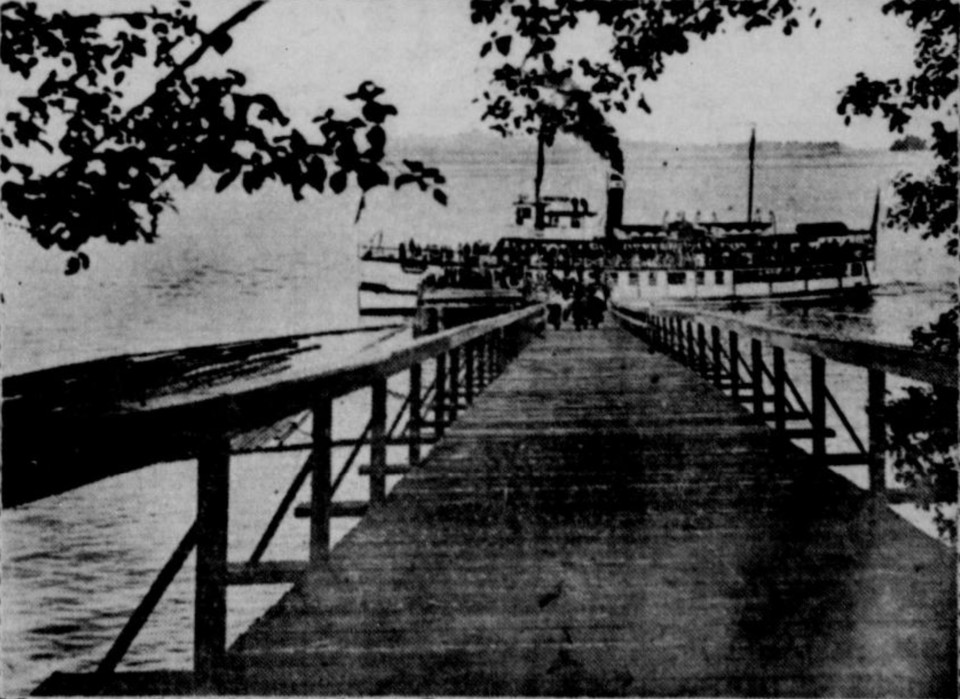
Kitsap steamboat at dock at Suquamish June 15 1911.pngUnknown photographer; The Seattle Star, June15,1911 / Wikimedia Commons · Public domain in the United States — published before 1931
Suquamish histories center on the waterways of central Puget Sound and on Lushootseed-speaking village life. The Tribe and its museum explain both the disruption of communal places and continuing work to sustain community gathering.
See each region’s evidence for historical or present-day scope.
Homeland / region
Pacific Northwest / Washington
Research depth
Source guide
Source collection
3 annotated resources · 2 Indigenous-led
Inspected sources
2 substantive works · selected content reviewed
Initial adequacy
Still unfinished
Source review
October 28, 2026
A source guide for a deeper dive.This entry provides a brief orientation and an organized reading path. A comprehensive deep dive has not yet been completed. Follow the annotated sources and distinguish primary community accounts from outside reference material.
Still unfinished
A bounded actual-content starting path and specifically scoped credited picture are available. Fuller history, source comparison and community review remain open; quantity does not establish completion.
Assessment recorded October 28, 2026. This is separate from research completion and community review.
Read original treaty and land records alongside Suquamish interpretations before making legal or boundary claims.
Broaden family and community-authored language and historical scholarship beyond these two institutional accounts.
Review current programmes separately; undated descriptions do not establish present outcomes.
The wharf image is a historical place view with conflicting catalogue dates, not a named-member or Indigenous-vessel portrait.
Backdrop photographs & credits
These photographs have individual, documented connections to this entry. Their captions and source records define the people, place, object, and period shown; no one photograph represents every community within a broader label.
Kitsap steamboat at dock at Suquamish June 15 1911.png Unknown photographer; The Seattle Star, June15,1911 / Wikimedia Commons · Public domain in the United States — published before 1931
Historic Suquamish wharf/steamer context, not an identified Tribal member, Indigenous-built vessel or a territorial depiction. Filename/caption/newspaper publication 1911 conflict with 1906 date field; exact capture date unresolved. The source is a newspaper-photo extraction, not the complete newspaper page; tiny figures are not individually identified. Complete available PNG converted to JPEG at unchanged dimensions; no pixel crop or retouching. Background/card CSS crops and overlays affect presentation; the opened page retains the complete available frame proportionally.
Image, association, and reuse record reviewed 2026-10-28.
Full photographs are displayed proportionally above. A translucent background copy may be cropped by the viewport; it does not replace the complete image or its record.
The visual treatment does not change the research status, evidence, or remaining gaps recorded in this profile.
Start reading here
A short purposeful path through selected actual-content works. Read annotations for community, period and inspection limits; this is not a complete history or community endorsement.
Then read its museum’s interpretation of renewed communal space.
These are selected starting points. The full annotated collection, source perspectives, inspection limits and remaining research questions follow below. A starting guide is not an exhaustive history or community endorsement.
01
Identity and context
The Suquamish Tribe has homelands in the central Puget Sound region.
Focus the next stage of research on: Community-authored history, Lushootseed, treaty histories and contemporary government. The sources below are selected reading paths; their authorship, dates and community scope should guide how they are used.
The Tribe describes permanent winter villages near shorelines and seasonal travel by family canoes to fishing, hunting and gathering places. Its account connects Suquamish with other communities through language, relationships and exchange. This reading introduces those connections without turning a historical village list into present government boundaries.
The museum dates the dedication of the House of Awakened Culture to 2009 and explains it as a response to the loss of communal gathering space associated with Old Man House. It describes the building as a setting for community and intertribal events. Read this as a public institutional account; its artwork and ceremonies have separate permissions.
Read original treaty and land records alongside Suquamish interpretations before making legal or boundary claims.
Broaden family and community-authored language and historical scholarship beyond these two institutional accounts.
Review current programmes separately; undated descriptions do not establish present outcomes.
The wharf image is a historical place view with conflicting catalogue dates, not a named-member or Indigenous-vessel portrait.
Cohort09: selected actual-content reviews preserve their institutional/community scope. Existing source cards are upgraded at the same ID and URL where noted; repeated publications are not globally new works.
Follow the reading path
Sources & further reading
Open any title to read the original source. Annotations explain what each link can help you explore.
No Indigenous-led source is identified in this entry yet. This is a gap in this collection, and does not imply an absence of community knowledge or organization.
A substantial tribal account of village life, colonial disruption and rebuilding. Selected sections support a waterway-centered introduction; current legal interpretations and demographic comparisons are not independently established.
Inspection: Content reviewed for the stated scope
Scope: Read introduction, timeline through Self Determination, Traditional Villages and Language. Synthesis uses village/seasonal movement and language context; no spiritual narrative or precise site inventory is republished.
Review recorded: October 28, 2026
Access note: Public source body inspected through the web reader and/or a normal HTTP200 local copy. Linked recordings, original records, objects and photographs were not automatically inspected or licensed. No login, paywall bypass or outreach. Undated retrospective, not a current legal, population or programme-outcomes assessment. Linked maps, legislation, judgments and language recordings were not reviewed.
Historical context for this entry. Read “About Your Visit - Suquamish Museum” with attention to the author, period covered, and communities named; compare with community-published accounts where available.
Selected museum accounts connect the House of Awakened Culture with communal gathering and the Old Man House legacy. This is the Tribe’s public interpretation, not a building-wide artwork license.
Inspection: Content reviewed for the stated scope
Scope: Read House of Awakened Culture introductory paragraphs and Old Man House Park subsection; other named-site biographies and creation narrative are not used in the synthesis.
Review recorded: October 28, 2026
Access note: Public source body inspected through the web reader and/or a normal HTTP200 local copy. Linked recordings, original records, objects and photographs were not automatically inspected or licensed. No login, paywall bypass or outreach. No cemetery locations, ceremonial instructions or precise sensitive-site data republished. Museum photographs, poles, internal art and oral narratives were not copied or licensed.