The Yavapai-Apache Nation is a distinct Verde Valley government comprising Yavapai and Apache peoples. Its own account names five communities and describes removal and return; this route does not stand for every Yavapai or Apache community.
See each region’s evidence for historical or present-day scope.
Homeland / region
Southwest / Arizona
Research depth
Source guide
Source collection
4 annotated resources · 3 Indigenous-led
Inspected sources
2 substantive works · selected content reviewed
Initial adequacy
Still unfinished
Source review
October 28, 2026
A source guide for a deeper dive.This entry provides a brief orientation and an organized reading path. A comprehensive deep dive has not yet been completed. Follow the annotated sources and distinguish primary community accounts from outside reference material.
Still unfinished
A bounded actual-content starting path and specifically scoped credited picture are available. Fuller history, source comparison and community review remain open; quantity does not establish completion.
Assessment recorded October 28, 2026. This is separate from research completion and community review.
Underlying executive orders, removal records, oral-history comparison and community review remain open.
Current programme delivery, title and boundary matters require separate dated evidence.
Backdrop photographs & credits
These photographs have individual, documented connections to this entry. Their captions and source records define the people, place, object, and period shown; no one photograph represents every community within a broader label.
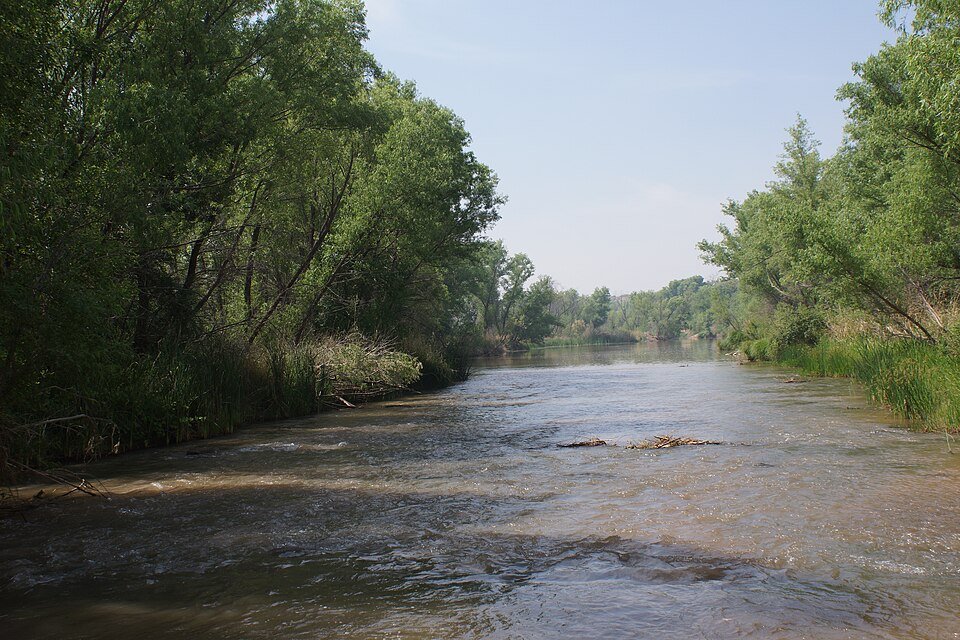
Verde River in the Camp Verde area, May 28, 2014 Chris English / Panoramio via Wikimedia Commons · CC BY-SA 3.0
Photographer-identified Verde River landscape with Camp Verde and Yavapai-Apache Nation tags. The Nation’s account places its historical reservation and return in the Verde Valley. Precise bank ownership is not established; this is regional river context, not a present boundary, Tribal village, historic reconstruction or access permission. Complete available retrieved JPEG imported unchanged. Background/card CSS crops and overlays affect presentation; the opened page retains the complete available frame proportionally.
Image, association, and reuse record reviewed 2026-10-28.
Full photographs are displayed proportionally above. A translucent background copy may be cropped by the viewport; it does not replace the complete image or its record.
The visual treatment does not change the research status, evidence, or remaining gaps recorded in this profile.
Start reading here
A short purposeful path through selected actual-content works. Read annotations for community, period and inspection limits; this is not a complete history or community endorsement.
Read its historical removal and return account with proposal and legal limits kept separate.
These are selected starting points. The full annotated collection, source perspectives, inspection limits and remaining research questions follow below. A starting guide is not an exhaustive history or community endorsement.
01
Identity and context
The Yavapai-Apache Nation is a contemporary nation whose Yavapai and Apache communities retain distinct histories and identities.
Focus the next stage of research on: Constituent peoples, forced displacement, return and contemporary nation-published accounts. The sources below are selected reading paths; their authorship, dates and community scope should guide how they are used.
The Nation distinguishes its Yavapai and Apache peoples and names Tunlii, Middle Verde, Rimrock, Camp Verde and Clarkdale as its five communities. These community names are not presented as separate governments. Its service overview gives an institutional introduction, not verified present programme outcomes.
The Nation’s historical account describes forced removal to San Carlos in 1875 and families returning to the Verde Valley later. It places the 1909 trust acquisition within recovery from dispossession. The page’s separate exchange proposals are not treated as present land-title findings.
Underlying executive orders, removal records, oral-history comparison and community review remain open.
Current programme delivery, title and boundary matters require separate dated evidence.
Cohort13: selected actual-content reviews preserve their institutional/community scope. Existing source cards are upgraded at the same ID and URL where noted; repeated publications are not globally new works.
Follow the reading path
Sources & further reading
Open any title to read the original source. Annotations explain what each link can help you explore.
No Indigenous-led source is identified in this entry yet. This is a gap in this collection, and does not imply an absence of community knowledge or organization.
The Nation introduces its Verde Valley communities, distinguishes Yavapai and Apache peoples and outlines public services.
Inspection: Content reviewed for the stated scope
Scope: Selected body lines15–30: two peoples/language distinctions, five named communities and reported services.
Review recorded: October 28, 2026
Access note: Actual selected public web-reader body inspected on October 28, 2026. April 2019 membership figures omitted. This is one government, not all Yavapai communities; language-family labels are the publisher’s. Services listed are not independently verified current delivery or outcomes.
Community or Indigenous-organization perspective linked for this entry. Use “Water Rights Settlement – Yavapai-Apache Nation” to begin with the publisher’s own account; check whether its scope is one community or a wider people.
Historical context for this entry. Read “Historical and cultural reference for Yavapai Apache” with attention to the author, period covered, and communities named; compare with community-published accounts where available.
The Nation’s historical section explains displacement from the Verde Valley in 1875 and families’ later return. Its account is distinct from the page’s proposed-exchange material.
Inspection: Content reviewed for the stated scope
Scope: Selected historical body lines68–79:1871 reservation, 1875 forced removal and dissolution, eventual return and 1909 trust acquisition.
Review recorded: October 28, 2026
Access note: Actual selected public web-reader body inspected on October 28, 2026. Proposal/current acreages, projected benefits, legal process, exact distance, maps and linked PDFs not adopted. Page mixes proposal language and a finalization link; no present title, trust status or boundary conclusion. Original orders and deeds uninspected. This review is reused from the same selected Nation account on the broader Yavapai reading route; original inspection scope/date retained, not a globally new work.
These collections preserve links from supplied studies and further research leads. The collection notes explain their provenance and review status. Links already used above point to their source cards. Supporting references and unread leads are excluded from the substantive inspected-source count.
Tonto Apache culture, history and timeline · 6 links
Owner-supplied Tonto Apache study: Payson tribal sources, historical Tonto/Western Apache context and related Yavapai-Apache Nation resources have distinct scopes. Bibliographic labels are provisional; original-source content review is pending. This page includes only selected material relevant to its broader or related-community scope.
A related Nation’s own account, already linked in the Atlas source table. Its institutions and constituent peoples must not be equated with the Payson Tonto Apache government. Automated request failed; this is not evidence of a reader paywall or removal.
Historical naming and conflict context. Check which people and settlements each passage describes rather than equating an old military label with a current government.
The Yavapai-Apache Nation’s own historical context. Distinguish its scope and two peoples from the Payson tribe; the supplied dates and claims await original-source review. Automated request failed; this is not evidence of a reader paywall or removal.
A dated Yavapai-Apache Nation language-program lead, not evidence that the Payson tribe runs the same class or that a program achieved measured outcomes. Automated request failed; this is not evidence of a reader paywall or removal.
A Yavapai-Apache Nation public remembrance/program lead. Distinguish a scheduled event from verified occurrence and from Payson tribal institutions. Automated request failed; this is not evidence of a reader paywall or removal.
A dated public family notice retained as provenance. No ceremony details, participants or images are reproduced. Public posting does not authorize reuse of restricted cultural knowledge; review context before any later summary. Automated request failed; this is not evidence of a reader paywall or removal.
Related entries may represent alternate names, constituent communities, wider groupings, or historical connections. Read the naming notes before treating entries as equivalent.
Robey’s Atlas of Indigenous North America · Compiled October 19, 2026 · Yavapai Apache