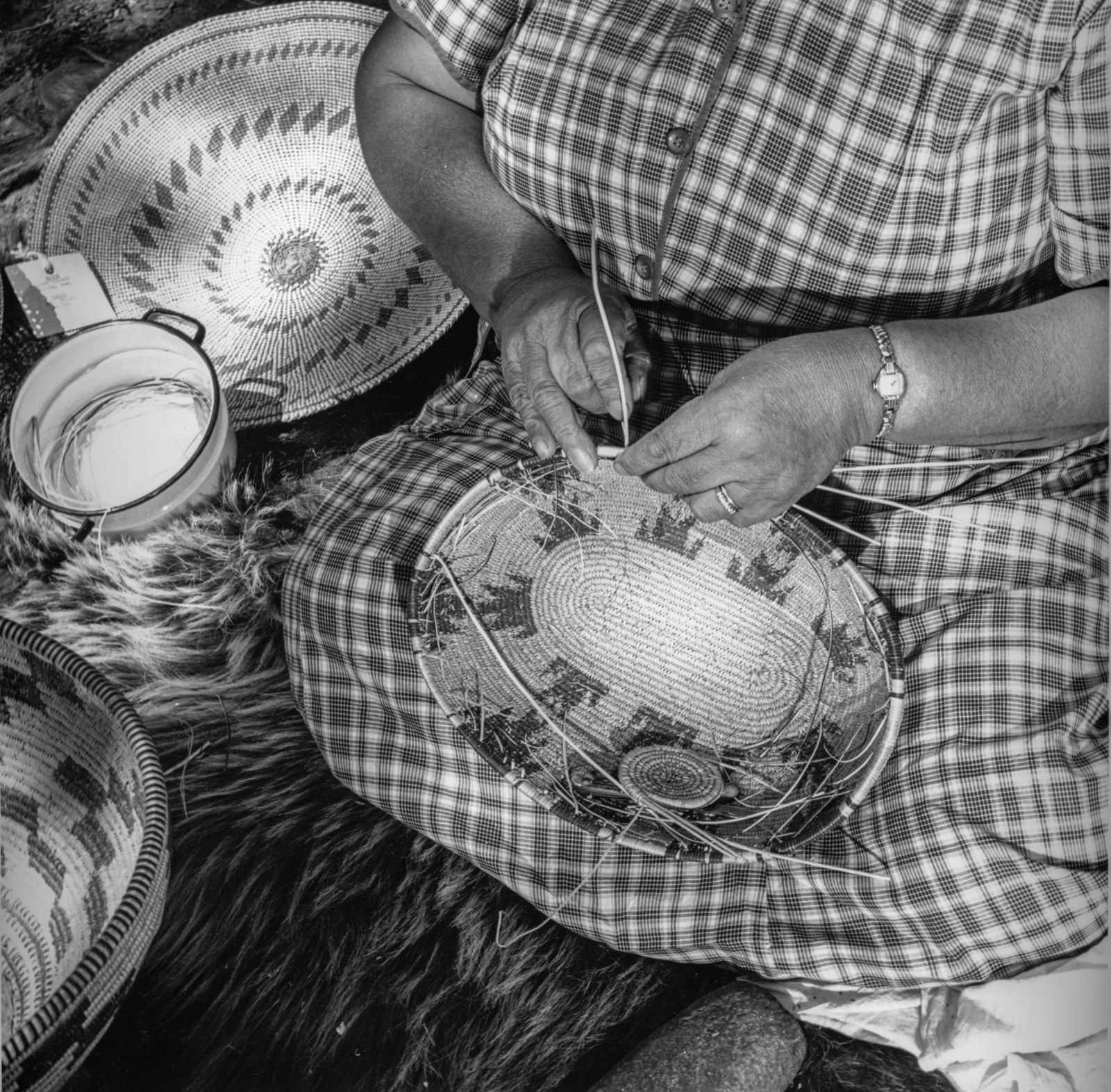
Owner-supplied study of historical Atsuge and Apwaruge contexts, broader Atsugewi language and people, and living Pit River communities. Historical regional labels and modern band identities remain distinct. These 29 URLs are contributed reading leads, not 29 verified works. Profile source annotations separately record actual selected-content reviews. Mirrors, descriptions, abstracts, announcements and unread leads are not automatically counted studies. The private full attachment is not reproduced.
- Pit River Tribe — official identificationAwaiting original-source reviewhttps://pitrivertribe.gov/
Supplied bibliography note: [1] Pit River Tribe. Official home page. Current primary source for the eleven autonomous bands and the Tribe's description of its ancestral homeland. Website.
- Constitution of the Pit River Tribe — supplied PDFAwaiting original-source reviewhttps://pitrivertribe.gov/wp-content/uploads/2017/09/Pit-River-Constitution.pdf
Supplied bibliography note: [2] Pit River Tribe. Constitution of the Pit River Tribe. Primary governing document. The preamble identifies the August 16, 1964 constitution; articles identify the bands, territory and institutions. Full PDF.
- Quarter3newsletter — August2025Awaiting original-source reviewhttps://pitrivertribe.gov/wp-content/uploads/2025/09/FINAL-Q3-AUGUST-2025-NEWSLETTER.pdf
Supplied bibliography note: [22] Pit River Tribe. August 2025 Quarter 3 Newsletter. Primary community report concerning the Medicine Lake gathering, elections and contemporary tribal programs. Full PDF.
- Quarter4newsletter — November2025Awaiting original-source reviewhttps://pitrivertribe.gov/wp-content/uploads/2025/11/FINAL-Q4-NOVEMBER-2025-NEWSLETTER.pdf
Supplied bibliography note: [23] Pit River Tribe. November 2025 Quarter 4 Newsletter. Primary source on the Four Corners commemoration, the 2025 language camp and community projects. Full PDF.
- Pit River language sessions — supplied2026flyerAwaiting original-source reviewhttps://pitrivertribe.gov/wp-content/uploads/2026/03/PR-Language-Dates-2026-flyer.pdf
Supplied bibliography note: [24] Pit River Health Service. Pit River Language Zoom Session Dates. 2026. Primary program notice documenting language sessions. It does not give an Atsugewi fluency count. Full PDF.
- American Indian Heritage — NPSAwaiting original-source reviewhttps://www.nps.gov/lavo/learn/tribes.htm
Supplied bibliography note: [3] National Park Service. American Indian Heritage. Lassen Volcanic National Park. Institutional overview of seasonal land use, western and eastern Atsugewi identities and cultural teaching at the park. Web text.
- Achomawi Geography — Fred B.Kniffen1928Awaiting original-source reviewhttps://digicoll.lib.berkeley.edu/record/82864/files/ucp023-006.pdf
Supplied bibliography note: [4] Kniffen, Fred B. Achomawi Geography. University of California Publications in American Archaeology and Ethnology 23, no. 5 (1928), 297–332. Especially pp. 315–320. Historical geographical scholarship based on local testimony, with material on Atsuge and Aporige settlements and exchange. Full scan.
- Atsugewi Ethnography — Thomas R.Garth1953Content checked — see the annotation’s scopehttps://digicoll.lib.berkeley.edu/record/84175/files/ucar014-003.pdf
Supplied bibliography note: [5] Garth, Thomas R. Atsugewi Ethnography. Anthropological Records 14, no. 2 (1953), 129–212. Major retrospective ethnography based on 1938–1939 fieldwork. Used here for source history, contributors and qualified historical claims. Full scan.
- Handbook of the Indians of California — Smithsonian recordAwaiting original-source reviewhttps://repository.si.edu/handle/10088/15545
Supplied bibliography note: [6] Kroeber, A. L. Handbook of the Indians of California. Bureau of American Ethnology Bulletin 78. Washington, DC, 1925. Chapter 21, pp. 305–317, is relevant. Historical synthesis whose categories and generalizations need comparison with later research. Smithsonian record and public domain full text scan.
- Handbook of the Indians of California — archive scanAwaiting original-source reviewhttps://archive.org/details/handbookofindian00kroe_0
Supplied bibliography note: [6] Kroeber, A. L. Handbook of the Indians of California. Bureau of American Ethnology Bulletin 78. Washington, DC, 1925. Chapter 21, pp. 305–317, is relevant. Historical synthesis whose categories and generalizations need comparison with later research. Smithsonian record and public domain full text scan.
- Indians of Lassen Volcanic National Park and Vicinity — Paul E.Schulz1954Awaiting original-source reviewhttps://www.gutenberg.org/cache/epub/65605/pg65605-images.html
Supplied bibliography note: [7] Schulz, Paul E. Indians of Lassen Volcanic National Park and Vicinity. Loomis Museum Association, 1954. Historical interpretive synthesis with contributions from Selena LaMarr. Used for specific practices and objects, with its older judgments treated critically. Public domain full text.
- Achomawi and Atsugewi Tales — supplied textAwaiting original-source reviewhttps://archive.org/stream/jstor-534634/534634_djvu.txt
Supplied bibliography note: [8] Dixon, Roland B. Achomawi and Atsugewi Tales. Journal of American Folklore 21, no. 81 (1908), 159–177. Especially the introduction and the Atsugewi narratives on pp. 170–177. Early mediated record of oral tradition, principally from Charley Snook for Atsugewi material. Public domain text and journal record.
- Achomawi and Atsugewi Tales — journal recordAwaiting original-source reviewhttps://www.jstor.org/stable/534634
Supplied bibliography note: [8] Dixon, Roland B. Achomawi and Atsugewi Tales. Journal of American Folklore 21, no. 81 (1908), 159–177. Especially the introduction and the Atsugewi narratives on pp. 170–177. Early mediated record of oral tradition, principally from Charley Snook for Atsugewi material. Public domain text and journal record.
- John Peabody Harrington Papers — archival finding aidAwaiting original-source reviewhttps://sirismm.si.edu/EADpdfs/NAA.1976-95.pdf
Supplied bibliography note: [9] Smithsonian Institution, National Anthropological Archives. John Peabody Harrington Papers. Subseries 2.11, Achomawi Atsugewi Wintu Yana, 1922. Finding aid identifying contributors, subjects and archival holdings. This is an archival guide rather than a complete transcription of the field notes. Full PDF.
- Atsugewi — California Language Archive overviewAwaiting original-source reviewhttps://cla.berkeley.edu/languages/atsugewi.html
Supplied bibliography note: [10] University of California, Berkeley, California Language Archive. Atsugewi. Scholarly language overview and bibliography, including language area, classification and speaker status. Web text.
- Semantic Structures in English and Atsugewi — introductionAwaiting original-source reviewhttps://www.acsu.buffalo.edu/~talmy/talmyweb/Dissertation/Intro.pdf
Supplied bibliography note: [11] Talmy, Leonard. Semantic Structures in English and Atsugewi. PhD dissertation, University of California, Berkeley, 1972. Introduction and acknowledgments. Primary linguistic research that explicitly credits Selina LaMarr and identifies fieldwork years. Introduction PDF.
- Borrowing Semantic Space — Leonard Talmy2000chapterAwaiting original-source reviewhttps://www.acsu.buffalo.edu/~talmy/talmyweb/Volume2/chap4.pdf
Supplied bibliography note: [12] Talmy, Leonard. Borrowing Semantic Space Diachronic Hybridization. In Toward a Cognitive Semantics, volume 2. MIT Press, 2000, chapter 4. Especially the opening contrast between English and Atsugewi structures. Scholarly analysis hosted on the author's university site. Chapter PDF.
- Achumawi Database — September2021working reportAwaiting original-source reviewhttps://zelligharris.org/Achumawi/Update20210930.pdf
Supplied bibliography note: [25] Nevin, Bruce. Achumawi Database Summary of September 2021 Work. A specialist's working report explaining continuing questions about historical reconstruction and the need for Atsugewi morphological analysis. This is a research update, not a final consensus classification. Full PDF.
- Early California Laws and Policies Related to California Indians —2002reportAwaiting original-source reviewhttps://courts.ca.gov/sites/default/files/courts/default/2024-08/ib.pdf
Supplied bibliography note: [13] Johnston-Dodds, Kimberly. Early California Laws and Policies Related to California Indians. California Research Bureau, September 2002. CRB-02-014. Historical research grounded in state laws, official records and contemporary accounts. Full report hosted by the California courts.
- Free State Slavery — Michael F.Magliari article abstractAwaiting original-source reviewhttps://online.ucpress.edu/phr/article-abstract/81/2/155/66851/Free-State-Slavery-Bound-Indian-Labor-and-Slave?redirectedFrom=fulltext
Supplied bibliography note: [14] Magliari, Michael F. Free State Slavery Bound Indian Labor and Slave Trafficking in California's Sacramento Valley 1850–1864. Pacific Historical Review 81, no. 2 (2012), 155–192. Peer reviewed historical study. The accessible abstract supports the regional economic point used here; full article access may require a subscription.
- Pit River Indians of California v.United States —1959findingsAwaiting original-source reviewhttps://dc.library.okstate.edu/digital/api/collection/p17279coll10/id/265/download
Supplied bibliography note: [15] Indian Claims Commission. The Pit River Indians of California v. United States. Docket 347, findings and opinion, July 29, 1959. 7 Indian Claims Commission 815–863. Primary legal record, including band identifications, Round Valley history and allotments. Full text through Oklahoma State University.
- Pit River Land Transfer Act of2026 — Senate Report119-147Awaiting original-source reviewhttps://www.govinfo.gov/content/pkg/CRPT-119srpt147/html/CRPT-119srpt147.htm
Supplied bibliography note: [18] United States Senate Committee on Indian Affairs. Pit River Land Transfer Act of 2026. Senate Report 119-147, September 22, 2026. Primary legislative report with historical background on land loss, the 1970 occupation and the proposed Four Corners transfer. Full text.
- H.R.2400 — September30,2026Senate amendmentAwaiting original-source reviewhttps://www.govinfo.gov/content/pkg/BILLS-119hr2400eas/xhtml/BILLS-119hr2400eas.html
Supplied bibliography note: [19] United States Congress. H.R. 2400, Senate amendment, September 30, 2026. Primary text documenting Senate passage with an amendment. It is a bill version, not evidence by itself of enactment or completed transfer. Full text.
- An American Genocide — publisher descriptionAwaiting original-source reviewhttps://yalebooks.yale.edu/book/9780300230697/an-american-genocide/
Supplied bibliography note: [26] Yale University Press. An American Genocide The United States and the California Indian Catastrophe 1846–1873, by Benjamin Madley. Publisher's description of the scholarly book first published in 2016. Used only to identify the book's statewide interpretive framework, rather than as access to the complete book.
- Selena LaMarr — NPS biographyAwaiting original-source reviewhttps://www.nps.gov/people/selena-lamarr.htm
Supplied bibliography note: [16] National Park Service. Selena LaMarr. Biographical account documenting her park work from 1952 to 1972 and Dessie Snooks's participation. Web text.
- Lilian Snooks — Emma Chapman/NPS biographyAwaiting original-source reviewhttps://www.nps.gov/articles/000/lilian-snooks.htm
Supplied bibliography note: [17] Chapman, Emma. Lilian Snooks. National Park Service. Biographical account of Lillian Bernice Snooks, Sherman Institute and her cultural preservation work with relatives. The page title uses Lilian; the body uses Lillian. Web text.
- Sáttítla Highlands —2025proclamationAwaiting original-source reviewhttps://www.govinfo.gov/content/pkg/DCPD-202500055/html/DCPD-202500055.htm
Supplied bibliography note: [20] President of the United States. Proclamation 10882 Establishment of the Sáttítla Highlands National Monument. January 14, 2025. Primary proclamation recognizing cultural relationships, archaeological evidence and a federal management framework. Full text.
- Sáttítla protection campaign — Stanford institutional accountAwaiting original-source reviewhttps://news.stanford.edu/stories/2025/09/sattitla-medicine-lake-highlands-national-monument-environmental-law-clinic
Supplied bibliography note: [21] Stanford Report. Charting the Journey of Sacred Sáttítla to National Monument Status. September 10, 2025. University account of the Environmental Law Clinic's involvement in the Pit River protection campaign. Web text.
- A Lexicon of Atsugewi — D.L.Olmsted1984Awaiting original-source reviewhttps://escholarship.org/content/qt2bn1g0w4/qt2bn1g0w4_noSplash_43d83124a82ff94561d7bea223fc60da.pdf
Supplied bibliography note: Olmsted, D. L. A Lexicon of Atsugewi. Survey of California and Other Indian Languages, University of California, Berkeley, 1984. The Berkeley language overview identifies this as a major reference. The link opens the scanned lexicon; it is provided for further language study rather than as the basis for the historical conclusions above.