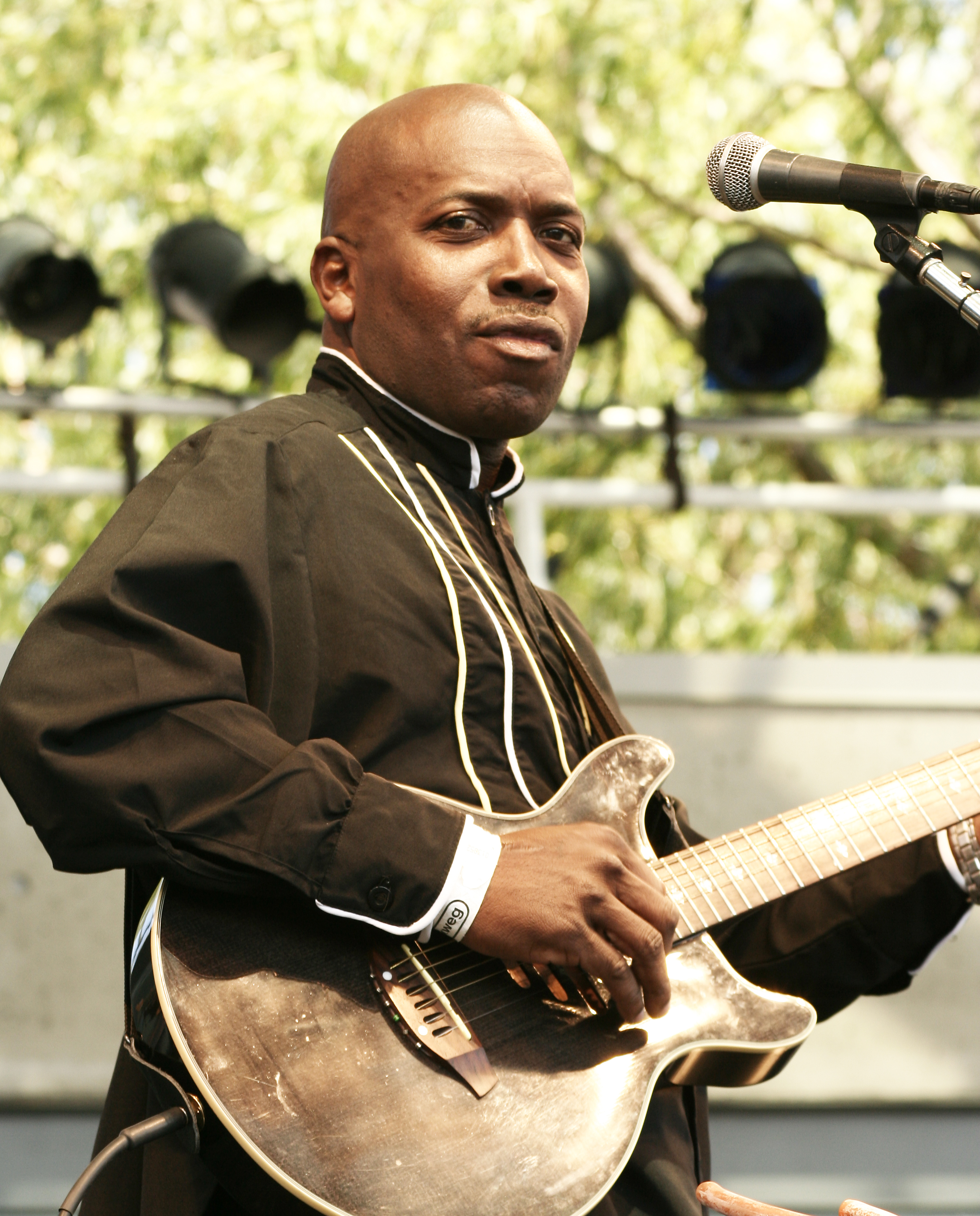
Andy Palacio at Harbourfront, July 2007John Leeson, 2007; Wikimedia Commons / photographer’s Flickr record. CC BY 2.0. Complete provider-delivered JPEG unchanged; card/backdrop CSS crops and overlays disclosed.
Local village community / Garifuna context · Added to the original list
Barranco (Belize)
Also find this entry through: Barranco
Barranco’s local Garifuna history is documented through community archives, changing livelihoods and public heritage education. These sources provide different starting perspectives while leaving family histories, land records and current conditions open for further study.
See each region’s evidence for historical or present-day scope.
Homeland / region
Caribbean / Belize — named local community context
Research depth
Source guide
Source collection
3 annotated resources · 1 Indigenous-led
Inspected sources
3 substantive works · selected content reviewed
Initial adequacy
Still unfinished
Source review
October 29, 2026
Names & relationshipsA separately findable local village reading route for the Garifuna community context of Barranco, Belize. The place includes a wider local population; this is not a claim that every resident is Garifuna or that this is a separate Indigenous nation or government.
A source guide for a deeper dive.This entry provides a brief orientation and an organized reading path. A comprehensive deep dive has not yet been completed. Follow the annotated sources and distinguish primary community accounts from outside reference material.
Still unfinished
Selected actual-content sources and a specifically scoped credited image provide a starting route. Fuller histories and comparison remain open; quantity does not establish completion or endorsement.
Assessment recorded October 29, 2026. This is separate from research completion and community review.
Develop local and community-authored history with actual-content inspected sources.
Clarify local institutions and distinctions among the municipality, Garifuna community and any named organizations; do not infer ethnicity from residence.
Add further community-authored local histories and review interpretations with publicly available community sources.
Named place and municipal institutions are not evidence that all residents are Garifuna or that the route is another people/government.
Dated descriptions, project announcements and samples do not establish present populations, language ability, land ownership or programme outcomes.
An earlier Barranco village-sign candidate returned HTTP429 and remains deferred with its underlying artwork uninspected. A separately cleared Andy Palacio performance portrait now supplies a narrowly documented Barranco-born person connection, not a village scene.
Backdrop photographs & credits
These photographs have individual, documented connections to this entry. Their captions and source records define the people, place, object, and period shown; no one photograph represents every community within a broader label.
Andy Palacio at Harbourfront, July 2007 John Leeson, 2007; Wikimedia Commons / photographer’s Flickr record. CC BY 2.0. Complete provider-delivered JPEG unchanged; card/backdrop CSS crops and overlays disclosed.
A named Garifuna musician whom his record label identifies as born and raised in Barranco. This particular photograph is identified by its photographer as July 2007 at Harbourfront. It is a public performance portrait, not a photograph of Barranco village, a local ceremony, all village residents or a territorial boundary. It does not imply artist, family, community, photographer or record-label endorsement of this Atlas.
Image, association, and reuse record reviewed 2026-10-29.
Full photographs are displayed proportionally above. A translucent background copy may be cropped by the viewport; it does not replace the complete image or its record.
The visual treatment does not change the research status, evidence, or remaining gaps recorded in this profile.
01
What family archives can reveal
Joseph O. Palacio’s 2009 article explains how preserved administrative papers can add village-level detail missing from large public archives. His methods discussion distinguishes the records used for research from private correspondence. It offers a way to study local history; this guide does not reproduce family letters, identify present plot owners or resolve land title.
SATIIM’s 2013 village account describes remittances, commuting, fishing, agriculture and the importance of connections with Punta Gorda. Read these as the organization’s description at a particular time. The old population estimates, services and travel arrangements should not be treated as present-day facts.
A 2020 Heritage Education Network feature includes a statement attributed to Dr Alberita Enriquez about the Barranco House of Culture’s purpose. It describes a resource center for learning about village history and cultural materials. This public educational account is a starting point for community perspectives, not permission to reproduce exhibits or private cultural knowledge.
Develop local and community-authored history with actual-content inspected sources.
Clarify local institutions and distinctions among the municipality, Garifuna community and any named organizations; do not infer ethnicity from residence.
Add further community-authored local histories and review interpretations with publicly available community sources.
Named place and municipal institutions are not evidence that all residents are Garifuna or that the route is another people/government.
Dated descriptions, project announcements and samples do not establish present populations, language ability, land ownership or programme outcomes.
An earlier Barranco village-sign candidate returned HTTP429 and remains deferred with its underlying artwork uninspected. A separately cleared Andy Palacio performance portrait now supplies a narrowly documented Barranco-born person connection, not a village scene.
Follow the reading path
Sources & further reading
Open any title to read the original source. Annotations explain what each link can help you explore.
No Indigenous-led source is identified in this entry yet. This is a gap in this collection, and does not imply an absence of community knowledge or organization.
Academic / local ethnohistorical researchRevista Pueblos y Fronteras Digital / SciELO MéxicoSource 1
Joseph O. Palacio shows how preserved household records can illuminate Barranco’s history beyond official archives. Selected introduction and methods distinguish public administrative records from private correspondence.
Inspection: Content reviewed for the stated scope
Scope: Actual normalHTTP200 article body: abstract, INTRODUCTION, RESEARCH METHODS and selected THE COMPILER AND THE CONTEXT paragraphs read. This is substantial selected content, not just an abstract.
Review recorded: October 29, 2026
Access note: Not a current land-title opinion or complete family genealogy. Later lot tables/appendices, original receipts, private letters, full kinship datasets and underlying archives not independently reviewed or reproduced. No plot-specific ownership or sensitive site details published.
SATIIM’s September12,2013 account relates migration, remittances, farming, fishing and access to Punta Gorda to Barranco’s development circumstances. Read as a dated organizational snapshot.
Inspection: Content reviewed for the stated scope
Scope: Actual complete main 2013 body read in web reader and normalHTTP200 HTML. Source-specific dated livelihood and access paragraphs selected for synthesis.
Review recorded: October 29, 2026
Access note: Old population figures, current service/travel schedules, land tenure/ownership assertions and proposed outcomes not adopted. The linked map/photo was not inspected for rights or reproduced.
The November12,2020 feature includes a substantive Barranco Resource Center section and a statement attributed to Dr Alberita Enriquez about its purpose and village history. It is an accessible local educational starting point.
Inspection: Content reviewed for the stated scope
Scope: Actual selected Barranco HouseofCulture section, attributed DrAlberitaEnriquez quotation and article date read from normalHTTP200 body/web reader. Other museum sections are not counted as local Barranco works.
Review recorded: October 29, 2026
Access note: No current opening hours, private family address/tenure verification or image permission. Exhibit photographs expressly credited to Enriquez/HouseofCulture were not copied; linked Facebook pages/media unreviewed.
Related entries may represent alternate names, constituent communities, wider groupings, or historical connections. Read the naming notes before treating entries as equivalent.
Robey’s Atlas of Indigenous North America · Compiled October 19, 2026 · Barranco (Belize)