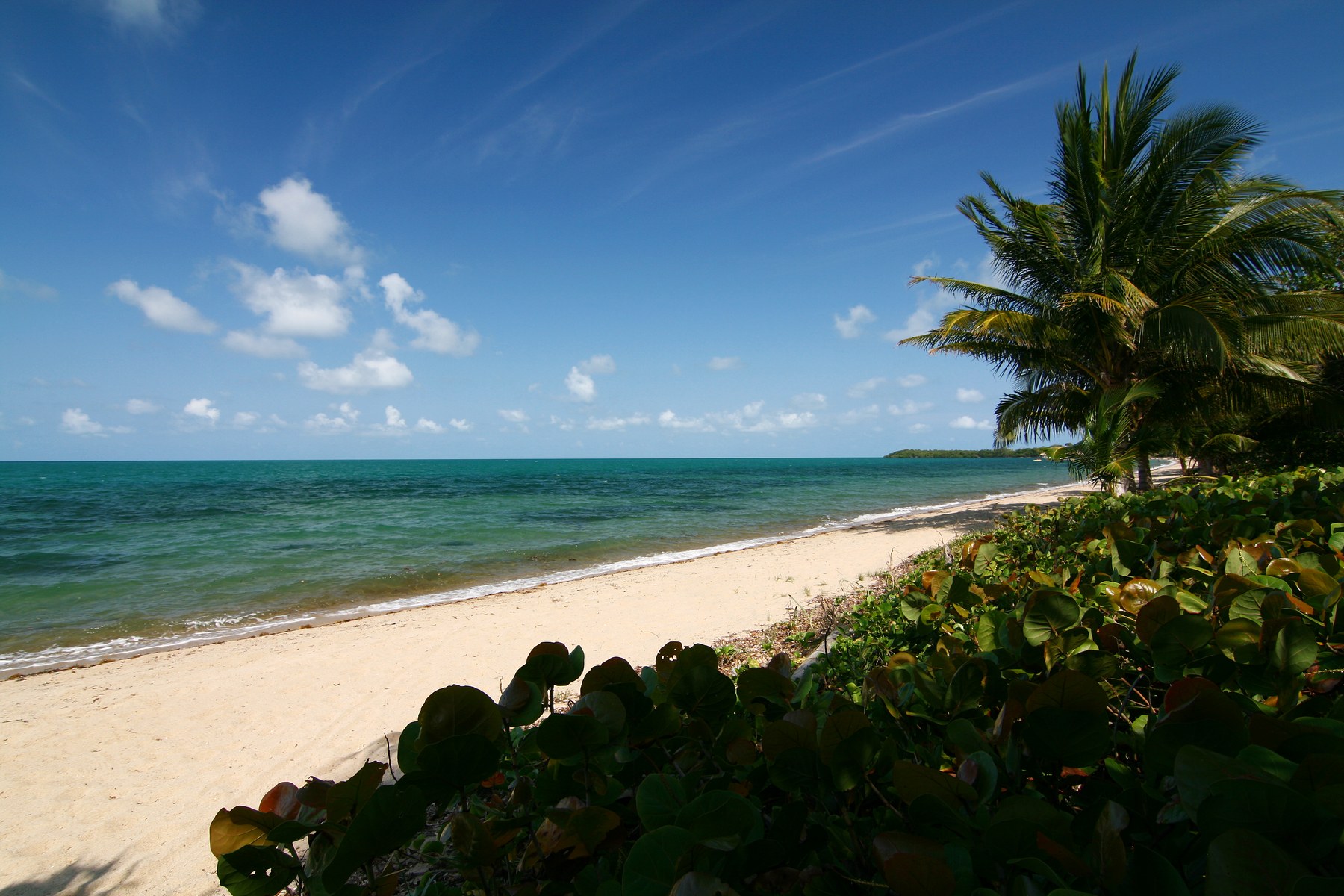
Almond Beach, Hopkins, Stann Creek, Belize,2012Walter Rodriguez,2012 · Wikimedia Commons, originally Flickr · CC BY 2.0 · Full-frame web copy proportionally resized/JPEG-compressed; CSS crops/overlays.
Local village community / Garifuna context · Added to the original list
Hopkins (Belize)
Also find this entry through: Hopkins
Hopkins is a coastal village with a specifically documented Garifuna community context. These starting sources bring together a local drumming center’s voice, dated language fieldwork and a participatory tourism plan; each presents a particular view of village life.
See each region’s evidence for historical or present-day scope.
Homeland / region
Caribbean / Belize — named local community context
Research depth
Source guide
Source collection
3 annotated resources · 1 Indigenous-led
Inspected sources
3 substantive works · selected content reviewed
Initial adequacy
Still unfinished
Source review
October 29, 2026
Names & relationshipsA separately findable local village reading route for the Garifuna community context of Hopkins, Belize. The place includes a wider local population; this is not a claim that every resident is Garifuna or that this is a separate Indigenous nation or government.
A source guide for a deeper dive.This entry provides a brief orientation and an organized reading path. A comprehensive deep dive has not yet been completed. Follow the annotated sources and distinguish primary community accounts from outside reference material.
Still unfinished
A bounded actual-content source guide and specifically scoped credited image are available. Fuller history and community/source comparison remain open; quantity does not establish completion or endorsement.
Assessment recorded October 29, 2026. This is separate from research completion and community review.
Develop local and community-authored history with actual-content inspected sources.
Clarify local institutions and distinctions among the municipality, Garifuna community and any named organizations; do not infer ethnicity from residence.
Add further community-authored local histories and review interpretations with publicly available community sources.
Named place and municipal institutions are not evidence that all residents are Garifuna or that the route is another people/government.
Dated descriptions, project announcements and samples do not establish present populations, language ability, land ownership or programme outcomes.
Backdrop photographs & credits
These photographs have individual, documented connections to this entry. Their captions and source records define the people, place, object, and period shown; no one photograph represents every community within a broader label.
Almond Beach, Hopkins, Stann Creek, Belize,2012 Walter Rodriguez,2012 · Wikimedia Commons, originally Flickr · CC BY 2.0 · Full-frame web copy proportionally resized/JPEG-compressed; CSS crops/overlays.
Copy-only mapping of the already reviewed and public Walter Rodriguez 2012 AlmondBeach photograph to the specifically named Hopkins,Belize local reading route. The underlying original Garifuna mapping is unchanged. The exact photographer record identifies AlmondBeach as Hopkins,StannCreek; this is a modern coastal place context, not an ethnicity claim about every resident, community-owned shore or a boundary. Modern Almond Beach landscape identified as Hopkins-area, Stann Creek, Belize. The BelizeTourismBoard identifies Hopkins with a Garifuna community; this is narrow place context, not a photograph of Garifuna people or a boundary, property-ownership, exclusive-occupation or all-community claim. Complete delivered frame inspected; original cameraRAW and earlier Photoshop processing history uninspected.
Image, association, and reuse record reviewed 2026-10-29.
Full photographs are displayed proportionally above. A translucent background copy may be cropped by the viewport; it does not replace the complete image or its record.
The visual treatment does not change the research status, evidence, or remaining gaps recorded in this profile.
01
Begin with a local cultural center
Lebeha’s own public account places the Center in northern Hopkins. It names Jabbar Lambey and Dorothy Pettersen as founders in 2002 and describes giving local children opportunities to learn music, dance and heritage. This is the Center’s account of its work, not a description of every family or a measured programme outcome.
Maya Ravindranath’s 2009 dissertation draws on fieldwork in 2007–08, including interviews and work with a local consultant. It treats Garifuna, Belizean Creole and English as part of Hopkins’s changing social setting. Its observations are a historical snapshot; they do not establish current language ability, and speaking a language is not a test of someone’s identity.
The same study describes how Hopkins residents combined local livelihoods with ties to Dangriga, other parts of Belize and relatives abroad. Schooling, work and remittances help readers see the village within wider networks. Those dated descriptions should be compared with later local accounts rather than treated as today’s economic census.
The January 2019 destination plan records a stakeholder vision that includes Garifuna and other cultural experiences. It emphasizes community participation, local businesses and training, while noting concerns over who benefits from tourism. These are planning priorities and reported concerns, not proof that the proposed benefits reached everyone.
Develop local and community-authored history with actual-content inspected sources.
Clarify local institutions and distinctions among the municipality, Garifuna community and any named organizations; do not infer ethnicity from residence.
Add further community-authored local histories and review interpretations with publicly available community sources.
Named place and municipal institutions are not evidence that all residents are Garifuna or that the route is another people/government.
Dated descriptions, project announcements and samples do not establish present populations, language ability, land ownership or programme outcomes.
Follow the reading path
Sources & further reading
Open any title to read the original source. Annotations explain what each link can help you explore.
No Indigenous-led source is identified in this entry yet. This is a gap in this collection, and does not imply an absence of community knowledge or organization.
Indigenous-led / community cultural organizationLebeha Drummers / Lebeha Drumming CenterSource 1
The Center’s own substantive account identifies its Hopkins setting, names founders Jabbar Lambey and Dorothy Pettersen, dates its beginning to 2002 and describes opportunities for local children to learn drumming, dance and heritage.
Inspection: Content reviewed for the stated scope
Scope: Actual complete LEBEHA DRUMMING CENTER body and 2005 teacher/group caption retrieved normally HTTP 200 and read. Not merely the website navigation; linked albums, music, videos and booking/contact material not reviewed.
Review recorded: October 29, 2026
Access note: Undated current webpage with dated retrospective claims. A self-description, not independent programme evaluation, evidence of all village practices or a present schedule. No photographs/music reproduced or rights inferred from the account.
Maya Ravindranath’s 2009 dissertation offers a dated study of multilingual Hopkins and a comparative teacher survey in four villages. Read the selected fieldwork and methods pages alongside community accounts; language use does not determine identity.
Inspection: Content reviewed for the stated scope
Scope: Actual primary university record and linked 217-page PDF retrieved HTTP 200. Read printed pp.20–29 and31–32 (PDFpp.31–40,42–43) for Hopkins/site/methods, and printed pp.124–126 (PDFpp.135–137) for teacher-survey methods and interpretation. Not the full dissertation.
Review recorded: October 29, 2026
Access note: A 2007–08 fieldwork snapshot, published 2009. No present speaker totals, language-disappearance claim, proficiency ranking, census or universal ethnicity inference. Figures, complete linguistic analyses, interviews themselves and underlying works not independently inspected. Private family recordings not reproduced.
A January 2019 planning document records a stakeholder vision combining Garifuna and other cultural experiences with local participation, entrepreneurship and training. Use it to examine goals and anticipated tensions, not as proof of later delivery.
Inspection: Content reviewed for the stated scope
Scope: Actual 128-page PDF retrieved normally HTTP 200. Cover/contents and selected Executive Summary PDFpp.9–12 read; the opening Executive Summary page was independently reopened for its stakeholder-vision and community-participation body.
Review recorded: October 29, 2026
Access note: Not all128pages, appendices, mapped areas, statistics, legal framework or later implementation inspected. Tourism forecasts/current totals and completed economic outcomes are not adopted. Photographs/maps not reproduced.
Related entries may represent alternate names, constituent communities, wider groupings, or historical connections. Read the naming notes before treating entries as equivalent.
Robey’s Atlas of Indigenous North America · Compiled October 19, 2026 · Hopkins (Belize)