Hupa reading begins here with the Hoopa Valley Tribe’s living-museum account and a university language overview. Together they connect community institutions, language and the lower Trinity River setting. A linguistic grouping, a broader people label and a present government should remain separately identified.
See each region’s evidence for historical or present-day scope.
Homeland / region
California
Research depth
Source guide
Source collection
4 annotated resources · 1 Indigenous-led
Inspected sources
2 substantive works · selected content reviewed
Initial adequacy
Still unfinished
Source review
October 28, 2026
A source guide for a deeper dive.This entry provides a brief orientation and an organized reading path. A comprehensive deep dive has not yet been completed. Follow the annotated sources and distinguish primary community accounts from outside reference material.
Still unfinished
A bounded actual-content starting path and specifically scoped credited picture are available. Fuller history, source comparison and community review remain open; quantity does not establish completion.
Assessment recorded October 28, 2026. This is separate from research completion and community review.
Read additional community-led historical accounts and selected public language-learning works.
Review Chilula and Whilkut community histories separately; a linguistic classification alone does not establish their present relationships or identity.
Backdrop photographs & credits
These photographs have individual, documented connections to this entry. Their captions and source records define the people, place, object, and period shown; no one photograph represents every community within a broader label.
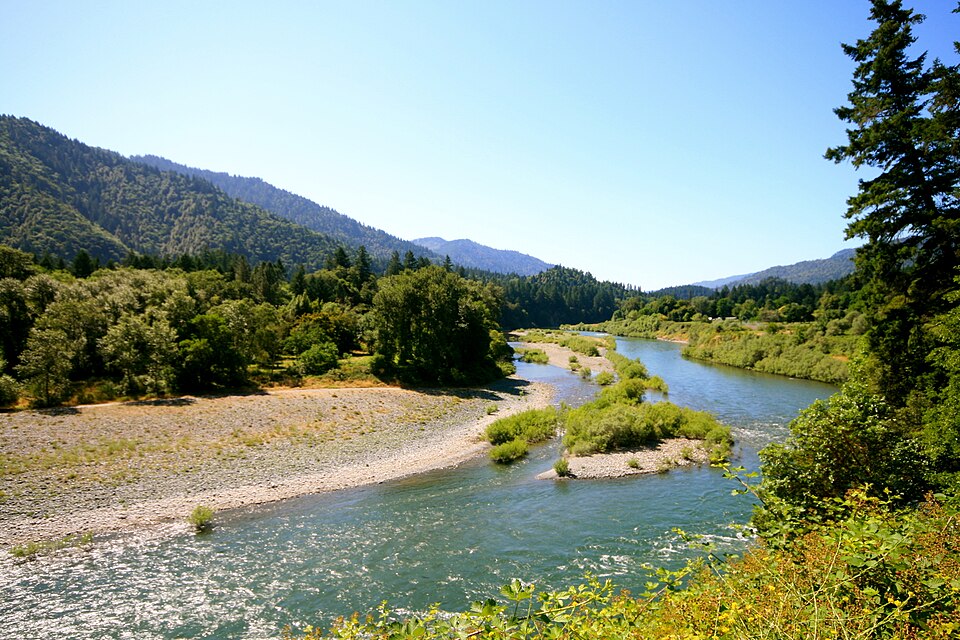
Trinity River near Hoopa PGHolbrook / Wikimedia Commons. CC BY-SA 3.0.
A modern river landscape near Hoopa. Berkeley’s language overview and the Tribe’s public museum account specifically situate Hupa community history along the lower Trinity River; this is not a current boundary, village interior or ceremonial view. Complete available retrieved JPEG imported unchanged. Background/card CSS crops and overlays affect presentation; the opened page retains the complete available frame proportionally.
Image, association, and reuse record reviewed 2026-10-28.
Full photographs are displayed proportionally above. A translucent background copy may be cropped by the viewport; it does not replace the complete image or its record.
The visual treatment does not change the research status, evidence, or remaining gaps recorded in this profile.
Start reading here
A short purposeful path through selected actual-content works. Read annotations for community, period and inspection limits; this is not a complete history or community endorsement.
Berkeley’s overview situates Hupa along the lower Trinity River and explains features of Dene verb structure.
These are selected starting points. The full annotated collection, source perspectives, inspection limits and remaining research questions follow below. A starting guide is not an exhaustive history or community endorsement.
01
Identity and context
Hupa people have homelands in the Trinity River region of northwestern California. The Hoopa Valley Tribe publishes community resources.
Focus the next stage of research on: Hupa language, river relationships, history and contemporary government. The sources below are selected reading paths; their authorship, dates and community scope should guide how they are used.
The Hoopa Tribal Museum describes itself as serving Hupa people rather than simply displaying a past culture. Its public account explains that family and tribal holdings can retain active uses, while museum work includes interpretation and community classes. This is not permission to copy those holdings, disclose private knowledge or enter cultural sites.
Berkeley’s California Language Archive locates Hupa’s traditional language area along the lower Trinity River. Its overview explains a Dene language whose verbs combine stems and prefixes, and notes patterns that differ from many related languages. The page also points toward grammars and recordings, which remain further leads rather than works read here. Historical linguistic classifications do not settle present community membership.
Read additional community-led historical accounts and selected public language-learning works.
Review Chilula and Whilkut community histories separately; a linguistic classification alone does not establish their present relationships or identity.
Cohort11: selected actual-content reviews preserve their institutional/community scope. Existing source cards are upgraded at the same ID and URL where noted; repeated publications are not globally new works.
Follow the reading path
Sources & further reading
Open any title to read the original source. Annotations explain what each link can help you explore.
No Indigenous-led source is identified in this entry yet. This is a gap in this collection, and does not imply an absence of community knowledge or organization.
A language reference linked for this entry. Read “Language Description Heritage - Language Hupa-Chilula” for terminology and documentation, and distinguish linguistic labels from the names of political communities.
Berkeley’s overview situates Hupa along the lower Trinity River and explains features of Dene verb structure. Archive and bibliography links provide further leads, rather than additional inspected works.
Inspection: Content reviewed for the stated scope
Scope: Opening language-area/family paragraphs and complete Grammatical information unit through the interlinear deer sentence. Selected archive/bibliography headings seen as leads only; linked publications and audio not opened.
Review recorded: October 28, 2026
Access note: Normal public HTTP 200 text read. Historical and21st-century speaker estimates are not adopted as current totals. Chilula/Whilkut linguistic classification does not establish present government identity or membership. No linked ethnography, grammar, song, recording, dictionary or archive item independently read.
A language reference linked for this entry. Read “Hupa Language and the Hupa Indian Tribe (Hoopa, Chilula-Whilkut)” for terminology and documentation, and distinguish linguistic labels from the names of political communities.
The Tribe describes a museum serving Hupa people, where family and tribal holdings continue to have active cultural uses. Its public account links interpretation, language and community teaching.
Inspection: Content reviewed for the stated scope
Scope: Complete six public institutional paragraphs from the Living Museum introduction through sponsored classes, before address/contact information; image captions excluded. Synthesis limited to museum purpose, community ownership and learning.
Review recorded: October 28, 2026
Access note: Normal public HTTP 200 body read. No artefacts, ceremonial knowledge, family records, village interiors, tours or private collections inspected. Named ceremonial locations and detailed cultural practices are not reproduced. Public exhibition is not permission to copy cultural material or enter a village site.
These collections preserve links from supplied studies and further research leads. The collection notes explain their provenance and review status. Links already used above point to their source cards. Supporting references and unread leads are excluded from the substantive inspected-source count.
Klamath and Salmon River War of 1855 and its aftermath · 14 links
A regional historical topic linked here for Karuk, Yurok, and Hupa context. The Klamath River is a place name here; this is not a study of the Klamath people of Oregon. Relevance must be assessed source by source.