Itza’ Maya language and community work in San José, Petén, is documented through educational publications and named collaborations. Read the community’s own teaching materials alongside an older linguistic report, keeping contemporary identity distinct from language fluency and historical kingdoms.
See each region’s evidence for historical or present-day scope.
Homeland / region
Petén, Guatemala
Research depth
Source guide
Source collection
4 annotated resources · 1 Indigenous-led
Inspected sources
3 substantive works · selected content reviewed
Initial adequacy
Still unfinished
Source review
October 29, 2026
A source guide for a deeper dive.This entry provides a brief orientation and an organized reading path. A comprehensive deep dive has not yet been completed. Follow the annotated sources and distinguish primary community accounts from outside reference material.
Still unfinished
Selected actual-content sources and a specifically scoped credited image provide a starting route. Fuller histories and comparison remain open; quantity does not establish completion or endorsement.
Assessment recorded October 29, 2026. This is separate from research completion and community review.
Add independently corroborated histories of Noj Petén, colonial change and present communities.
Seek fuller Itza’-authored publications and outcomes evidence for language programmes.
Backdrop photographs & credits
These photographs have individual, documented connections to this entry. Their captions and source records define the people, place, object, and period shown; no one photograph represents every community within a broader label.
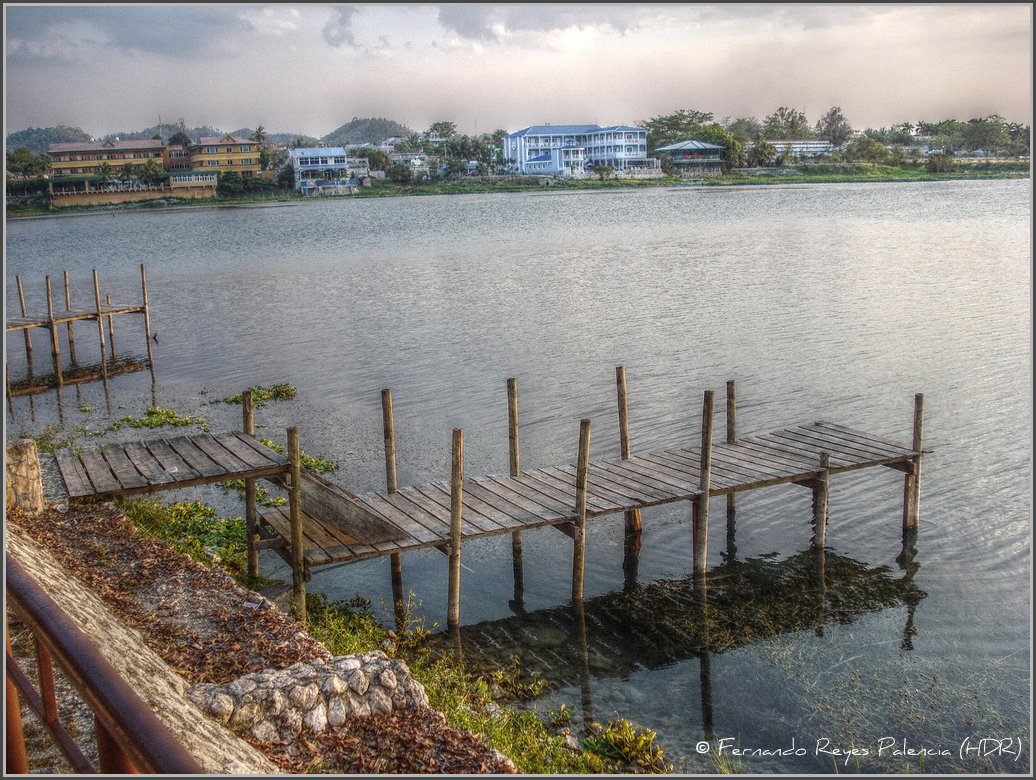
Lake Petén Itzá, Petén, Guatemala Fernando Reyes Palencia / Wikimedia Commons (Flickr source) · CC BY-SA 2.0
Modern landscape of the specifically named lake. Hofling’s selected preface places Itza’ speakers at San José on Lake Petén Itzá. This photograph is not identified as a view from San José or of historical Nojpetén, and is not evidence of every lakeside resident’s identity, ownership, community boundaries or precontact conditions.
Image, association, and reuse record reviewed 2026-10-29.
Full photographs are displayed proportionally above. A translucent background copy may be cropped by the viewport; it does not replace the complete image or its record.
The visual treatment does not change the research status, evidence, or remaining gaps recorded in this profile.
01
Identity and homelands
The Itza’ linguistic community’s institutional home is San José, Petén, within the contemporary Maya world of northern Guatemala.
ALMG publishes Maya Itza’ literature and language materials; these are useful sources for studying continuity beyond archaeological accounts of ancient Maya cities.
The 2022 ALMG book identifies the Itza’ linguistic community in San José and explains its aim of strengthening children’s learning. Its teacher introduction discusses Itza’ as a second language for pupils whose first language is Spanish. That context shows why language use cannot function as a simple test of community identity.
Hofling’s report credits Félix Fernando Tesucún’s contributions to documentation and explains his decision to study one speaker’s language in depth. The publicly linked report supplies selected front matter, not the entire published grammar. Its1998 research conditions and historical speaker estimates are not current counts.
San José’s October2026 municipal report describes a two-year training programme involving teachers from San José and San Andrés, ALMG’s Itza’ linguistic community and education authorities. This is a reported educational activity; its stated hopes do not establish measured learning outcomes.
Add independently corroborated histories of Noj Petén, colonial change and present communities.
Seek fuller Itza’-authored publications and outcomes evidence for language programmes.
Follow the reading path
Sources & further reading
Open any title to read the original source. Annotations explain what each link can help you explore.
No Indigenous-led source is identified in this entry yet. This is a gap in this collection, and does not imply an absence of community knowledge or organization.
Indigenous-ledComunidad Lingüística Itza’, ALMG; translator Herbert Marcony Chayax TesucúnSource 1
A community-produced bilingual book explains its educational purpose, adaptation and learning with elders.
Inspection: Content reviewed for the stated scope
Scope: Normal HTTP200 complete PDF retrieved after web-reader403; actual PDF pages1,3,5–10 title/credits, presentation, community-president letter and teacher-methodology introduction read.
Review recorded: October 29, 2026
Access note: Selected educational front matter only; narrative stories, illustrations and ritual content not reproduced or claimed inspected. The Ministry letter refers to a vocabulary title inconsistent with this book’s cover; the cover/community credits determine this citation. No linked media, cited underlying works, or additional publications automatically inspected. No outreach or access bypass.
A dated municipal report describes a two-year teacher-training collaboration with the Itza’ linguistic community and education authorities.
Inspection: Content reviewed for the stated scope
Scope: Actual article body: venue, teachers, coordinating institutions and declared language-teaching purpose. Normal HTTP200 body retained.
Review recorded: October 29, 2026
Access note: Programme completion is reported by the municipality; its optimistic claims are not independent evidence of learning outcomes or universal revitalization. Photographs not licensed or reproduced. No linked media, cited underlying works, or additional publications automatically inspected. No outreach or access bypass.
The report credits Félix Fernando Tesucún’s collaboration and explains the limits of documenting an individual speaker’s language.
Inspection: Content reviewed for the stated scope
Scope: Actual PDF pages1–2 project summary/publication limitation and pages7–9 preface and acknowledgments, read from normal HTTP200 PDF.
Review recorded: October 29, 2026
Access note: The report describes1998 work and a2000 grammar; the full grammar is expressly not included. Historical speaker totals are not current figures. No narratives, recordings or individual-speaker description generalized to all Itza’ people. No linked media, cited underlying works, or additional publications automatically inspected. No outreach or access bypass.
The prize record identifies an Itza’ organization based in San José and describes conservation and education priorities.
Inspection: Supporting or limited review; see scope
Scope: Actual indexed main paragraphs and dated prize/year labels.
Review recorded: October 29, 2026
Access note: Direct403 stopped; brief institutional award record excluded from substantive count. Old family/area figures and present leadership not adopted; linked case study not retrieved. No linked media, cited underlying works, or additional publications automatically inspected. No outreach or access bypass.
Related entries may represent alternate names, constituent communities, wider groupings, or historical connections. Read the naming notes before treating entries as equivalent.
Robey’s Atlas of Indigenous North America · Compiled October 19, 2026 · Itza Maya