Historical people / reading label · Added to the original list
Lucayan
Also find this entry through: Lucayans
Lucayan is a historical reading label for Indigenous communities of the Bahamian archipelago, including the Bahamas and Turks and Caicos. Museum interpretation and ceramic research introduce island settlement, skilled material production and exchange without determining anyone’s present ancestry or identity.
Names & relationshipsThe Turks and Caicos National Museum relates Lucayans to Taíno within a changing historical regional classification. This outline is a historical reading route, not a present government, a claim of disappearance or a determination of anyone’s current identity.
A source guide for a deeper dive.This entry provides a brief orientation and an organized reading path. A comprehensive deep dive has not yet been completed. Follow the annotated sources and distinguish primary community accounts from outside reference material.
Still unfinished
Selected actual-content sources and a specifically scoped credited image provide a starting route. Fuller histories and comparison remain open; quantity does not establish completion or endorsement.
Assessment recorded October 29, 2026. This is separate from research completion and community review.
Develop a community-led or appropriately scoped historical introduction and an annotated actually inspected reading collection.
Verify individually relevant imagery, creator and reuse terms before a substantive guide is published.
Verify fuller naming, organizational relationships and present-day context; identity checks do not establish ancestry, membership, representation, jurisdiction or community endorsement.
Add Indigenous-descendant and locally authored perspectives without presuming a present identity or government.
Compare settlement chronology and colonial records with newer scholarship.
Backdrop photographs & credits
These photographs have individual, documented connections to this entry. Their captions and source records define the people, place, object, and period shown; no one photograph represents every community within a broader label.
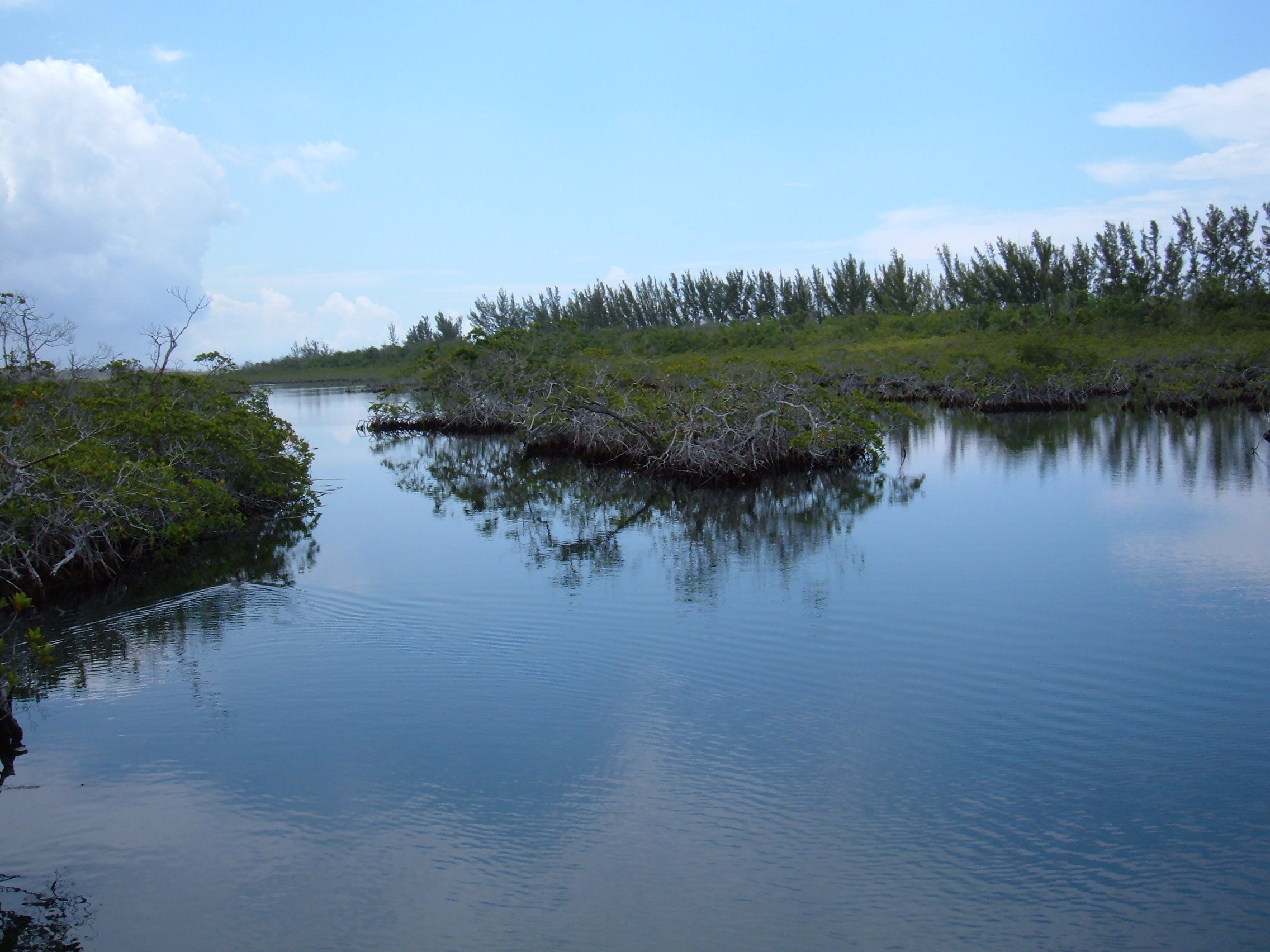
A modern landscape in the specifically named national park. Bahamas National Trust identifies the park with Lucayan historical heritage; this is place context for the historical Lucayan reading route, not a photograph of historical people or artifacts. No exact archaeological site, ancestral boundary, exclusive ownership, extinction or present ancestry claim is inferred.
Image, association, and reuse record reviewed 2026-10-29.
Full photographs are displayed proportionally above. A translucent background copy may be cropped by the viewport; it does not replace the complete image or its record.
The visual treatment does not change the research status, evidence, or remaining gaps recorded in this profile.
01
A historical regional label
The Turks and Caicos museum relates the Lucayan label to wider Taíno histories and discusses alternative settlement interpretations. Its account of Spanish enslavement provides colonial context. Its outdated disappearance and technological-ranking language is not adopted; a historical name is not a verdict on living descendants.
Florida Museum researchers describe red Palmetto Ware with burned conch-shell inclusions and investigate how potters worked with limited local clay. Their experiments help explain material choices; they do not recreate an individual historical potter’s own explanation.
The 2022 pottery study distinguishes locally made vessels from imports associated with the Greater Antilles. Its authors caution that differences between household floors, refuse deposits and periods affect comparisons. Their exchange model is a research interpretation built from incomplete samples.
Berman, Pearsall and Ritzheimer compare charred wood from four sites on San Salvador and Grand Bahama. They interpret collection as a mixture of nearby availability and purposeful selection, while noting that preservation and sample context affect what survives. This is evidence from selected archaeological assemblages, not a description of every Lucayan household or today’s forests.
Develop a community-led or appropriately scoped historical introduction and an annotated actually inspected reading collection.
Verify individually relevant imagery, creator and reuse terms before a substantive guide is published.
Verify fuller naming, organizational relationships and present-day context; identity checks do not establish ancestry, membership, representation, jurisdiction or community endorsement.
Add Indigenous-descendant and locally authored perspectives without presuming a present identity or government.
Compare settlement chronology and colonial records with newer scholarship.
Follow the reading path
Sources & further reading
Open any title to read the original source. Annotations explain what each link can help you explore.
No Indigenous-led source is identified in this entry yet. This is a gap in this collection, and does not imply an absence of community knowledge or organization.
Museum / archiveTurks and Caicos National MuseumSource 1
Regional interpretation introduces the Lucayan label, archaeological evidence, island networks and colonial enslavement.
Inspection: Content reviewed for the stated scope
Scope: Actual Lucayan History and Archaeology of the Lucayans in the Caicos Islands body, especially naming, settlement interpretation and paddle-conservation account. Normal HTTP200 also retained.
Review recorded: October 29, 2026
Access note: The page contains outdated technological-superiority, simplified origins and extinction wording; these are not adopted. Competing settlement models and approximate dates remain attributed. No present ancestry judgment, current government claim or restricted object reproduction. No linked media, cited underlying works, or additional publications automatically inspected. No outreach or access bypass.
Researchers explain Palmetto Ware and experiments with scarce clay and crushed conch-shell temper.
Inspection: Content reviewed for the stated scope
Scope: Actual article paragraphs on local raw materials, red shell-tempered Palmetto Ware, clay testing and Greater Antillean comparisons; reader lines 55–76. Normal HTTP200 body retained.
Review recorded: October 29, 2026
Access note: Experimental inference is distinguished from direct observation of historical potters. Differing arrival-date summaries are not combined into an exact chronology. Article photographs remain unlicensed for reproduction here. No linked media, cited underlying works, or additional publications automatically inspected. No outreach or access bypass.
A research study compares local and imported ceramics and explains how find context and small samples limit interpretations of exchange.
Inspection: Content reviewed for the stated scope
Scope: Actual 16-page PDF: selected printed pages 1–4, abstract, introduction and cultural-background opening; printed page 13 discussion/conclusions on context-sensitive counts and exchange. Normal HTTP200 PDF retained.
Review recorded: October 29, 2026
Access note: Selected sections, not all tables, excavation records, cited genetic studies or 16-page close reading. Identity/ancestry is not inferred from ceramic or genetic classifications; no sensitive sites or remains reproduced. No linked media, cited underlying works, or additional publications automatically inspected. No outreach or access bypass.
A research comparison examines fuelwood use and explains how recovery and preservation affect interpretation. Four sampled sites are not the entire archipelago.
Inspection: Content reviewed for the stated scope
Scope: Actual open-access publisher HTML: abstract/introduction42–81, Materials and methods172–181, taphonomic discussion188–195, selected conclusions251–257. Online4October2024;volume34,pp363–382(2025).
Review recorded: October 30, 2026
Access note: Selected sections, not full article,underlying collections,complete tables,figures,map or supplements. No new excavation access,precise-site reproduction,current habitat claim,conservation outcome or universal historical practice inferred. Radiocarbon ranges,genetic claims and sensitive material are not adopted.
Related entries may represent alternate names, constituent communities, wider groupings, or historical connections. Read the naming notes before treating entries as equivalent.
Robey’s Atlas of Indigenous North America · Compiled October 19, 2026 · Lucayan