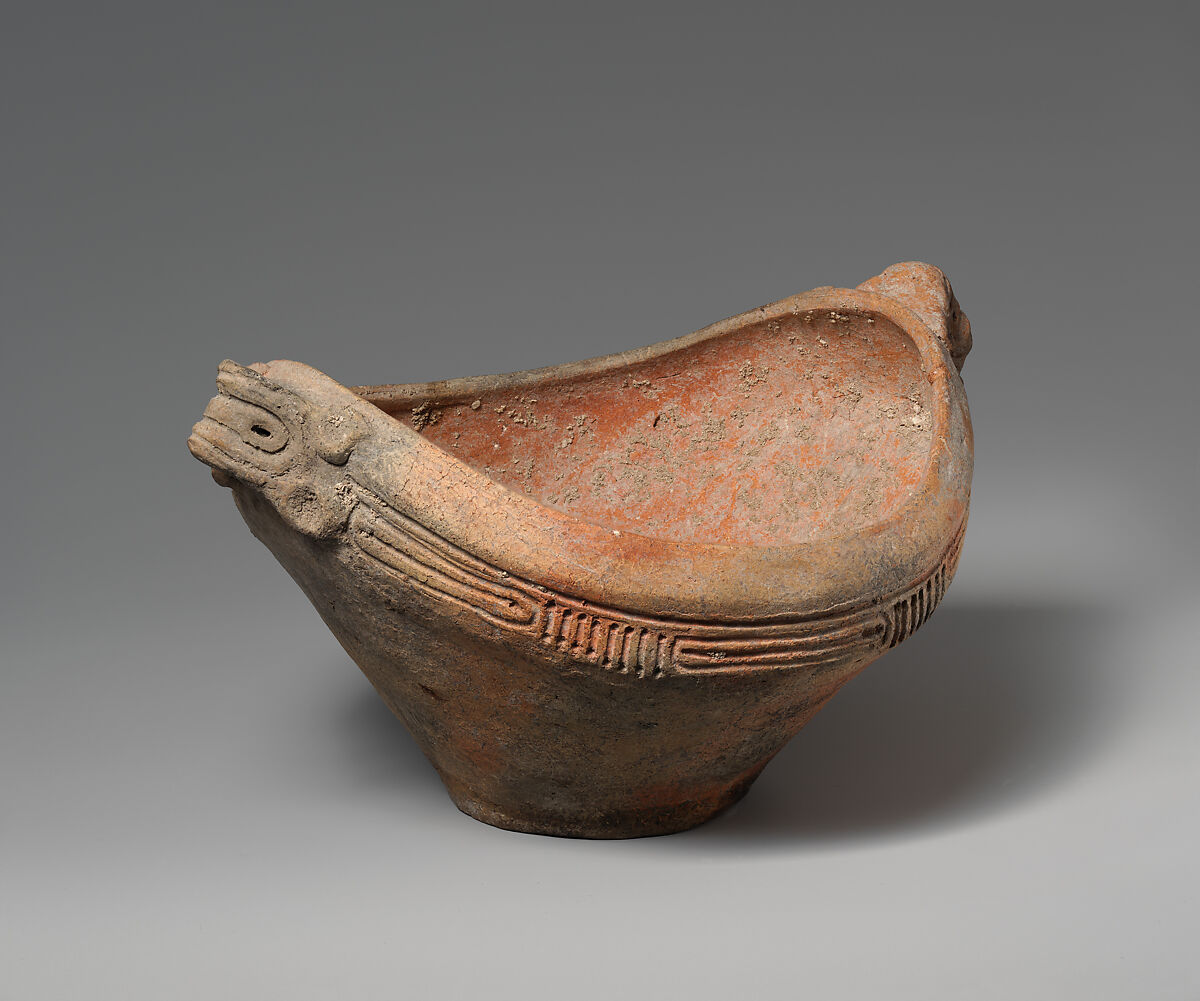
Taíno ceramic bowl,13th–15th century, Dominican RepublicTaíno maker unnamed · Image: The Metropolitan Museum of Art · Gift of Vincent and Margaret Fay,1993 · Public Domain / CC0
Taíno is a broad Caribbean reading route involving living identities and different island and diaspora experiences. Museum education, organizational accounts and attributed community reporting provide starting perspectives; individual communities and institutions remain separately findable.
See each region’s evidence for historical or present-day scope.
Homeland / region
Caribbean / Greater Antilles
Research depth
Source guide
Source collection
7 annotated resources · 2 Indigenous-led
Inspected sources
4 substantive works · selected content reviewed
Initial adequacy
Still unfinished
Source review
October 29, 2026
A source guide for a deeper dive.This entry provides a brief orientation and an organized reading path. A comprehensive deep dive has not yet been completed. Follow the annotated sources and distinguish primary community accounts from outside reference material.
Still unfinished
A bounded actual-content source guide and specifically scoped credited image are available. Fuller history and community/source comparison remain open; quantity does not establish completion or endorsement.
Assessment recorded October 29, 2026. This is separate from research completion and community review.
Develop individually scoped island-community and diaspora histories using community publications and scholarship.
Original colonial records, language documentation and comparative interpretations remain open.
The two inspected starting works are not an exhaustive regional history or community endorsement.
Add independently compared local histories and community-specific source guides without applying appearance/genetic membership rules.
Underlying interviews, colonial records and current institutional relationships remain unverified.
Backdrop images & credits
These images have individual, documented connections to this entry. Their captions and source records define the people, place, object, and period shown; no one image represents every community within a broader label.
Taíno ceramic bowl,13th–15th century, Dominican Republic Taíno maker unnamed · Image: The Metropolitan Museum of Art · Gift of Vincent and Margaret Fay,1993 · Public Domain / CC0
Specifically catalogued Taíno ceramic container from the Dominican Republic. The published gift credit is preserved; no ceremonial function, maker identity or all-community design interpretation inferred.
Image, association, and reuse record reviewed 2026-10-28.
Full images are displayed proportionally above. A translucent background copy may be cropped by the viewport; it does not replace the complete image or its record.
The visual treatment does not change the research status, evidence, or remaining gaps recorded in this profile.
01
Identity and context
Taíno histories and contemporary identities span Caribbean island communities and diaspora. Smithsonian research examines living heritage and identity beyond narratives of disappearance.
Focus the next stage of research on: Community perspectives, rural cultural continuities, colonial history and the diverse contemporary Taíno movement. Start with the annotated sources and compare each publisher’s scope and perspective.
The Smithsonian guide places surviving farming, weaving and pottery traditions alongside European colonization. Its contemporary focus challenges disappearance narratives. It does not turn ancestry, appearance or a genetic result into a determination of community membership.
The United Confederation of Taíno People describes continuing identity and contemporary artistic practice. It is one representative institution, not a substitute for every island community or a single government for all Taíno people.
The pictured ceramic bowl is catalogued as Taíno,13th–15th century, from the Dominican Republic. It provides an older material example, not a portrait of living people or a design shared by every community.
In a 2017 American Indian article, Taíno author José Barreiro describes La Rancheria in Caridad de los Indios and nearby La Escondida through community visits and family accounts. He presents locally rooted agricultural knowledge and kinship histories. These named examples should not be generalized to every Cuban family or treated as a current population count.
Barreiro’s later ICT analysis describes connections among island communities, diaspora associations and locally organized groups. He treats revitalization as varied and sometimes contested. The Atlas records these as an author’s analysis and verifies individual organizations separately rather than assigning one blanket membership or government structure.
Develop individually scoped island-community and diaspora histories using community publications and scholarship.
Original colonial records, language documentation and comparative interpretations remain open.
The two inspected starting works are not an exhaustive regional history or community endorsement.
Add independently compared local histories and community-specific source guides without applying appearance/genetic membership rules.
Underlying interviews, colonial records and current institutional relationships remain unverified.
Caribbean pilot: selected scope/date/access limits retained; supporting object/summary/event leads excluded from substantive counts. Supplementary work, not a completed20-profile cohort.
Follow the reading path
Sources & further reading
Open any title to read the original source. Annotations explain what each link can help you explore.
No Indigenous-led source is identified in this entry yet. This is a gap in this collection, and does not imply an absence of community knowledge or organization.
Museum / archivesi.eduSource 1Supporting reference · outside substantive inspected count
Retained event/programme lead. No unseen exhibition body, proceedings, participant presentation or recording is treated as inspected.
Inspection: Content review not recorded
Scope: Access/metadata assessment only; no substantive historical body review.
Access recorded: October 19, 2026
Access note: Legacy Smithsonian event URL timed out; symposium programme is an event/agenda lead, not inspected proceedings or a viewed recording. Original IDs/URLs retained. Neither counts toward substantive review.
A public teaching guide emphasizes living heritage and continuing identity alongside colonial disruption. Its classroom overview is not a complete history of every island community.
Inspection: Content reviewed for the stated scope
Scope: Selected actual text from both PDF pages: p1 language/continuity introduction; p2 Who Are the Taíno, homeland and surviving farming/weaving/pottery paragraphs.
Review recorded: October 28, 2026
Access note: Two-page PDF text read normally. Layout order is non-linear; no full figure/map inspection, image reuse, genetic inference, population estimate or endorsement of ceremonial interpretations. The Spanish edition is not another counted work.
The organization asserts living Taíno identity and describes language and artistic continuities. Read it as one representative institution’s perspective.
Inspection: Content reviewed for the stated scope
Scope: Actual selected History and Art body lines30,46,52–54,126–128; English and Spanish are parallel presentations, not two works.
Review recorded: October 28, 2026
Access note: Organization is not treated as the government of every Taíno community. Broad Florida/homeland boundaries, recognition list, ancestry tests, images and categorical first-encounter claims excluded. No linked language lessons or registry reviewed.
An explicitly attributed ceramic container supplies the historical object pictured here. This supporting object record does not represent all Taíno communities.
Inspection: Supporting or limited review; see scope
Scope: Exact object details, media Public Domain label and general ceramics introduction, lines3–47.
Review recorded: October 28, 2026
Access note: Supporting image/object context only, not an additional substantive history work. Maker and photographer not named. No function, sacred status, exact findspot, provenance beyond published gift credit or universal motif meaning inferred.
A Taíno author reports on eastern Cuban families and named communities. Read as attributed community reporting, not a census or a test of anyone’s identity.
Inspection: Content reviewed for the stated scope
Scope: Winter 2017,Vol18No4. Actual article body read from normalHTTP 200HTML after web-reader timeout: author/issue line, opening Oriente/Baracoa context, LaRancheria/Caridad de los Indios and LaEscondida community paragraphs, selected historical-family recollections and agricultural/ecological-knowledge discussion.
Review recorded: October 29, 2026
Access note: Selected text only; underlying colonial grants, interviews, genealogies, population/genetic percentages, current officeholders, claimed national agricultural outcomes and private ceremonial/birthing/prayer descriptions not adopted. Article photos and map not reproduced. No claim that every eastern Cuban family has the same identity.
First-person analysis describes island–diaspora networks, locally named communities and varied forms of identity revitalization. The author’s interpretation stays attributed.
Inspection: Content reviewed for the stated scope
Scope: Actual HTML body paragraphs83–101 and author biography106 read; displayed publication November28,2025 and updateMay19,2026. Selected island–NorthAmerica connections, associations/yucayeques, Cuban local-community examples and caution about varied claims/bases of identity. NormalHTTP 200body privately cached.
Review recorded: October 29, 2026
Access note: Not independent verification of every named group, hereditary line, legal claim, membership, representation or contemporary population. Images/private practices and linked book not reused/read. No ethnicity from genetics/appearance or automatic umbrella-to-community inference.
Related entries may represent alternate names, constituent communities, wider groupings, or historical connections. Read the naming notes before treating entries as equivalent.
Robey’s Atlas of Indigenous North America · Compiled October 19, 2026 · Taíno