Omaha history is connected with the middle Missouri River and continuing community life under pressure from federal land and assimilation policies. These readings pair critical historical interpretation with the Tribe’s preservation work and a selected 1854 treaty.
See each region’s evidence for historical or present-day scope.
Homeland / region
Great Plains / Nebraska
Research depth
Source guide
Source collection
5 annotated resources · 3 Indigenous-led
Inspected sources
3 substantive works · selected content reviewed
Initial adequacy
Still unfinished
Source review
October 28, 2026
A source guide for a deeper dive.This entry provides a brief orientation and an organized reading path. A comprehensive deep dive has not yet been completed. Follow the annotated sources and distinguish primary community accounts from outside reference material.
Still unfinished
A bounded actual-content starting path and specifically scoped credited picture are available. Fuller history, source comparison and community review remain open; quantity does not establish completion.
Assessment recorded October 28, 2026. This is separate from research completion and community review.
Add more Omaha-authored public history and language scholarship.
Inspect original treaty and implementation records before legal/land claims.
Review complete current preservation policy separately from the brief mission.
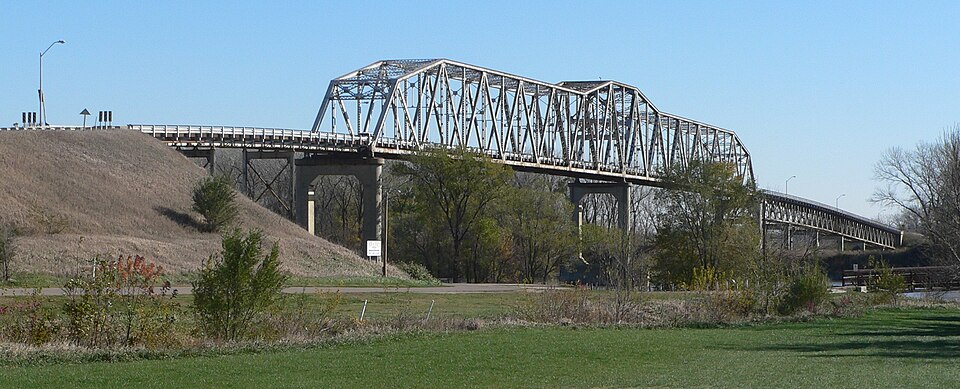
Decatur image is a modern Missouri River bridge setting, not Indigenous-built architecture, a precise historic village or boundary.
Backdrop photographs & credits
These photographs have individual, documented connections to this entry. Their captions and source records define the people, place, object, and period shown; no one photograph represents every community within a broader label.
Missouri River bridge at Decatur, Nebraska Ammodramus / Wikimedia Commons — Public domain — photographer’s worldwide release
Modern Missouri River bridge setting at Decatur, Nebraska. Regional waterway context only; not an Omaha-built bridge, exact historic village, reservation boundary or historic view. Water only partly visible. Complete available retrieved JPEG imported unchanged. Background/card CSS crops and overlays affect presentation; the opened page retains the complete available frame proportionally.
Image, association, and reuse record reviewed 2026-10-28.
Full photographs are displayed proportionally above. A translucent background copy may be cropped by the viewport; it does not replace the complete image or its record.
The visual treatment does not change the research status, evidence, or remaining gaps recorded in this profile.
Start reading here
A short purposeful path through selected actual-content works. Read annotations for community, period and inspection limits; this is not a complete history or community endorsement.
These are selected starting points. The full annotated collection, source perspectives, inspection limits and remaining research questions follow below. A starting guide is not an exhaustive history or community endorsement.
01
Identity and context
The Omaha Tribe has enduring relationships with the Missouri River and northern plains.
Focus the next stage of research on: Umonhon naming, language, treaties and contemporary tribal government. The sources below are selected reading paths; their authorship, dates and community scope should guide how they are used.
Ridington challenges the expectation that Omaha identity would vanish through assimilation. His selected analysis examines reformers’ assumptions and allotment’s harmful effects. It helps distinguish an observer’s prediction from evidence about what Omaha people continued to do.
The Tribe’s preservation office describes caring for cultural resources and working with museums and other collections. Its mission makes continuing community responsibilities visible alongside historical reading. The brief mission/functions are useful; unfinished placeholder text is not a complete published procedure.
The March 1854 treaty describes cession, relocation and federal control over payments and individual assignments. It is a starting point for examining policy, not evidence that each promise was fulfilled. Compare the wording with historical analysis and future community-specific land records.
Add more Omaha-authored public history and language scholarship.
Inspect original treaty and implementation records before legal/land claims.
Review complete current preservation policy separately from the brief mission.
Decatur image is a modern Missouri River bridge setting, not Indigenous-built architecture, a precise historic village or boundary.
Cohort10: selected actual-content reviews preserve their institutional/community scope. Existing source cards are upgraded at the same ID and URL where noted; repeated publications are not globally new works.
Follow the reading path
Sources & further reading
Open any title to read the original source. Annotations explain what each link can help you explore.
No Indigenous-led source is identified in this entry yet. This is a gap in this collection, and does not imply an absence of community knowledge or organization.
Community or Indigenous-organization perspective linked for this entry. Use “Home - Omaha Tribe of Nebraska” to begin with the publisher’s own account; check whether its scope is one community or a wider people.
Ridington critiques the assumption that Omaha identity must disappear under assimilation. Selected historical-analysis sections guide critical reading of older observers; his interpretations remain attributed.
Inspection: Content reviewed for the stated scope
Scope: Actual digitized text: location sentence printedp37 for Missouri River context; The Myth of the Vanishing Indian and Friends of the Indian, pp42–44; beginning Glimpses of Omaha Life in the Twentieth Century p45. Synthesis uses assimilation/allotment critique, not sacred-object or ritual descriptions.
Review recorded: October 28, 2026
Access note: Actual selected public body inspected 2026-10-28 through normal HTTP200 retrieval, web reader or stated PDF pages. No bypass or outreach. Linked works, original records, audio and pictures were not automatically inspected or licensed. NormalHTTP200 HTML retrieved; only named selected sections substantively used. Underlying manuscripts/fieldwork and cited works uninspected. Journal/year not established in this body and not guessed. Outsider historical terminology is contextualized, not adopted.
Community or Indigenous-organization perspective linked for this entry. Use “Omaha Heritage Project” to begin with the publisher’s own account; check whether its scope is one community or a wider people.
The Tribe’s public statement describes care for cultural resources and work with collections. Its actual mission/functions are useful; unfinished placeholder text elsewhere is excluded.
Inspection: Content reviewed for the stated scope
Scope: Actual mission paragraph and Functions paragraph on cultural resources, ancestral history and work with museum/private collections. Our Processes contains Lorem Ipsum placeholders, excluded as policy/substantive content.
Review recorded: October 28, 2026
Access note: Actual selected public body inspected 2026-10-28 through normal HTTP200 retrieval, web reader or stated PDF pages. No bypass or outreach. Linked works, original records, audio and pictures were not automatically inspected or licensed. Undated brief institutional statement, not a full manual/current legal guide. Underlying inventories, restricted material and statutes unreviewed. No sensitive sites/objects or coordinates republished.
Selected terms show land cession, relocation, payments and individual assignments in the March 1854 agreement. Read alongside community history, not as proof of consent, fulfillment or present law.
Inspection: Content reviewed for the stated scope
Scope: Actual HTML preamble and Articles1–6 read: Article1 Missouri River geography, 2 relocation and4–6 payment/assignment terms. No original manuscript, separate January27, 1854 agreement or later records inspected.
Review recorded: October 28, 2026
Access note: Actual selected public body inspected 2026-10-28 through normal HTTP200 retrieval, web reader or stated PDF pages. No bypass or outreach. Linked works, original records, audio and pictures were not automatically inspected or licensed. March16 agreement; page records April17 ratification/June21 proclamation. Colonial terminology not endorsed. No present ownership, jurisdiction, unanimous consent or legal claim determined.
Related entries may represent alternate names, constituent communities, wider groupings, or historical connections. Read the naming notes before treating entries as equivalent.
Robey’s Atlas of Indigenous North America · Compiled October 19, 2026 · Omaha