Pueblo is a broad route into distinct peoples and communities, rather than a single government. The Indian Pueblo Cultural Center offers a New Mexico-centered introduction and guidance for reading about living communities respectfully.
See each region’s evidence for historical or present-day scope.
Homeland / region
Southwest / New Mexico / Arizona
Research depth
Source guide
Source collection
5 annotated resources · 5 Indigenous-led
Inspected sources
3 substantive works · selected content reviewed
Initial adequacy
Still unfinished
Source review
October 28, 2026
A source guide for a deeper dive.This entry provides a brief orientation and an organized reading path. A comprehensive deep dive has not yet been completed. Follow the annotated sources and distinguish primary community accounts from outside reference material.
Still unfinished
A bounded actual-content starting path and specifically scoped credited picture are available. Fuller history, source comparison and community review remain open; quantity does not establish completion.
Assessment recorded October 28, 2026. This is separate from research completion and community review.
Individual Pueblo histories and languages need separate sources; this is a regional introduction.
Underlying archives, historical interpretations and community review remain open.
Backdrop photographs & credits
These photographs have individual, documented connections to this entry. Their captions and source records define the people, place, object, and period shown; no one photograph represents every community within a broader label.
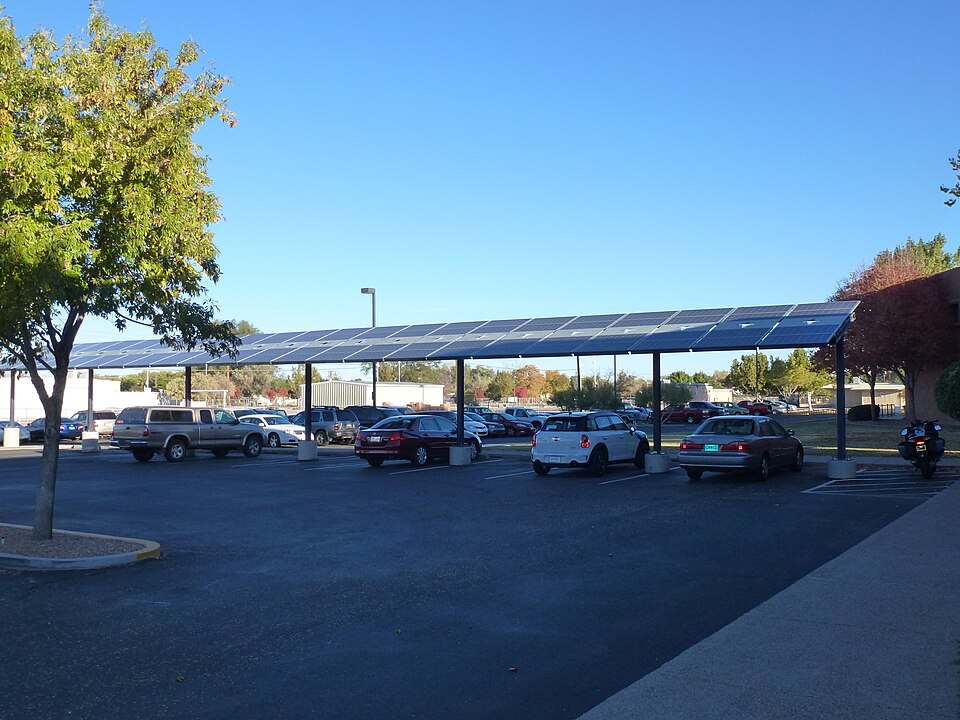
Solar canopy at the Indian Pueblo Cultural Center, October 25, 2012 Chris English / Panoramio via Wikimedia Commons · CC BY-SA 3.0
A specifically identified public institutional setting at the jointly Pueblo-owned Center in Albuquerque. This is a modern parking/solar installation, not an image of any Pueblo village, ceremony, sacred site or universal traditional art. It supplies a shared-institution example for the broader reading route, not separate imagery for every Pueblo. Complete available retrieved JPEG imported unchanged. Background/card CSS crops and overlays affect presentation; the opened page retains the complete available frame proportionally.
Image, association, and reuse record reviewed 2026-10-28.
Full photographs are displayed proportionally above. A translucent background copy may be cropped by the viewport; it does not replace the complete image or its record.
The visual treatment does not change the research status, evidence, or remaining gaps recorded in this profile.
Start reading here
A short purposeful path through selected actual-content works. Read annotations for community, period and inspection limits; this is not a complete history or community endorsement.
Keep public learning separate from access and photography permission.
These are selected starting points. The full annotated collection, source perspectives, inspection limits and remaining research questions follow below. A starting guide is not an exhaustive history or community endorsement.
01
Identity and context
Pueblo is a broad grouping of distinct peoples, languages and nations, rather than one tribe.
Focus the next stage of research on: Individual Pueblo sources, linguistic diversity and specific political communities. The sources below are selected reading paths; their authorship, dates and community scope should guide how they are used.
The Pueblo-owned Center distinguishes nineteen New Mexico Pueblos. This is a regional frame within a wider Pueblo world, including Arizona communities; it does not make them one nation or erase differences in language and history. Follow individual directory entries for community-specific reading.
The Albuquerque Center describes museum, education, library and archival resources under the nineteen New Mexico Pueblos. It provides a shared public introduction while individual communities retain their own governments and accounts.
The Center’s guidance treats Pueblos as living homes. Photography may require permits or be prohibited, and restricted spaces remain restricted. Read each community’s rules; a published image or online source is not permission to visit, record people or enter private spaces.
Individual Pueblo histories and languages need separate sources; this is a regional introduction.
Underlying archives, historical interpretations and community review remain open.
Cohort13: selected actual-content reviews preserve their institutional/community scope. Existing source cards are upgraded at the same ID and URL where noted; repeated publications are not globally new works.
Follow the reading path
Sources & further reading
Open any title to read the original source. Annotations explain what each link can help you explore.
No Indigenous-led source is identified in this entry yet. This is a gap in this collection, and does not imply an absence of community knowledge or organization.
Indigenous-ledIndian Pueblo Cultural CenterSource 1
The Pueblo-owned Center distinguishes the nineteen New Mexico Pueblos and introduces language and cultural diversity. Its geographic scope does not exhaust the wider Pueblo world.
Inspection: Content reviewed for the stated scope
Scope: Selected FAQ body lines50–56, 102–111, 129–131 and144–146: distinct nations, Center ownership, language diversity, Arizona relationship and arts.
Review recorded: October 28, 2026
Access note: Actual selected public web-reader body inspected on October 28, 2026. Population totals, categorical language taxonomy, superlative revolt claim and ceremonial explanations excluded. Neither the nineteen-community frame nor a shared label creates one government. Logo is expressly copyrighted; it is not reproduced.
Community or Indigenous-organization perspective linked for this entry. Use “HISTORY | Pueblo of Tesuque” to begin with the publisher’s own account; check whether its scope is one community or a wider people.
Community or Indigenous-organization perspective linked for this entry. Use “Laguna Church | Pueblo of Laguna” to begin with the publisher’s own account; check whether its scope is one community or a wider people.
Community guidance treats Pueblos as living homes and distinguishes permission to visit from permission to photograph.
Inspection: Content reviewed for the stated scope
Scope: Selected public guidance lines54–67, 78–81, 96–107: private homes, permits or photography bans, restricted spaces, signage and artifacts.
Review recorded: October 28, 2026
Access note: Actual selected public web-reader body inspected on October 28, 2026. Not a current opening/permit directory or permission grant. No ceremony description, restricted-space instructions or contact with communities. Individual rules govern; historic publication does not establish consent.
The Center describes its Albuquerque campus and educational, museum, library and archival work under the nineteen New Mexico Pueblos.
Inspection: Content reviewed for the stated scope
Scope: Selected opening body lines47–48, 53 and65: campus context, cultural/educational facilities and community governance.
Review recorded: October 28, 2026
Access note: Actual selected public web-reader body inspected on October 28, 2026. Only the institutional introduction inspected; no linked videos, collection items or underlying governance records. Current acreage, leadership biographies and financial claims omitted. The institution is not a replacement for individual Pueblo governments.
Related entries may represent alternate names, constituent communities, wider groupings, or historical connections. Read the naming notes before treating entries as equivalent.
Robey’s Atlas of Indigenous North America · Compiled October 19, 2026 · Pueblo